
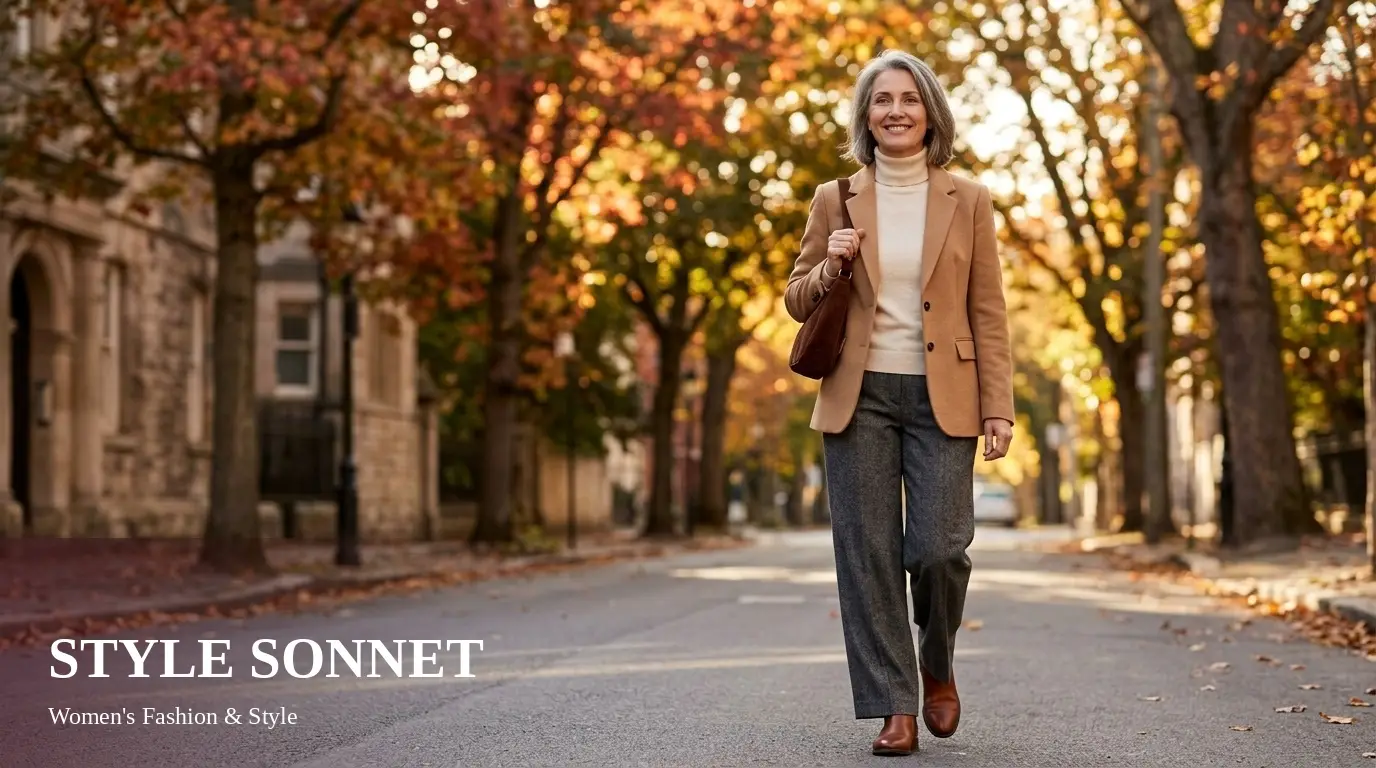
Fall fashion advice for women over 50 tends to land in one of two extremes: either it clings to trends built for twenty somethings, or it plays it so safe you end up looking exactly like everyone else at the grocery store. Neither one accounts for what actually works once you know your body and your closet.
The real challenge with fall outfits women over 50 face every year is the same: mornings start cold, afternoons warm up, and half your closet either runs too young or too shapeless to bridge that gap. A cardigan tossed over a tank isn’t a strategy. Neither is buying the same black blazer for the fifth fall in a row.
What follows are 21 specific combinations, not vague suggestions, built around pieces you can layer, remove, or swap as the temperature shifts through the day. Some lean elegant, some are built for errands, and each one gives you an actual move to make, not just a mood board.
Layer a Chunky Cardigan Over a Slip Dress
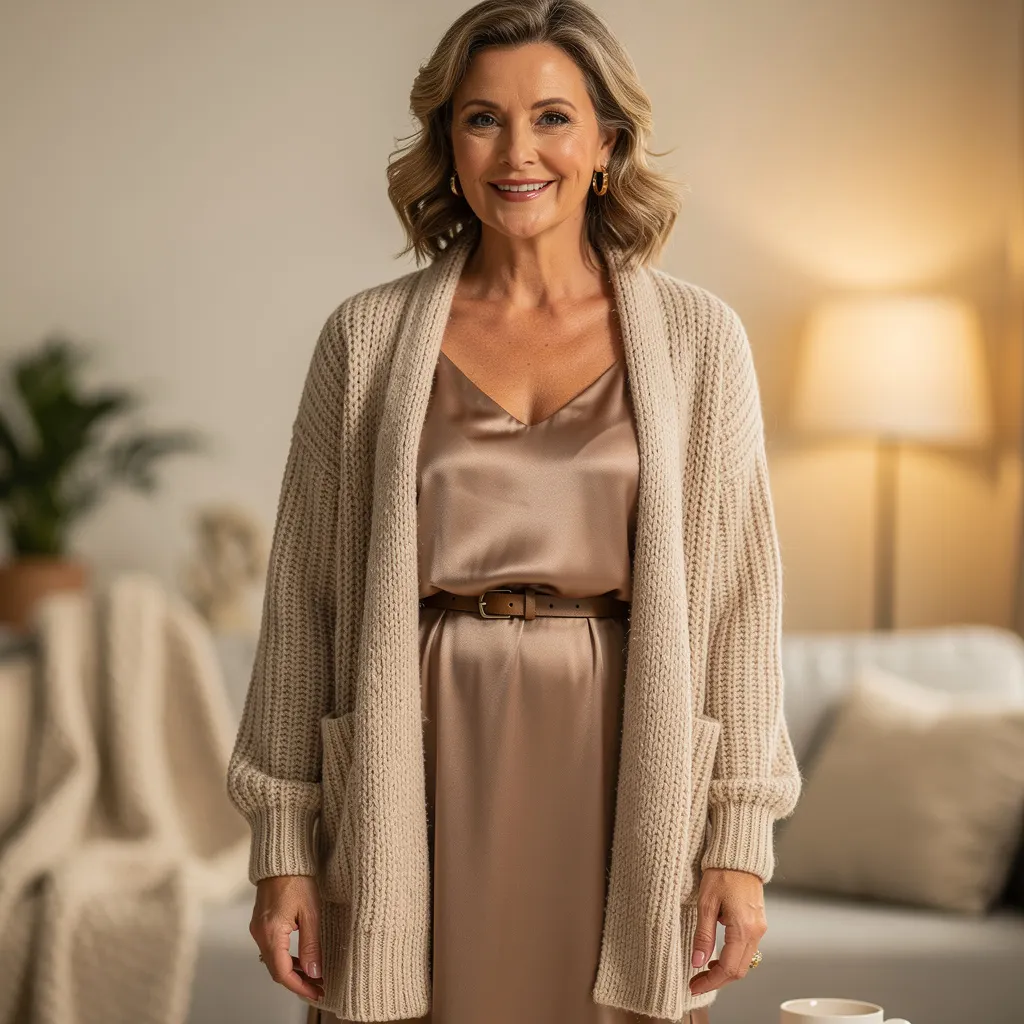
That slip dress you love disappears the second the temperature drops below 65, and a plain t-shirt underneath kills the whole look. The fix isn’t a coat, it’s a chunky knit cardigan left open over the dress, with the hem falling right at your knee or lower so the two lengths don’t fight each other.
Cinch it loosely at the waist with a thin belt if the cardigan runs boxy. This works especially well with dresses that have a bit of shine or texture, since the cardigan adds warmth without flattening the fabric underneath. Keep the shoes simple: a pointed flat or a low boot lets the layering do the talking.
A summer slip dress on its own, fine at noon but too cold by early evening.
A chunky cardigan left open over the same dress, warm enough for the temperature drop and still easy to move in.
Trade Ankle Boots for Over the Knee Boots When Your Jeans Are Slim
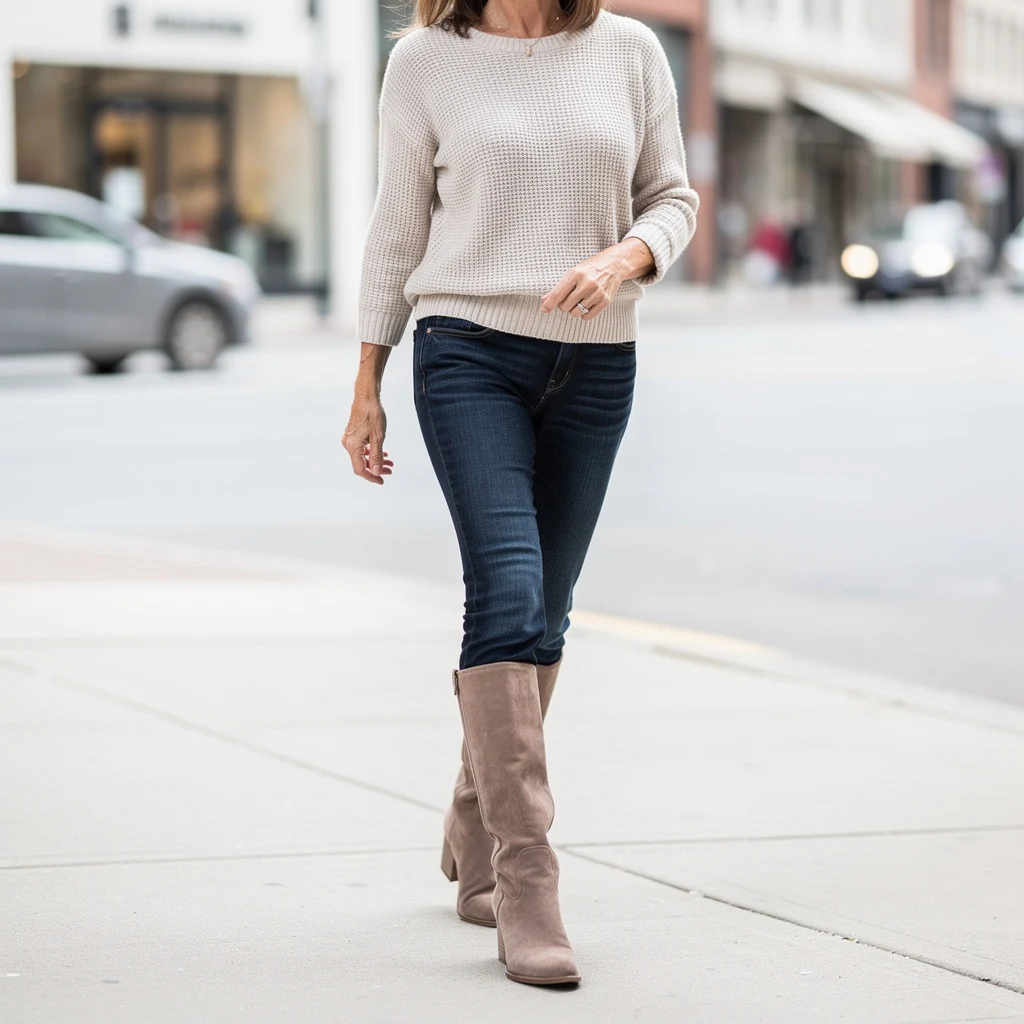
Swap your ankle boots for a pair that hits above the knee whenever your jeans are slim through the calf. Ankle boots cut the leg line right at its narrowest point, which shortens everything below the knee.
over the-knee boots do the opposite: they extend the line and make the leg look longer without changing anything else in the outfit. Stick to a boot in a matte leather or suede so it doesn’t compete with a busy sweater on top, and keep the heel low if you plan to walk more than a few blocks.
This one switch changes the whole silhouette of an outfit you already own.
| Ankle Boots | Over-the-Knee Boots |
|---|---|
| Cuts the leg line at its narrowest point. | Extends the leg line for a longer look. |
| Works with wider or cropped pants. | Best with slim or skinny jeans. |
Pick a Camel Wool Blazer Over Another Black One This Year

Black blazers get treated like the safe choice, but a camel or warm tan version works just as hard and photographs better against fall’s usual palette of rust, olive, and burgundy. It also doesn’t disappear into dark denim or black trousers the way a black blazer can.
Look for one in a mid-weight wool with a slight structure at the shoulder, since anything too soft will read more like a cardigan than a blazer. Wear it open over a simple top and let the color carry the outfit. One camel blazer covers more fall combinations than a second black one ever will.
Choose a mid-weight wool with structure at the shoulder.
Pair it with rust, olive, or burgundy pieces.
A soft, unstructured fabric that reads as loungewear.
Pairing it with another flat neutral on top.
Build One Fall Outfit Entirely in Shades of Rust
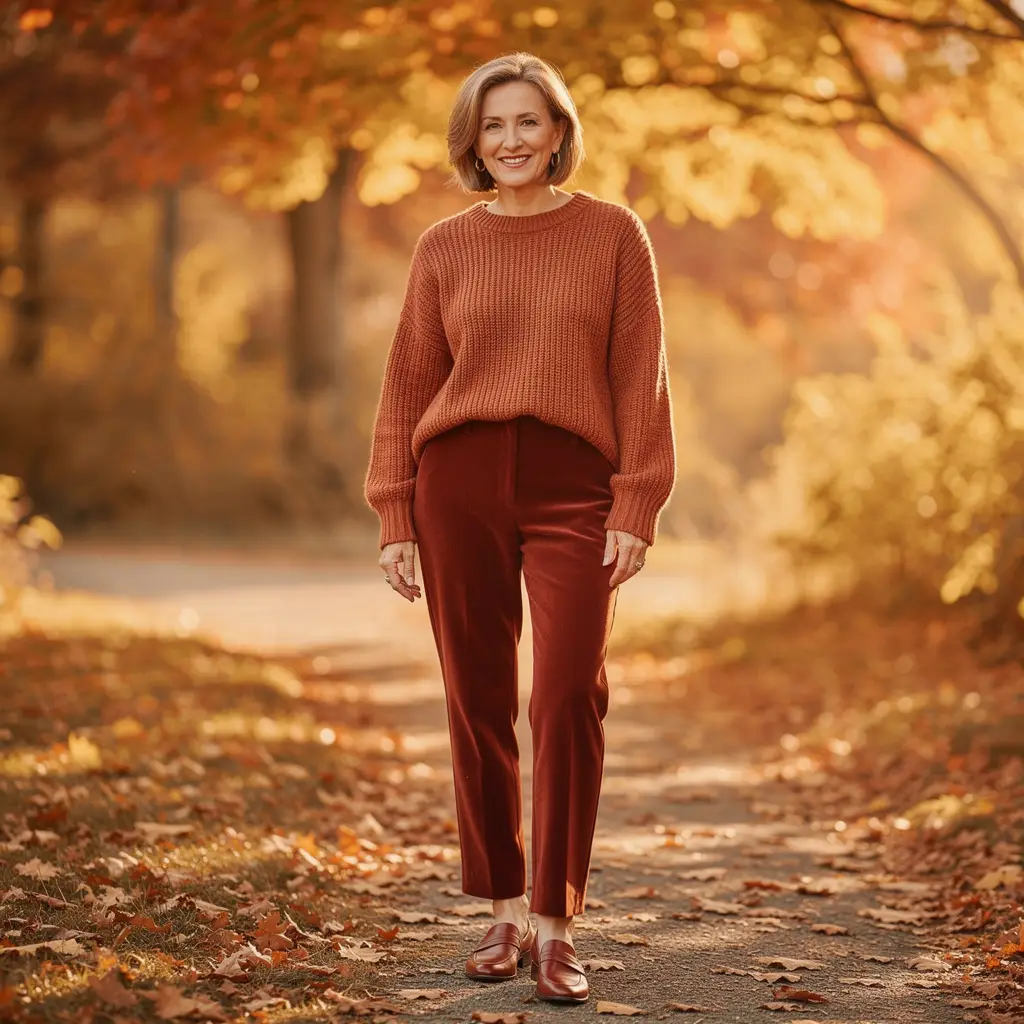
A monochrome outfit in rust, from a soft sweater down to suede loafers, reads as put together the second you step outside, and it takes less effort than coordinating three separate colors.
The trick is varying the shade slightly between pieces rather than matching them exactly, so a burnt orange sweater with terracotta pants still looks intentional instead of like a uniform. Stick to one texture change, like a knit top with a smooth pant, to keep the outfit from looking flat.
Add one grounding neutral, such as a brown bag or black boot, so the whole look doesn’t blur into a single block of color.
💡 Quick Tip
Vary the shade slightly between pieces instead of matching them exactly, and add one texture change so the outfit doesn’t flatten into a single block of color.
Put a Turtleneck Under Wide Leg Trousers, Not Skinny Jeans
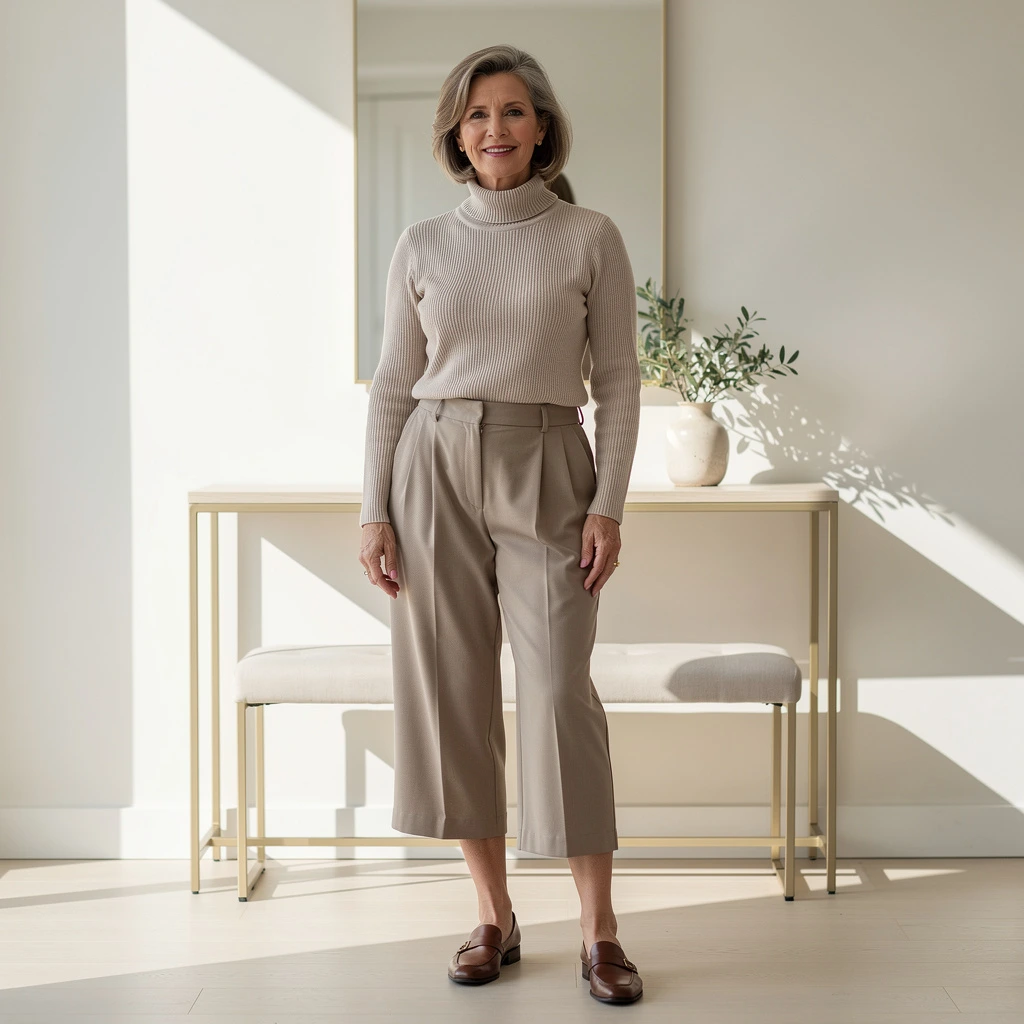
Standing in front of the closet on a chilly Tuesday morning, the usual move is a turtleneck with skinny jeans, but that combination piles all the volume up top while the legs stay narrow underneath.
Switch the bottom to a wide-leg trouser instead and the outfit balances out immediately, since the wider leg gives the fitted turtleneck somewhere to lead the eye. A cropped trouser that hits right above the ankle works especially well with a low boot or loafer.
This pairing also solves a practical problem: wide-leg trousers hide bulkier tights on the days that actually call for them.
Let One Plaid Scarf Be the Only Pattern in the Whole Outfit
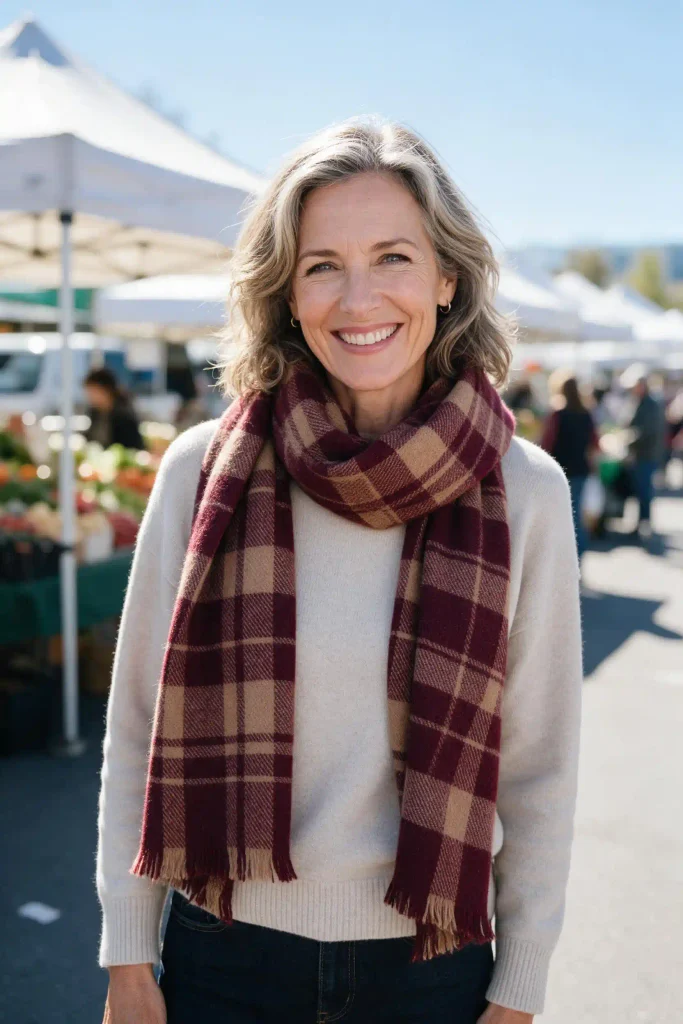
Mixing two patterns in one fall outfit is usually where the whole look falls apart, and a plaid scarf tossed over a striped sweater is the fastest way there. The easier route is picking one pattern for the entire outfit and building everything else around solid, matching tones.
A wool scarf in burgundy and camel plaid works well against a plain sweater and dark denim, since the scarf becomes the outfit’s one point of interest instead of competing with anything else.
Keep jewelry minimal here. One patterned piece already does the job a whole stack of accessories usually tries to do.
Pick a plain sweater or top in a solid neutral.
Add the patterned scarf as the outfit’s only print.
Match one accessory to a color already in the scarf.
Wear a Leather Jacket Open Over a Midi Dress Instead of Buttoned Tight
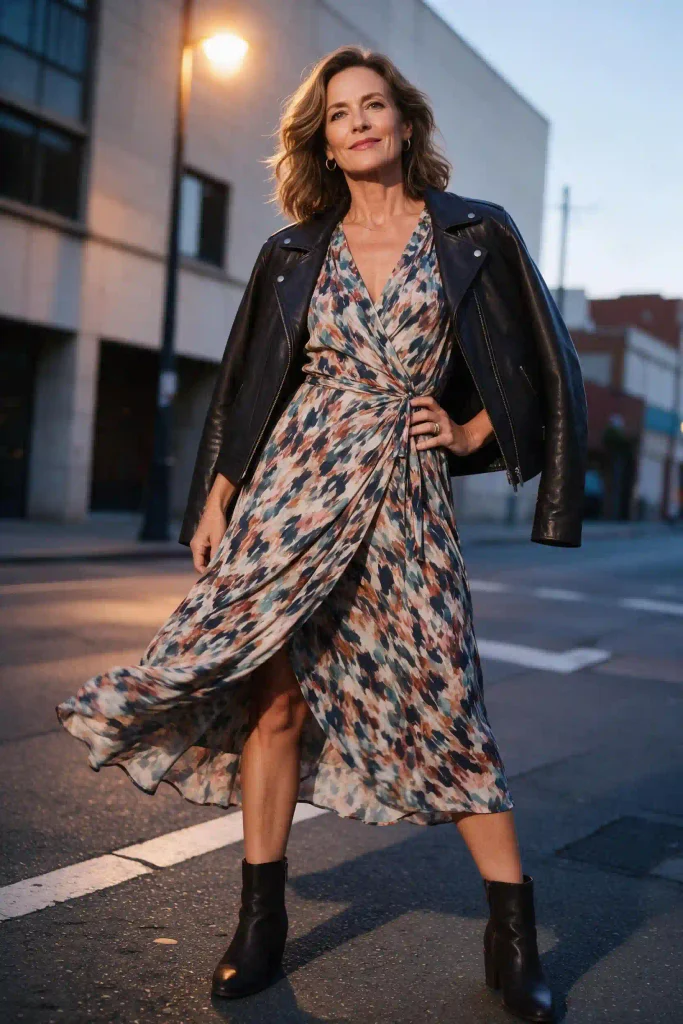
A leather jacket left open over a flowy midi dress creates a mix of hard and soft textures that a buttoned-up jacket never manages on its own. The trick is leaving at least the top two buttons undone so the dress shows through and softens the jacket’s structure.
This works especially well with dresses that have some movement, like a wrap style or a gathered waist, since the jacket adds shape without stiffening the whole outfit.
A pair of ankle boots underneath keeps it grounded rather than costume-like. It reads polished enough for dinner but relaxed enough for an afternoon out.
Leave the jacket open. Buttoning it hides the dress and stiffens the whole outfit.
Choose a Jewel Toned Outfit Over Your Usual Neutrals for Evening Plans

Neutrals are the easy choice for daytime, but they can read flat under evening lighting, especially against candles or dim restaurant light.
A jewel tone like emerald, sapphire, or deep plum catches light in a way beige or gray simply doesn’t, and it doesn’t take any extra effort beyond swapping the color of one piece.
A jewel toned blouse under a black blazer, or a single emerald dress with neutral accessories, does more for an evening outfit than an entirely neutral look ever will. Save the boldest color for whichever piece sits closest to your face.
What to gather
Swap Your Heavy Coat for a Longline Cardigan Coat on 50 Degree Days
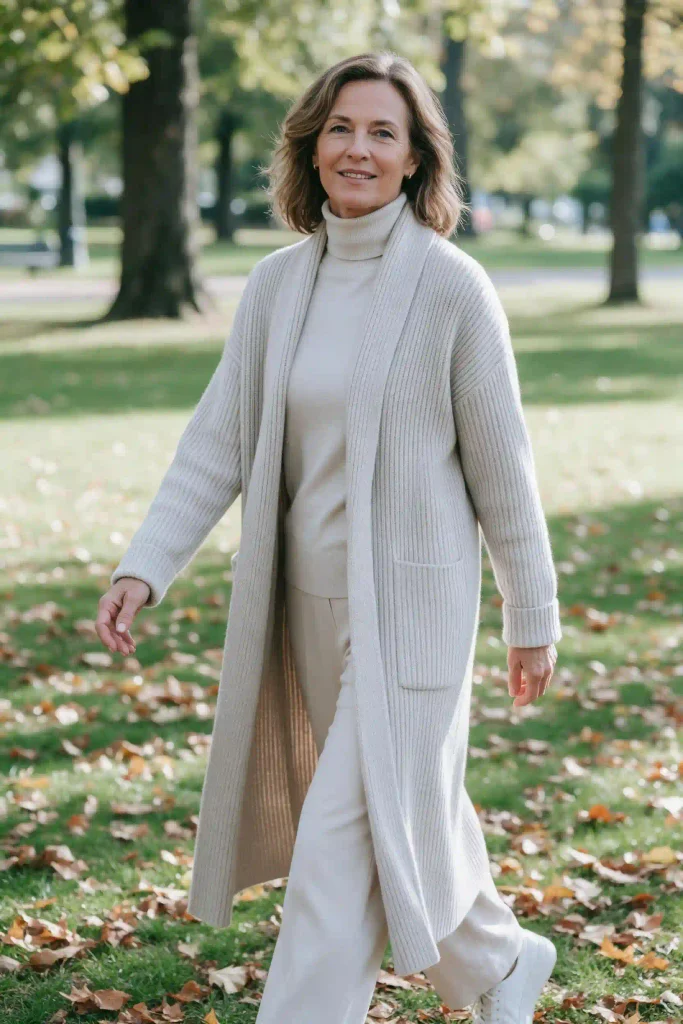
There’s a stretch of fall, usually somewhere in the 50s, where a heavy wool coat feels like overkill but a regular cardigan doesn’t cut it either.
A longline cardigan coat, the kind that falls past the hip with no buttons, sits right in that gap. It has enough structure to read as outerwear instead of just a sweater, but none of the bulk of an actual coat.
Look for one in a ribbed or waffle knit rather than a thin cotton blend, since the weight matters more than the length here. It layers over a turtleneck on colder mornings and works alone once the afternoon warms up.
Crop Your Wide Leg Pants Instead of Letting Them Puddle Over Your Boots
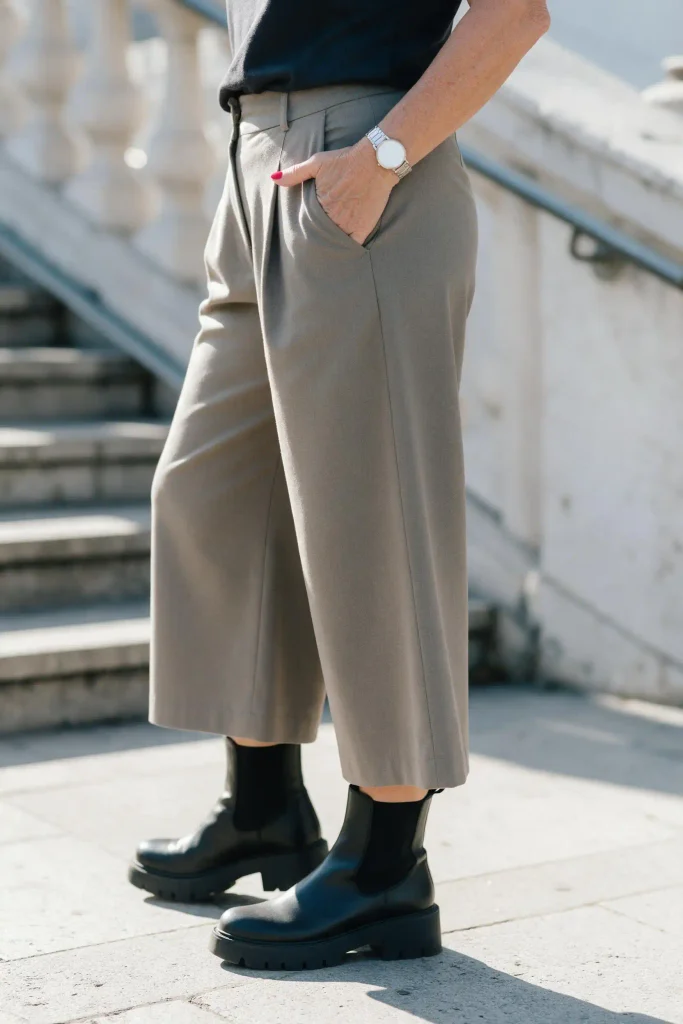
A wide-leg pant that pools over the top of your boots adds visual weight right where you don’t want it, at the ankle. The simple fix is choosing a cropped length that hits just above the ankle bone, so the boot shows and the leg line stays clean.
This matters more with a chunkier boot, since fabric bunching on top of an already bulky shoe makes the whole leg look shorter. A straight or slightly flared crop works better here than a skinny ankle pant, which can look mismatched against a wide leg top. Hem length is worth altering if the pair you own runs long.
- ▸Shows off the boot instead of hiding it.
- ▸Keeps the leg line clean and long.
- ▸Avoids fabric bunching at the ankle.
Add One Cognac Tote to Warm Up an Otherwise Cool-Toned Outfit
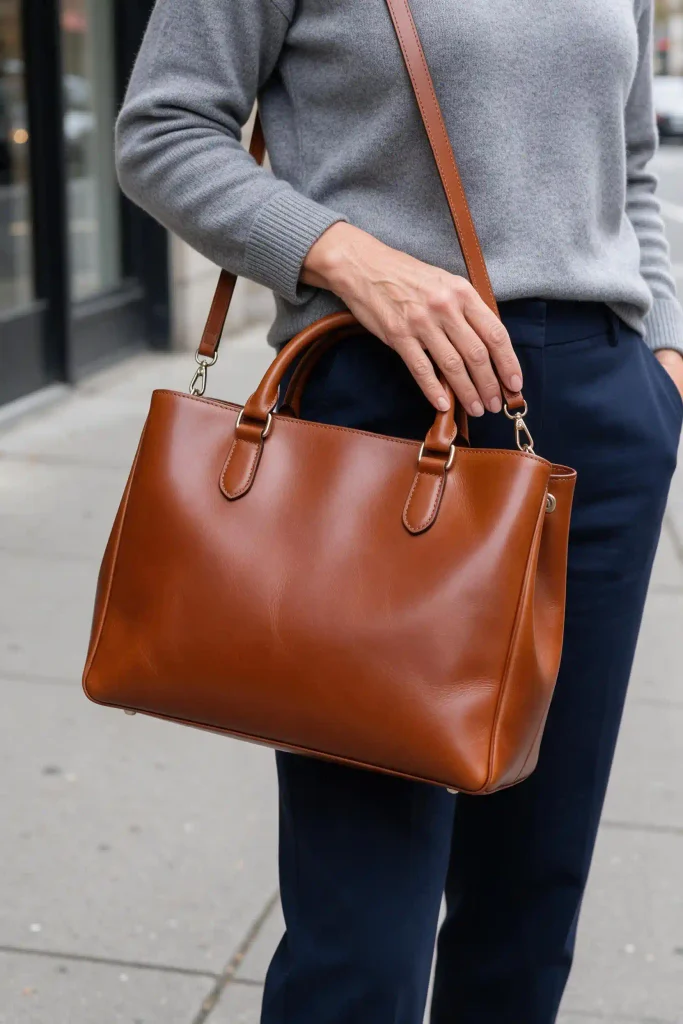
Cool toned outfits, all grays and blues and black, often need one warm anchor to keep them from looking flat under fall light. A cognac or camel tote does that job better than a scarf or jewelry, since bags sit at eye level in most outfit photos and carry more visual weight than people expect.
Choose a structured shape over a slouchy one, since structure reads more intentional against soft knitwear. This works with almost any cool-toned combination, gray sweater and navy trousers, even an all black look benefits from the contrast. Skip the black bag that already matches everything else.
Gray sweater, navy trousers, and a black bag that blends into the rest of the outfit.
The same outfit with a structured cognac tote that gives the whole look a warm focal point.
Layer a Turtleneck Under a Jumper Dress Instead of Going Bare Armed

It’s easy to assume a jumper dress just needs a jacket once it’s cold, but bare arms underneath let in more chill than most people expect, and piling a bulky cardigan on top just hides the dress.
A thin, fitted turtleneck worn underneath solves both problems at once, adding warmth without changing the shape the dress was designed to have. Choose a fitted style rather than a chunky one so the dress silhouette still shows through.
This combination also works layered under a blazer on cooler days, no cardigan required.
| Bare Arms | Turtleneck Underneath |
|---|---|
| Cold within minutes outdoors. | Warm without covering the dress. |
| Needs a bulky cardigan as backup. | Layers cleanly under a blazer too. |
Choose Suede Over Leather for a Softer Take on Fall Texture
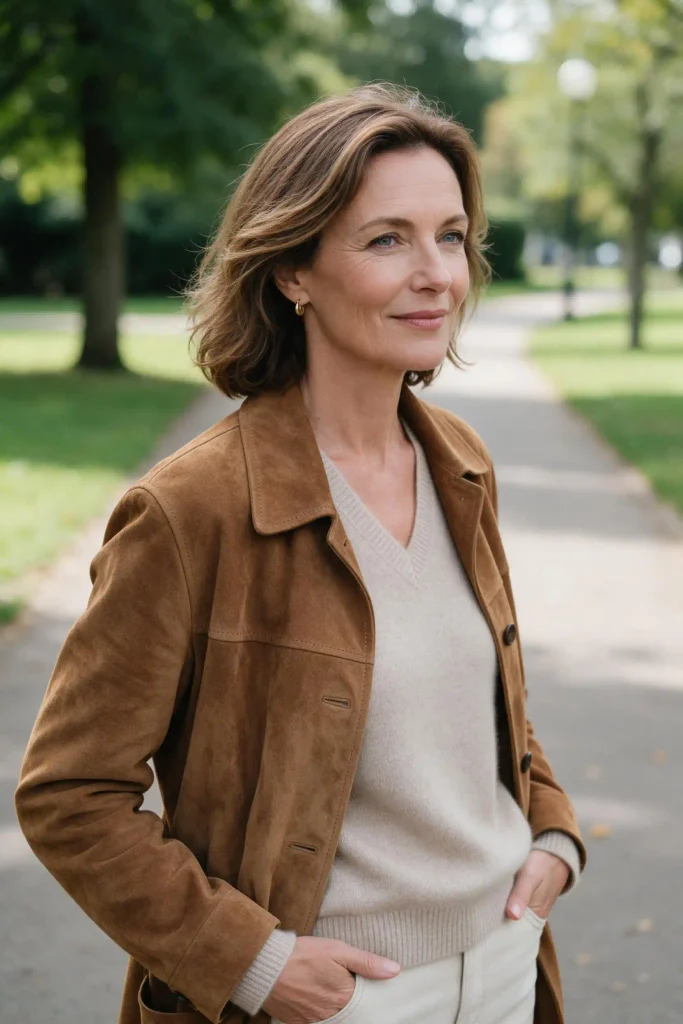
Reach for suede instead of leather this fall when you want texture without the shine leather tends to catch under bright light. Suede reads softer and more matte, which pairs especially well against wool and cashmere, fabrics that can look slightly stiff next to leather.
A suede jacket, boot, or bag adds the same structural element leather would, just quieter. The tradeoff is care: suede shows water spots faster and needs a protector spray before its first wear. Reserve it for drier days if rain is in the forecast.
Spray it with a suede protector before the first wear.
Pair it with wool or cashmere for texture contrast.
Wearing it out in unexpected rain.
Storing it away without a suede brush.
Pair a Printed Midi Skirt With a Plain, Fitted Sweater
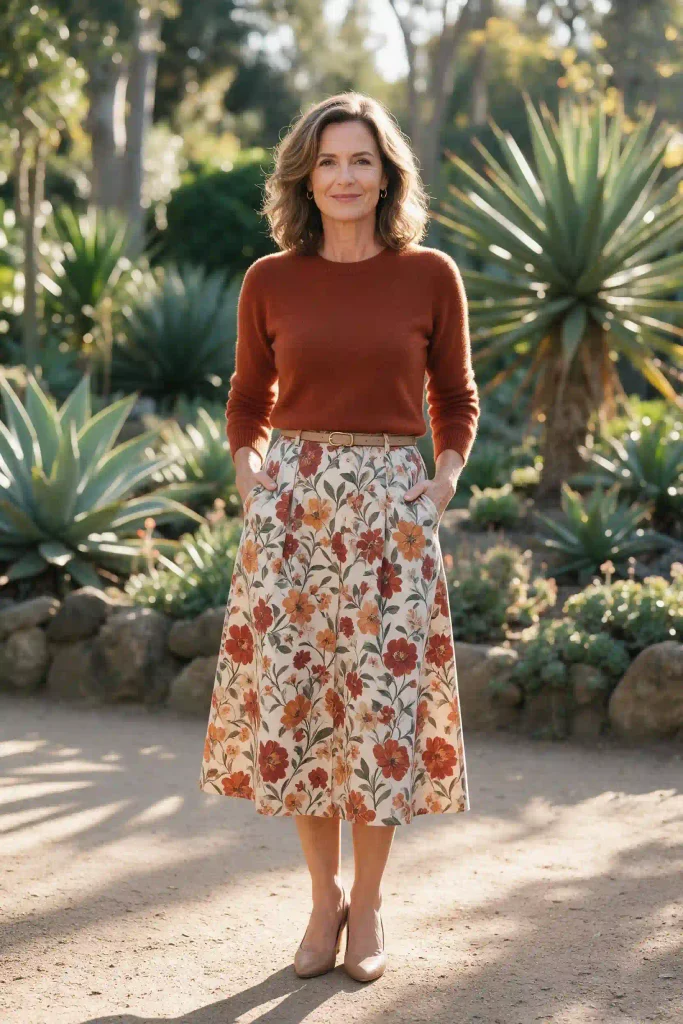
A plain fitted sweater tucked into a printed midi skirt lets the skirt do all the visual work instead of splitting attention between two patterns. This combination flatters more body types than a print on print pairing, since the fitted top defines the waist before the fuller skirt begins.
Pick a sweater color that’s already present in the skirt’s print, so the two pieces read as coordinated instead of accidental. A thin belt at the waist sharpens the transition point even further. This pairing works just as well with a floral, plaid, or paisley print.
💡 Quick Tip
Pick your sweater in a color already found in the skirt’s print so the outfit reads as coordinated, not accidental.
Add a Structured Vest Over a Button Down for Shape Without Bulk

That button down sitting in the back of the closet since summer doesn’t need retiring for the season, it just needs a structured vest layered over it to add shape without piling on bulk.
A vest does what a full sweater or blazer can’t: it defines the waist and shoulders while leaving the sleeves free to roll up or push back. Wool or tweed vests read more fall-appropriate than a quilted style, which leans more casual.
This combination moves from a desk to a dinner reservation with just a shoe change. It’s one of the most efficient repeat pieces in a fall closet.
Pair Straight Leg Jeans With a Cropped Puffer Instead of an Oversized One
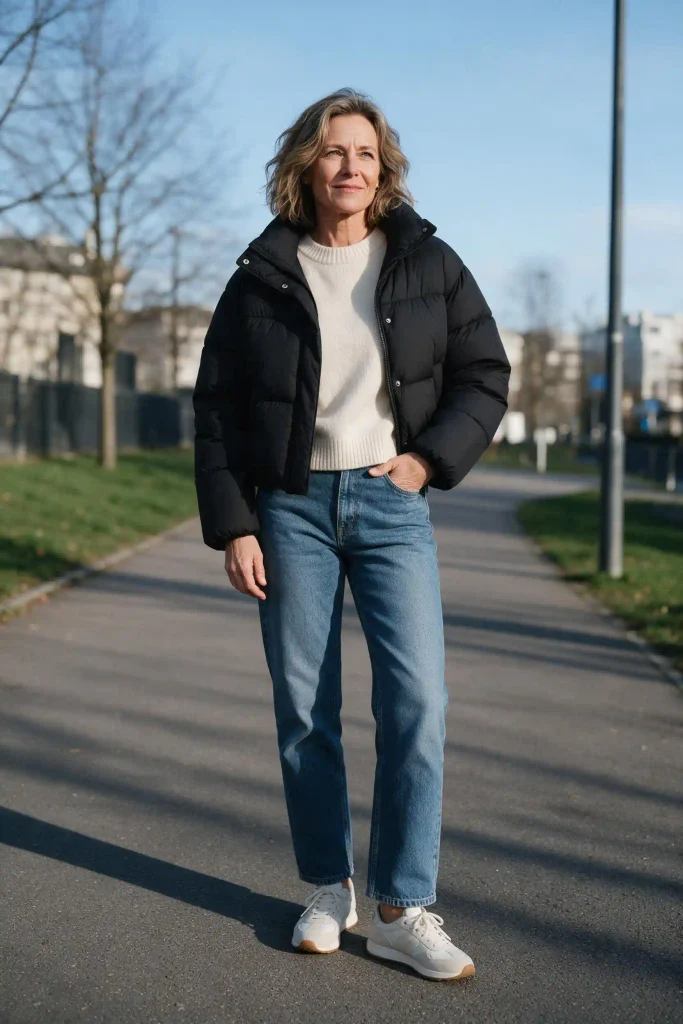
An oversized puffer paired with straight leg jeans tends to swallow the waist and flatten the whole outfit into one shape. A cropped puffer fixes that by stopping right at the hip, which keeps a defined waistline visible even under a bulky jacket.
Straight leg jeans balance the proportion from there, since a skinny jean under a puffer can look top-heavy.
Choose a puffer that stops at the hip, not below it.
Pair it with a straight or slightly flared jean.
Add a low boot to keep the proportions grounded.
Update a Matte Fall Outfit With One Metallic Accessory, Not Three
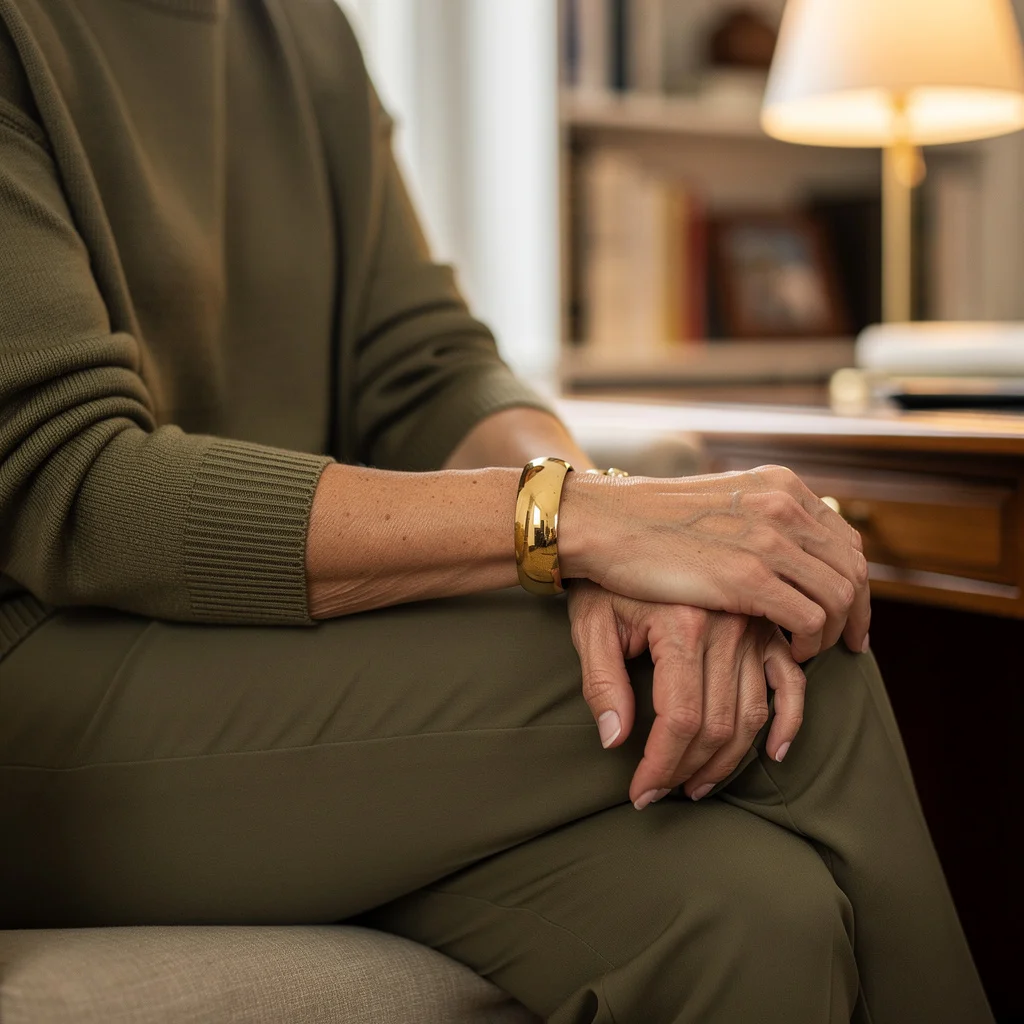
Metallics catch light in a way matte fall fabrics like wool and suede don’t, which is exactly why one gold cuff or a single pair of hoop earrings can lift an outfit that otherwise reads flat.
The mistake is reaching for three metallic pieces at once, a bag, jewelry, and shoes, which starts to look more like costume jewelry than a considered detail.
One metallic piece reads as a detail. Three reads as costume jewelry.
Choose a Wrap Cardigan Instead of a Blazer for Softer Structure
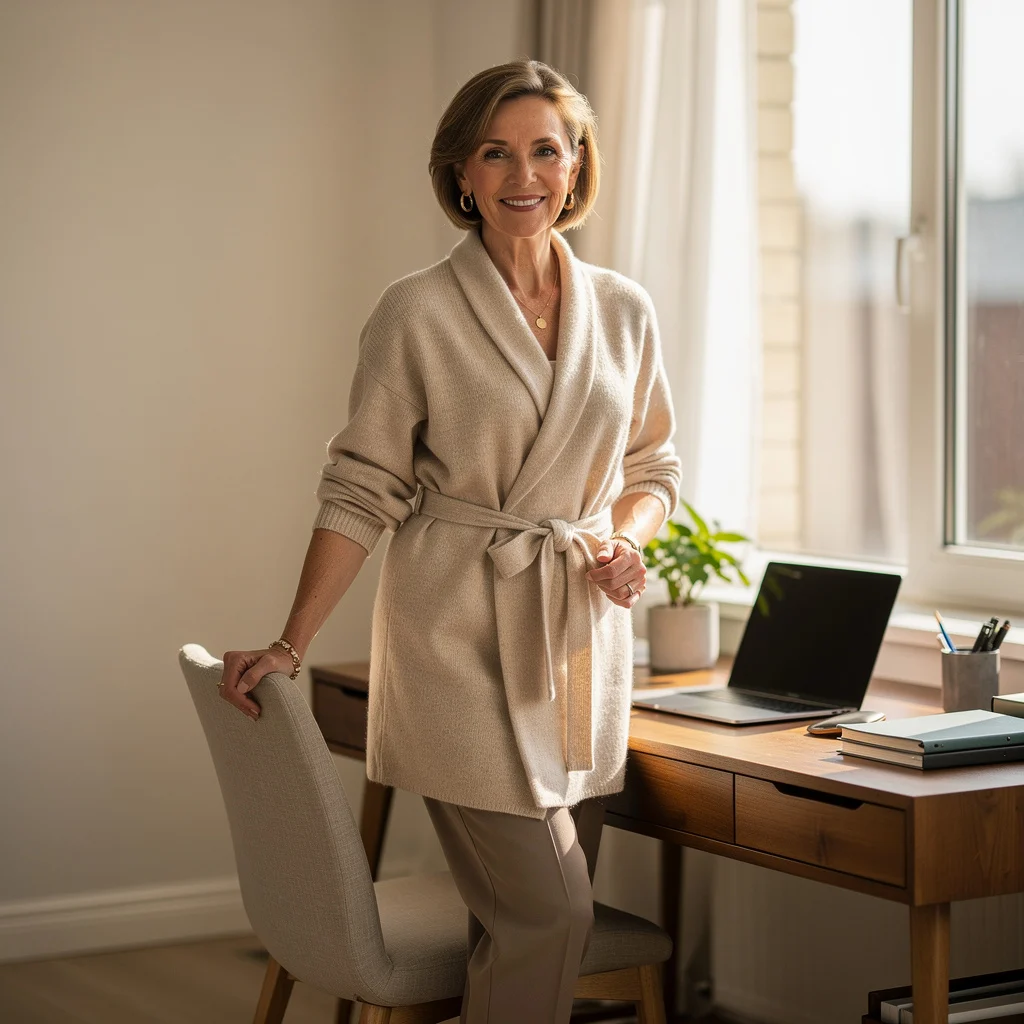
A wrap cardigan tied at the waist gives an outfit shape the same way a blazer would, just without the stiffer shoulders and structured lapel. It’s a softer alternative for days when a blazer feels too formal but a plain cardigan feels too shapeless.
Look for one long enough to tie properly rather than one that just overlaps loosely in front.
What to look for
Build Depth With Tonal Shades of Brown Instead of Mixing Unrelated Colors
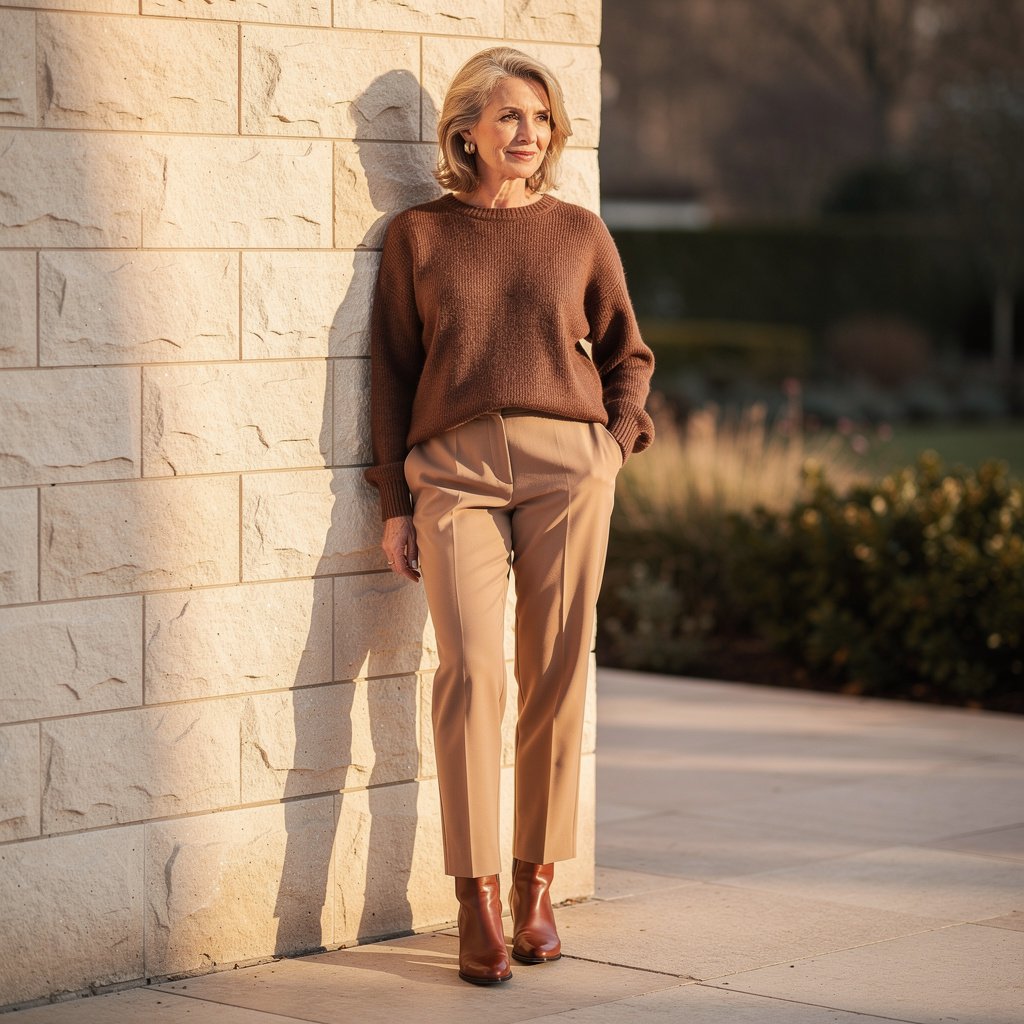
Mixing three or four unrelated colors in one outfit takes real skill to pull off well, and most mornings there isn’t time for that kind of color theory.
Staying within one family, chocolate, camel, and cognac all together, creates depth without the guesswork, since every piece already relates to the others by default.
Add a Beret to Update a Basic Sweater and Jeans Outfit
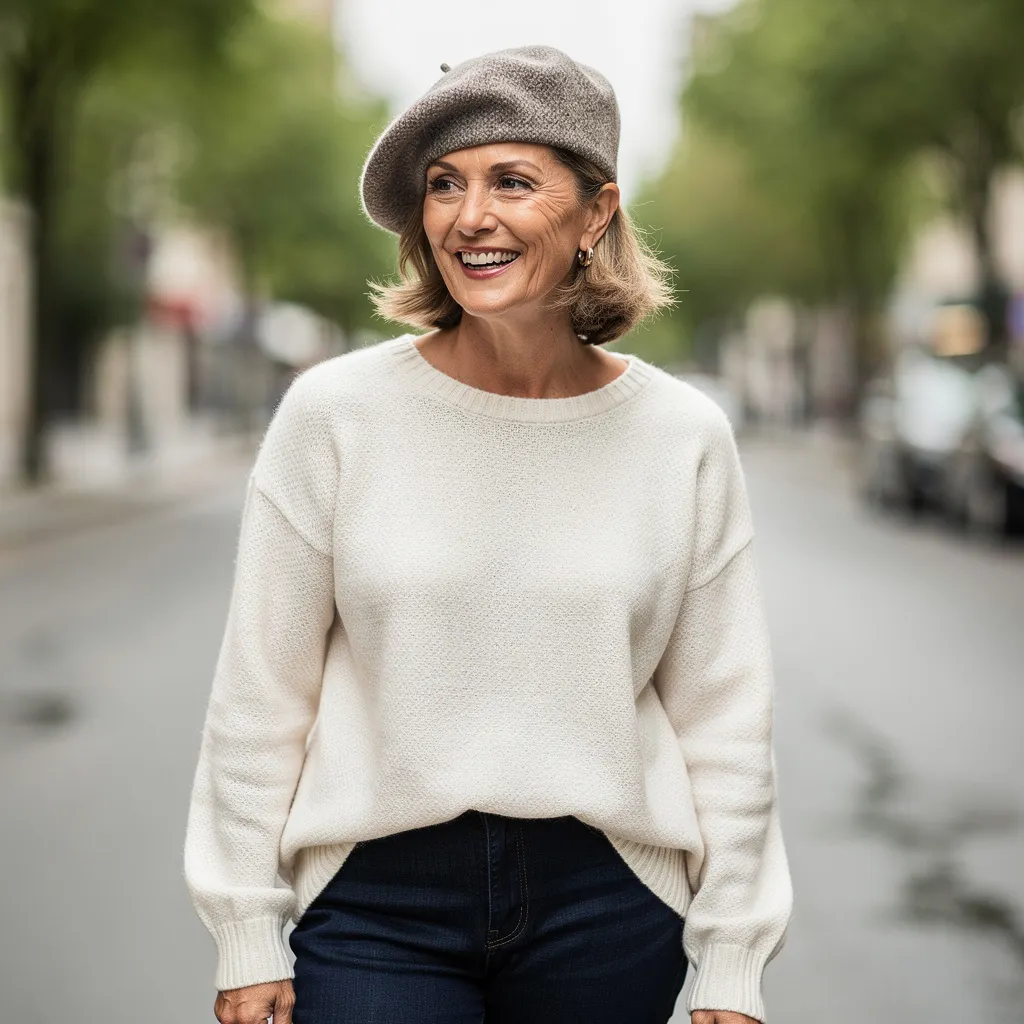
The same sweater and jeans combination worn all week starts to feel invisible by Thursday, and a beret is one of the few accessories that changes the whole feel of an outfit without touching the clothes underneath. Worn at a slight angle rather than straight on, it reads as intentional instead of costume-like.
- ▸Tilt it slightly rather than wearing it flat and centered.
- ▸Pick a wool version over a felt one for fall weight.
- ▸Keep hair loose or in a low bun so it doesn’t compete.
Wear Knee High Boots With a Dress Instead of Tights for Cleaner Lines
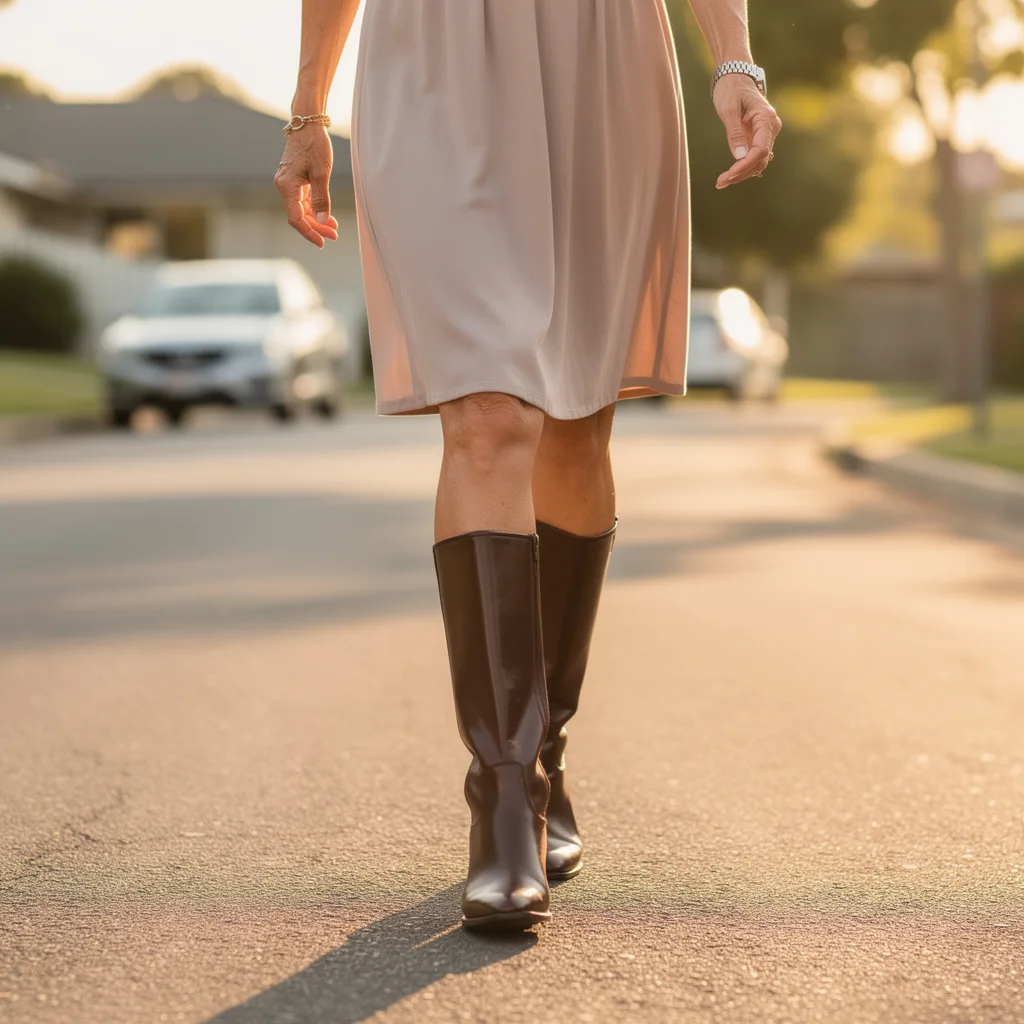
Tights under a dress can bunch at the knee and add a visible line right where a boot meets the leg. A knee high boot worn without tights skips that problem entirely, since the boot itself becomes the coverage and the leg line stays unbroken from hem to heel.
Tights bunching at the knee where the boot line cuts across.
One unbroken line from hem to heel, boot and dress reading as a single silhouette.
Conclusion
Fall dressing over 50 isn’t about chasing trends or hiding under bulky layers, it’s about knowing which small swaps actually change how an outfit works. A cropped puffer instead of an oversized one, a cognac tote instead of black, knee-high boots instead of tights: none of these require a closet overhaul, just a better eye for the combination.
The 21 fall outfits above give you real starting points, whether you’re dressing for the office, a dinner out, or just a walk with cooler air finally back. Pick two or three that fit pieces you already own, and build from there before buying anything new.
Save this list for the next time your closet feels stuck between seasons.
