
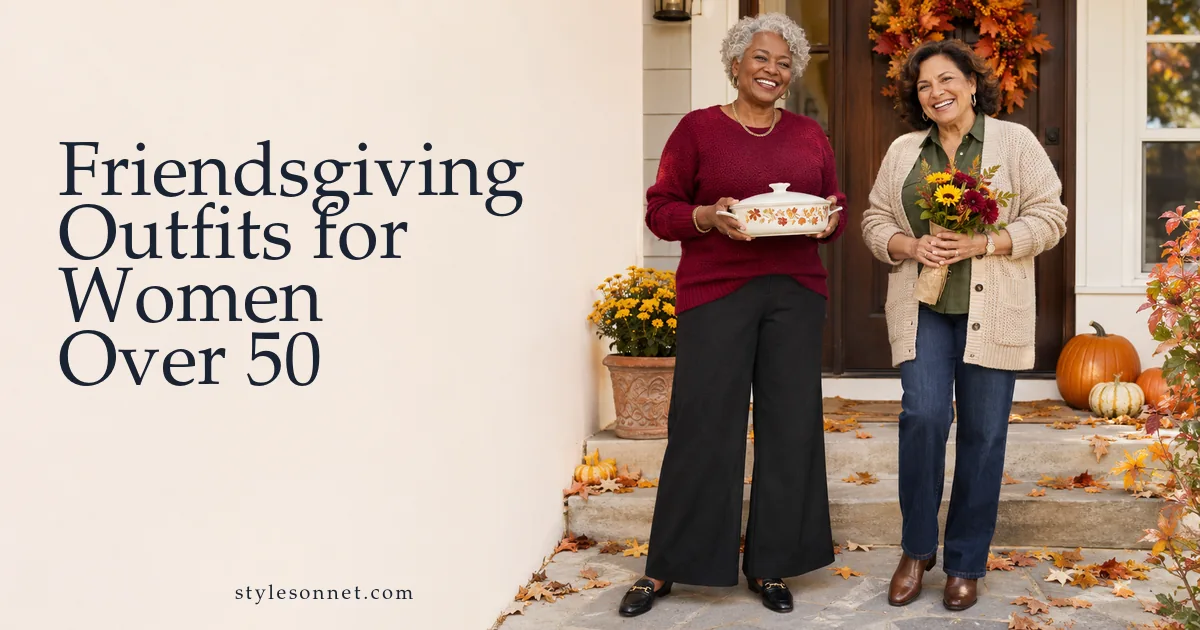
Friendsgiving is not a smaller copy of family Thanksgiving. It is a gathering of friends, often potluck style, often in a home that is not yours, with a looser plan moving from kitchen to living room to a walk. Learning how to dress for friendsgiving over 50 means dressing for that evening, relaxed enough to laugh, carry a dish, and sit on a sofa, yet polished enough for photos.
The aim is a polished look that belongs with friends, not a formal outfit borrowed from elsewhere and not a lounge outfit that looks unfinished in a photo. Friends notice effort, but they also notice when you look uncomfortable or overdressed. This guide walks through the decisions, from the invitation to the evening, so you build one outfit for venue, food, photos, and people.
Work through the steps and check the outfit at home before you leave. A Friendsgiving outfit that passes doorway, dish carrying, and group photo tests will feel easy all evening, so you spend the night with friends, not your clothes.
Three easy Friendsgiving outfits to try
- Relaxed potluck at home: A fine-gauge burgundy knit, dark straight jeans, loafers and a light cardigan you can remove while helping in the kitchen.
- Restaurant Friendsgiving: A soft wrap midi dress, opaque tights, low ankle boots and a small shoulder bag feel polished without being formal.
- Backyard or patio gathering: Pull-on ponte trousers, an ivory crewneck, a wool coat and grippy ankle boots handle chilly air and indoor mingling.
If the invitation feels unclear, compare casual versus dressy Thanksgiving outfits. Taking a train or staying overnight? Use this Thanksgiving outfit packing guide to keep your look ready on arrival.
1. Read the Invitation Like a Dress Code
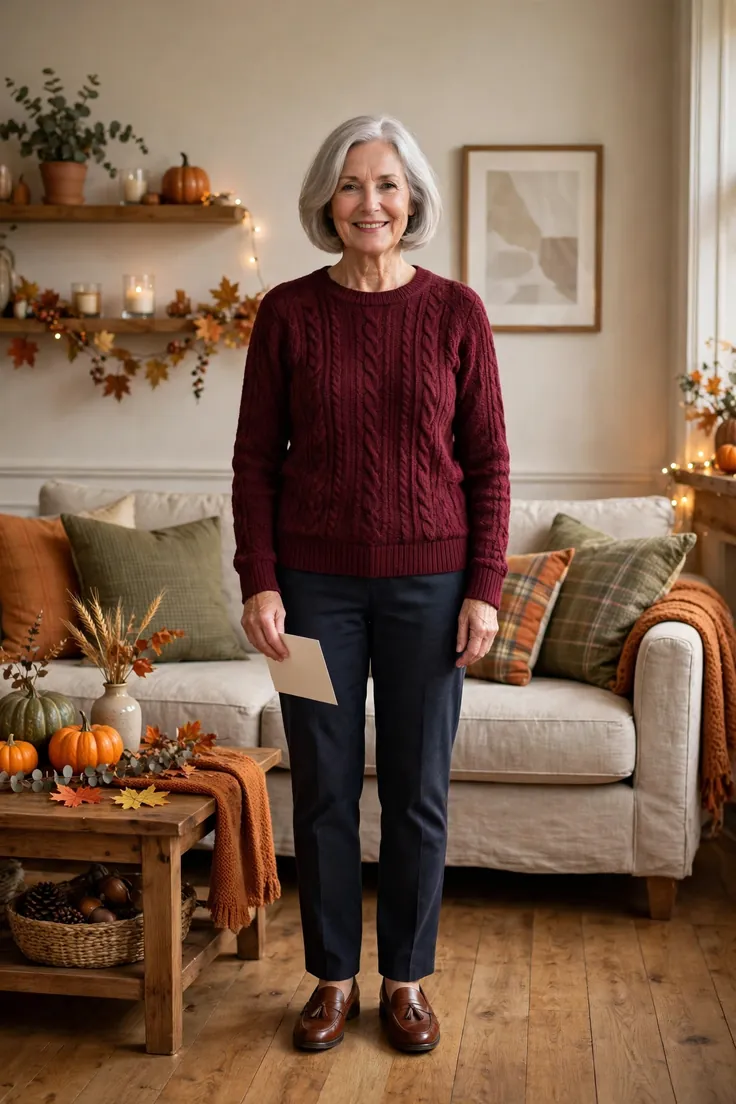
Read the invitation closely instead of copying last year. Words like come as you are, a theme, a restaurant booking, or a dish request each signal a different polish level. Note the time, place, food, and shoe rules, since each detail changes the outfit.
Keep that note beside you while you choose. If the invitation says nothing about dress, treat that as useful information too. It usually means comfort and personality matter more than formality, so lean friendly and relaxed.
2. Ask the Host One Direct Question
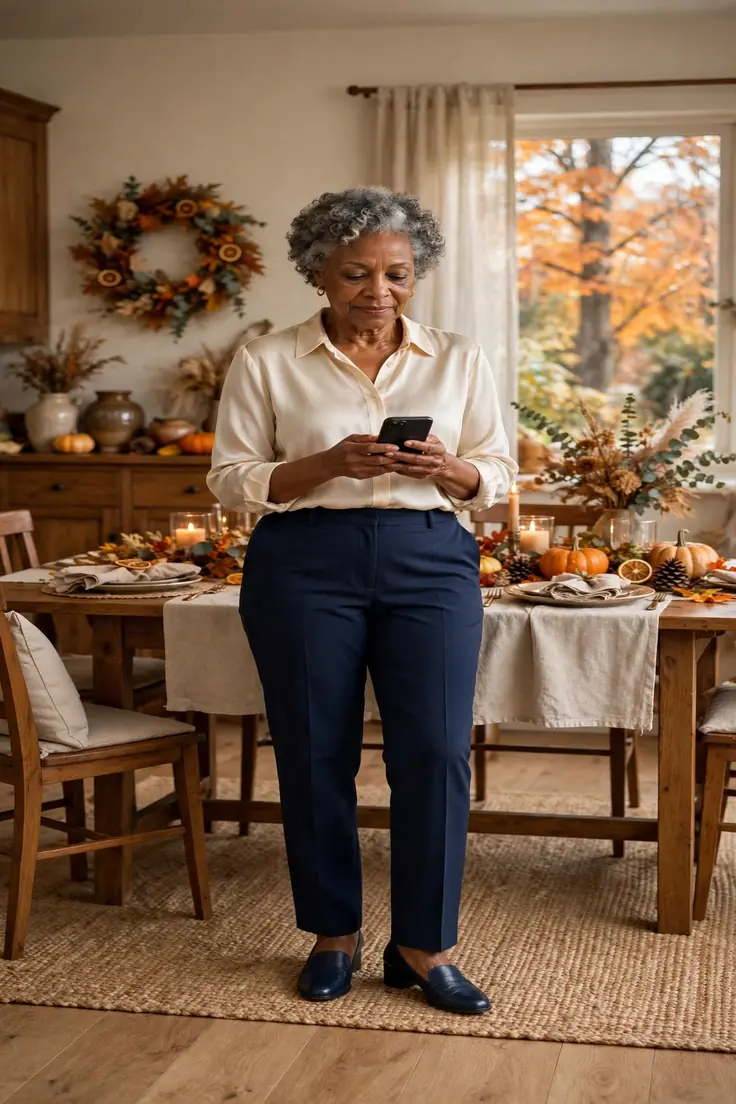
Ask one clear question instead of guessing or collecting different answers from friends. Try what are most people wearing, or is this a home or restaurant evening. Hosts welcome one direct question because it shows you care.
Ask early, not on the day, so you have time to choose calmly. Note the answer in your own words, such as home and relaxed or backyard and warm layers, and let it guide every later step. A host answer beats any general style rule.
3. Work Out the Venue Before You Choose
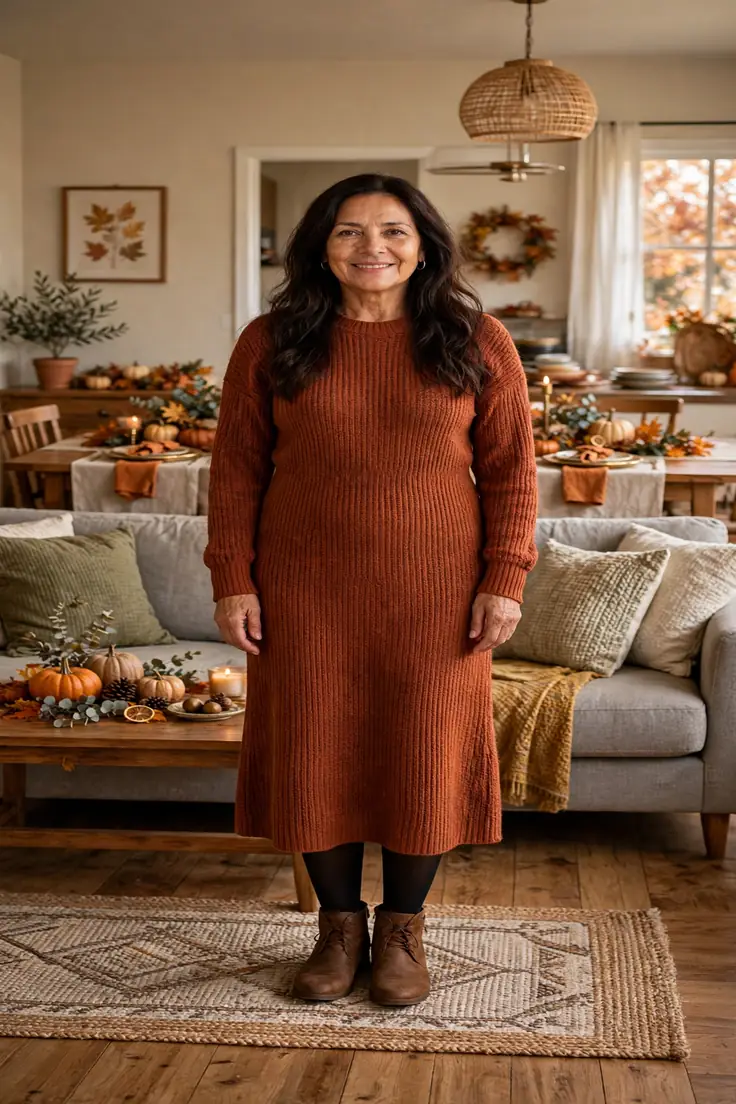
A home, restaurant, bar, and backyard each need a different outfit, even with the same guests. A home evening calls for softer shoes and easy layers, while a restaurant calls for a cleaner line, a smaller bag, and shoes for smooth floors.
Decide the venue first, then picture the rooms you will actually use. Think about the doorway, dining table, sofa, and way outside, and choose an outfit that moves through them without a change. Once the venue is clear, later choices get simpler.
4. Check the Weather and the Travel Time
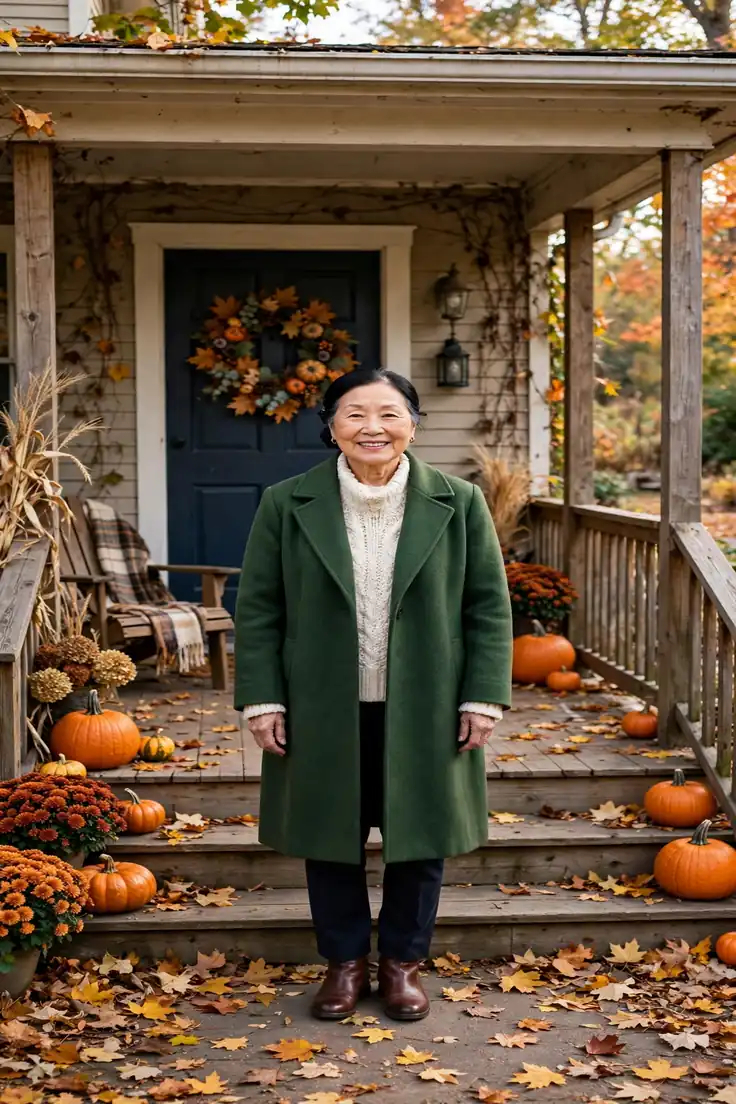
Check the forecast for arrival and late evening, not only midday. A cold porch, rainy walk, or warm crowded living room can change your layer and shoes. A short drive and a long walk home also call for different coats and shoes.
Plan the coat and shoes for the coldest and longest part of the trip, not the warmest moment inside. If the evening runs late, keep a warm layer ready for the trip home, so you do not end the night cold with an unplanned coat.
5. Set Your Festive Level in Advance

Decide your festive level before opening the closet. For Friendsgiving, festive can mean one rich autumn color, one soft sparkle in an earring, or one polished layer. It does not need a themed sweater or a full holiday outfit.
Write your choice in one sentence, such as burgundy sweater with gold earrings, or navy dress with a camel coat. Use it as a filter: if a piece does not support that sentence, leave it out. The result looks calm and festive in photos.
6. Audit Your Closet Before You Shop

Look in your own closet before buying anything new. A loved knit, well fitting dark trousers, an easy midi skirt, and a trusted coat are often enough. A new piece should fill a real gap, not replace a good outfit you already own.
Lay out three possible bases and compare them in daylight, since a base can behave differently on you than on a hanger. Choose the one you feel relaxed in, then add only what the evening needs. You will look like yourself, only more festive.
7. Choose a Base That Moves With Friends

Choose a base for greeting friends, sitting on chairs, standing for long chats, and moving rooms without adjusting anything. A soft knit with dark trousers, a midi dress with tights, or a knit top with a midi skirt all work when the fit is easy.
Test the base in motion at home, not only standing still. Walk, sit on a low sofa, stand again, and reach for a table item. If anything pulls or needs smoothing, change the base now. It must keep up with a moving evening.
8. Choose a Top That Works at a Potluck Table

A potluck table asks more of a top than a served dinner. You may lean over dishes, pass plates, and help clear, so choose a secure neckline, sleeves that stay put, and splash resistant fabric. A fine knit or blouse with a camisole works well.
Avoid long loose sleeves near hot dishes, a neckline that opens as you lean, or a light front if you serve gravy or sauce. A top that survives serving survives the evening, so you will not spend the night guarding your clothes.
9. Choose Bottoms You Can Carry a Dish In
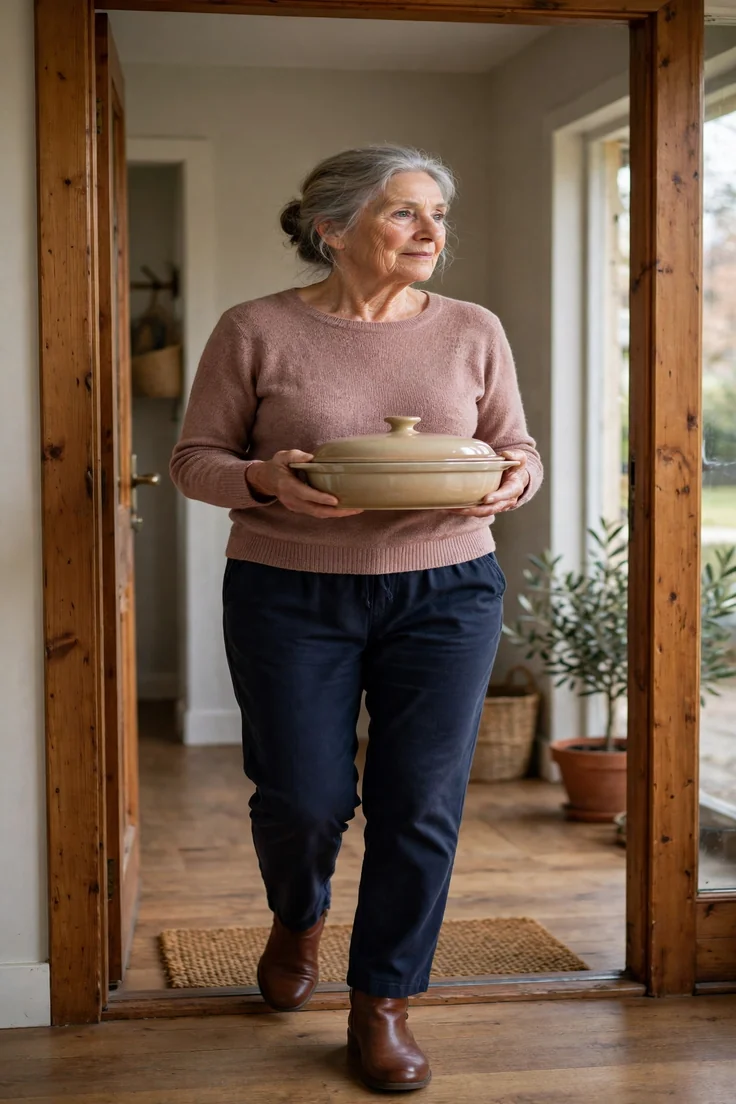
Choose bottoms that let you carry a dish with both hands, walk through a doorway, and sit without a struggle. Dark trousers, a midi skirt with room to walk, or dark jeans all work when the leg moves freely.
Test the bottom with your hands full, even if you only pretend to carry a dish at home. Walk, turn, sit, and stand again, and notice whether waist, hem, or shoe needs attention. If carrying changes the outfit, change the bottom.
10. Add a Dress Alternative You Can Sit In
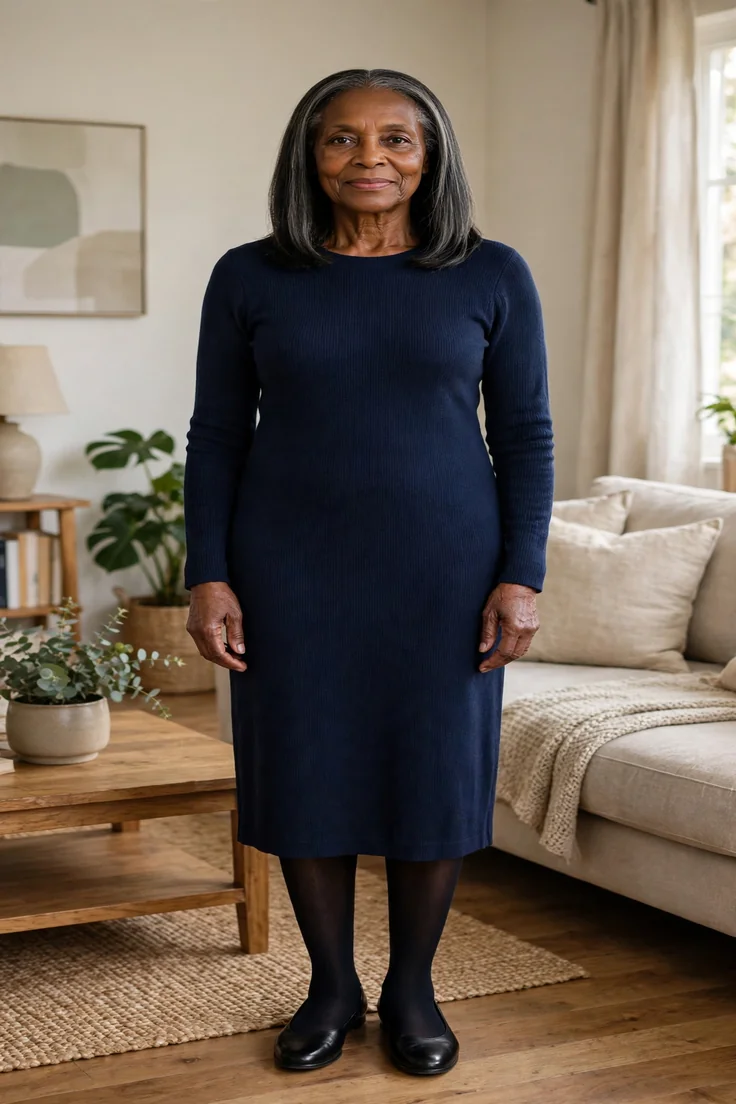
If you prefer a dress, choose one that sits well on a sofa, dining chair, and bar stool, since Friendsgiving seating is rarely uniform. A midi knit dress, secure wrap dress, or soft A line dress works when the hem falls cleanly as you sit.
Sit in the dress in three different seats at home and check the neckline as you lean forward to talk. A dress that needs constant smoothing will distract you, while one that falls cleanly lets you relax with friends.
11. Build a Middle Layer for a Friend's House

A friend's house rarely stays one temperature, so build a middle layer you can remove indoors and replace without fuss. An open cardigan, soft blazer, or knit jacket works when the top underneath already looks finished alone.
Choose a layer that folds or hangs easily near the door and does not wrinkle badly when you sit. If the layer is the only thing making the outfit work, it will fail in a warm room, so check the top alone first.
12. Choose a Coat You Can Hang Without Help

Choose a coat that fits over your full outfit, closes comfortably, and hangs easily on a hook, chair, or crowded rail. A relaxed wool coat, soft wrap coat, or roomy dress coat works when sleeves slide over your layer without bunching at the shoulders.
Plan where the coat will go on arrival, and keep phone and keys in a pocket or small bag you can reach easily. A coat that is easy to hang and find again saves an awkward doorway moment and keeps arrival smooth.
13. Pick Shoes for Mingling, Not Just for Photos
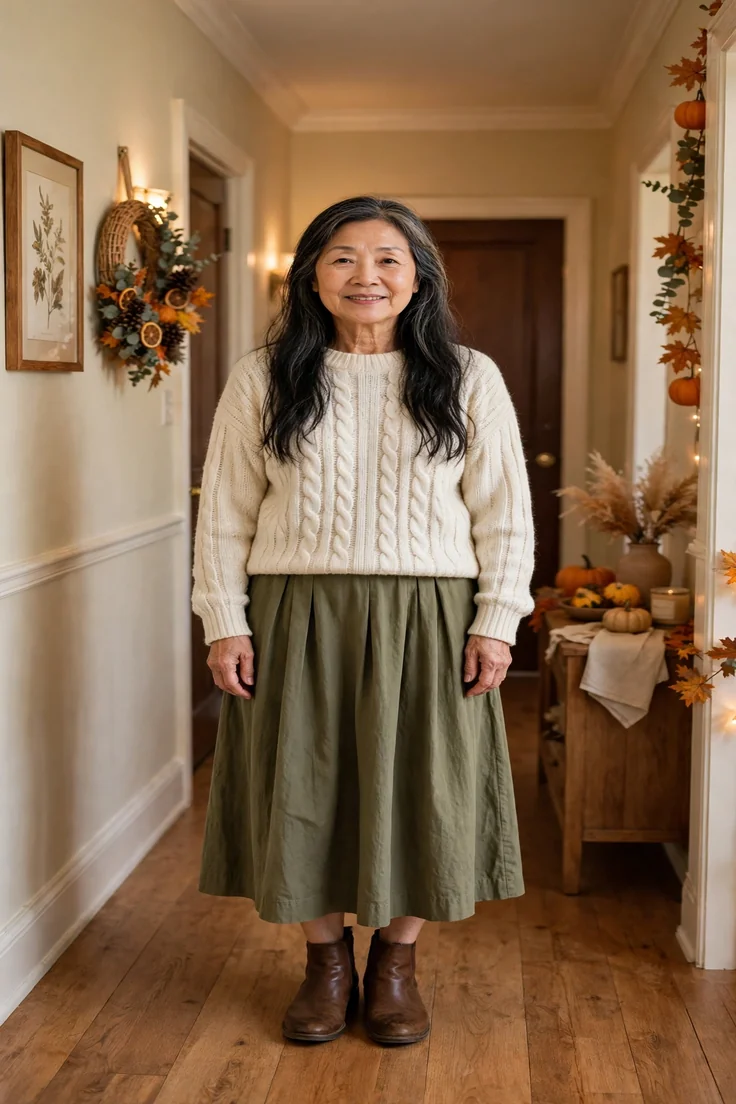
Pick shoes for mingling: standing for long chats, walking between rooms, and sometimes stepping onto a porch or patio. A polished loafer, low ankle boot, or low block heel works when the shoe is broken in and stable on smooth floors and steps.
Walk in the shoes at home for at least twenty minutes, including stairs if the venue has them. If a shoe hurts in that test, it will hurt more during a long evening. Keep a comfortable pair ready for the trip home.
14. Choose a Bag That Leaves Your Hands Free

Choose a small bag that leaves your hands free for a dish, coat, greeting, and plate. A small crossbody, wristlet, or structured bag with a strap works when it hangs cleanly at the hip and does not slide off your shoulder or bump chairs.
If you carry a dish, plan the bag around the dish, not the other way around. A bag that needs holding gets in the way at the door, table, and in photos. A hands free bag lets you hug friends and help in the kitchen.
15. Plan the Dish and the Outfit Together

Plan your dish and outfit in the same session, because the dish changes the outfit. A hot casserole needs both hands and a secure top, a salad needs a steady walk, and a dessert needs a top that can handle a splash. Check them together.
For a heavy, hot, or messy dish, choose sleeves you can push up, a darker lower half, and a top that wipes clean or washes easily. That is not dressing down; it is dressing smartly for the job you volunteered to do.
16. Dress for Travel to a Friend's Home

Dress for the trip to your friend's home, not only for arrival. A knit, ponte trouser, or stretch dress looks better after a car ride than stiff fabric that creases at hip and knee. Check the back and hem after sitting.
Pack coat, shoes, and bag around the outfit, and keep jewelry in a small pouch until arrival if it tangles. Arriving fresh means choosing pieces that hold up from your front door to your friend's door, starting the evening calmly.
17. Adjust the Outfit for a Restaurant Friendsgiving
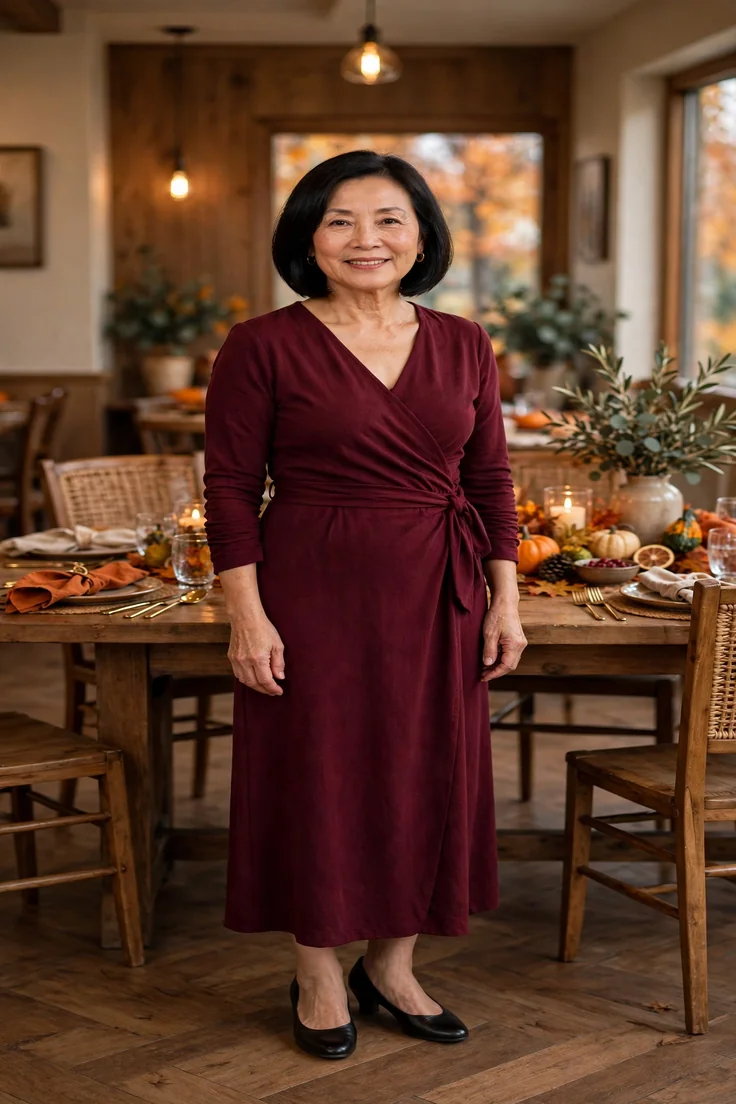
For a restaurant Friendsgiving, tighten the outfit by one clear step without turning formal. A polished blouse, tailored trousers, or wrap dress, plus a smaller bag and low heel or polished flat, suits a restaurant table, tiled floor, and fixed seating.
Check the seating in advance if you can, since a booth, high table, and standard table each change the hem and shoe that work. A restaurant outfit should look intentional in table photos and feel easy through a long meal.
18. Adjust the Outfit for a Bar or Late Evening Plan

For a bar or late plan, choose an outfit that stays comfortable and polished after dark, in lower light, and on your feet longer. A dark base, richer color near the face, and low heel suit dim light well.
Plan the late layer now, not at midnight: a coat that fits over the outfit, a scarf that does not slip, and a shoe you can walk home in. If the plan moves venues, the outfit should move with it without a change.
19. Adjust the Outfit for an Outdoor or Backyard Evening

For an outdoor or backyard evening, choose warmth, grip, and a hem that handles grass, steps, and uneven ground. A midi hem with flat boots, opaque tights if cold, and a covering coat suit a backyard well.
Add a layer you can wear outdoors all evening, not only on arrival, and choose a color that reads well in daylight and string lights. An outdoor outfit should let you stand, walk, and sit on garden chairs without worrying about mud or wind.
20. Layer for a House You Cannot Control
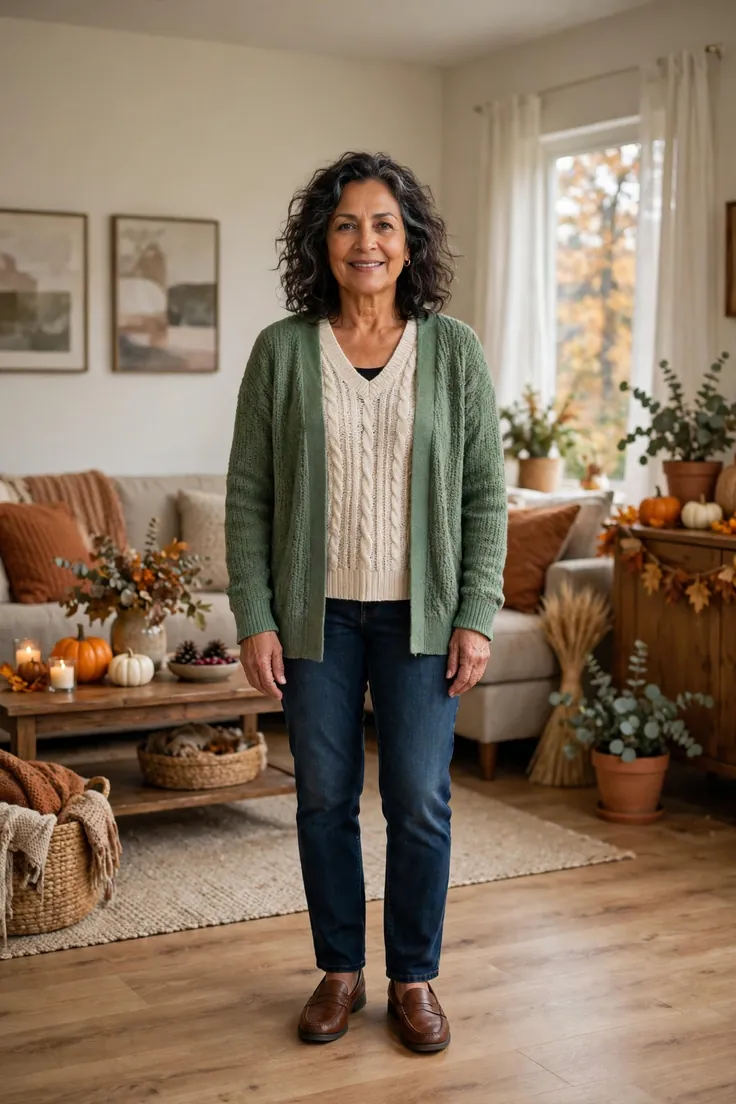
When you cannot control the temperature, layer in three pieces that each look good alone: a thin base, a midweight knit or blouse, and a removable outer layer. That lets you adjust in seconds as rooms warm, without choosing between cold outside and overheated inside.
Test the three layers together at home, including sitting and standing, and make sure sleeves fit under the coat without bunching. If one layer only works with another, replace it with a piece that stands alone. Temperature control is comfort control.
21. Choose Colour for a Group Photo

Choose color with group photos in mind, since Friendsgiving photos usually show many people close together. One rich autumn color near your face, such as burgundy, olive, navy, or forest green, looks warm and clear in indoor light while the rest stays calm.
Avoid a very bright print near the face, a neon color, or a busy pattern that dominates a group shot. If friends wear strong colors, a calm base with one rich accent still stands out without outdressing anyone. Color is a social choice here.
22. Keep Pattern Calm Beside Friends
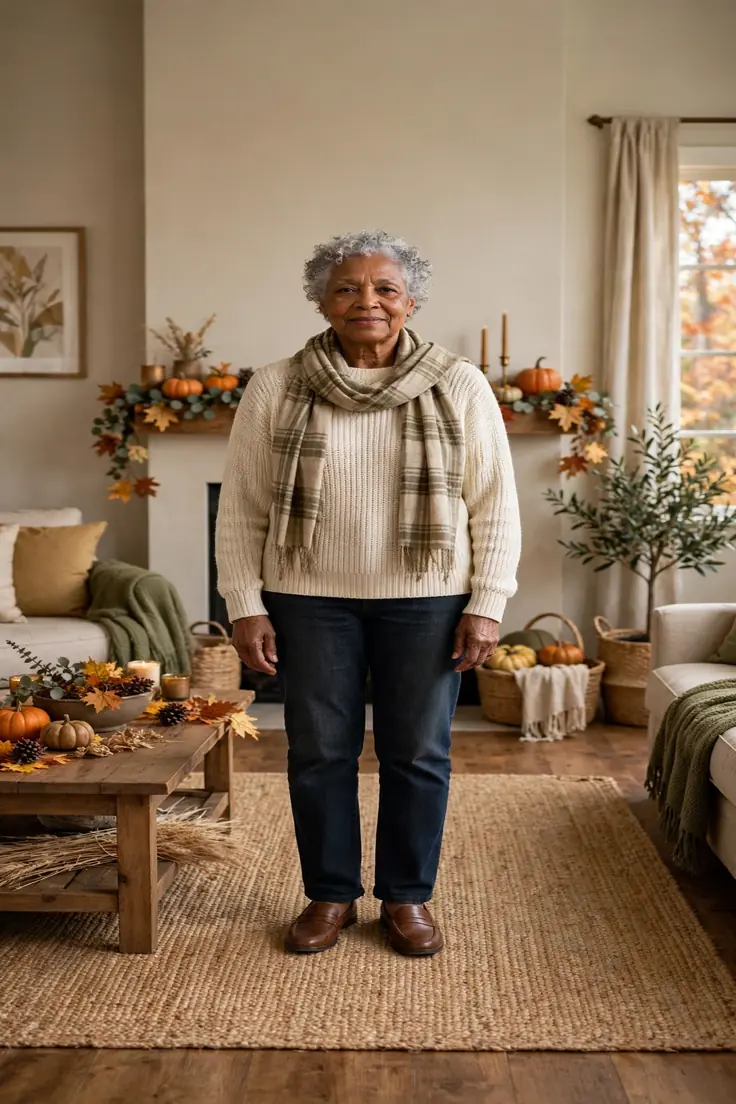
Keep pattern to one piece at a small scale, so the outfit photographs calmly beside friends who may also wear pattern. A quiet plaid scarf, subtle stripe, or small print skirt works when the rest is solid.
If you love pattern, put it where it moves least, such as a skirt or scarf, and keep the top near your face solid. That placement gives personality without making the photo about one piece. A calm pattern reads as thoughtful in a group.
23. Keep Jewelry Friendly for Hugs and Photos
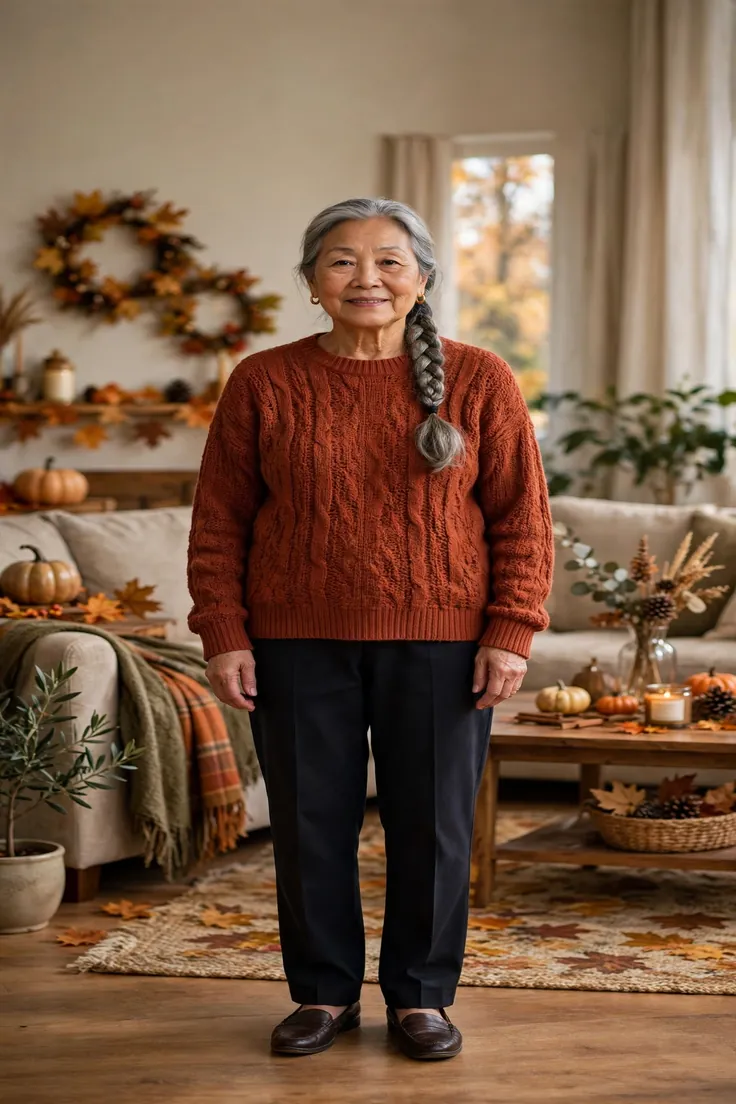
Keep jewelry friendly for hugs, since Friendsgiving includes many greetings. Small hoops, a short necklace, a simple cuff, or a flat brooch all work, while swinging necklaces, clinking bracelets, and rings that catch on knit fabric will distract you all evening.
Put your focal piece where it shows in a seated group photo, such as earrings or a shoulder brooch, and check it does not scratch, catch, or swing when you hug someone. Simple and secure jewelry adds warmth without problems.
24. Style Hair That Survives the Evening
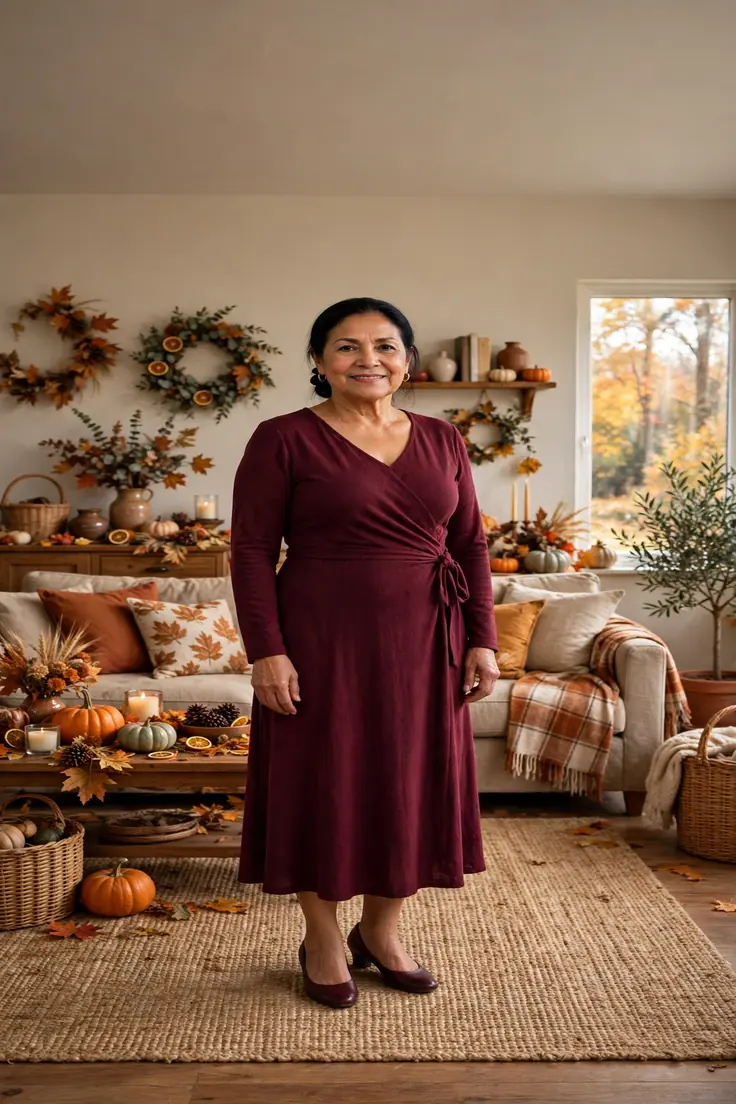
Style hair that survives cooking steam, hugs, laughter, and a late walk, not only a mirror check at home. A low bun, smooth blowout with light hold, soft waves pinned back, or simple low ponytail works when the style holds for hours without constant fixing.
Test the style by moving, leaning, and wearing your coat, then check it again after an hour at home. If it falls apart in the test, choose a simpler version that holds. A style you can forget is more flattering than one you keep repairing.
25. Choose Makeup That Lasts Through Food and Talk

Choose makeup that lasts through food, drink, and long conversation in warm indoor light. A natural matching base, soft blush, defined brows, and a lip color that survives eating all work when the products are tested before the day, not discovered at the party.
Do a wear test at home, including eating and drinking, and check the result in warm light and in a photo. Keep one lip product and a small powder in your bag, and leave the rest at home.
26. Do a Group Photo Test at Home

Do a group photo test at home, even if you are alone. Stand beside a chair or doorway to mimic a group, take a photo from a few steps away, and check the full outfit for a dominating color or riding hem.
Fix only what the photo shows, then take one more photo after the fix. A group photo test differs from a mirror check because it shows how the outfit reads at a distance and beside other people. One test prevents an evening of wondering.
27. Plan the Arrival Moment at the Door

Plan the arrival moment, because the doorway is where the outfit is first seen and hands are busiest. Decide what you will carry, where your coat will go, and how you will greet the host before you ring the bell.
Practice the doorway sequence once at home, including removing the coat and finding a hook, especially if you carry a dish. A smooth arrival sets the tone for the evening and lets the host focus on welcoming you, not on helping with bags and coats.
28. Adjust the Outfit as the Evening Moves

Adjust the outfit as the evening moves from arrival to dinner to games or a walk, instead of wearing one version all night. Remove the middle layer as the room warms, push sleeves up in the kitchen, and add the coat for a porch chat.
Check the outfit in a mirror after the first big adjustment, smooth top and hem once, then stop fussing. An outfit that adapts looks relaxed and confident, while one that cannot adapt starts to feel like a costume. Friendsgiving rewards flexibility.
29. Plan Your Place in Group Photos

Plan your place in group photos by thinking about height, color, and seating, not by posing alone. Stand or sit where your outfit reads clearly, avoid standing behind a taller friend, and keep bag and coat out of frame.
When the photo is taken, relax your shoulders, keep hands visible and natural, and look at the camera rather than adjusting clothes. A relaxed pose in a tested outfit beats a stiff pose in a new outfit.
30. Plan the Late Evening Transition
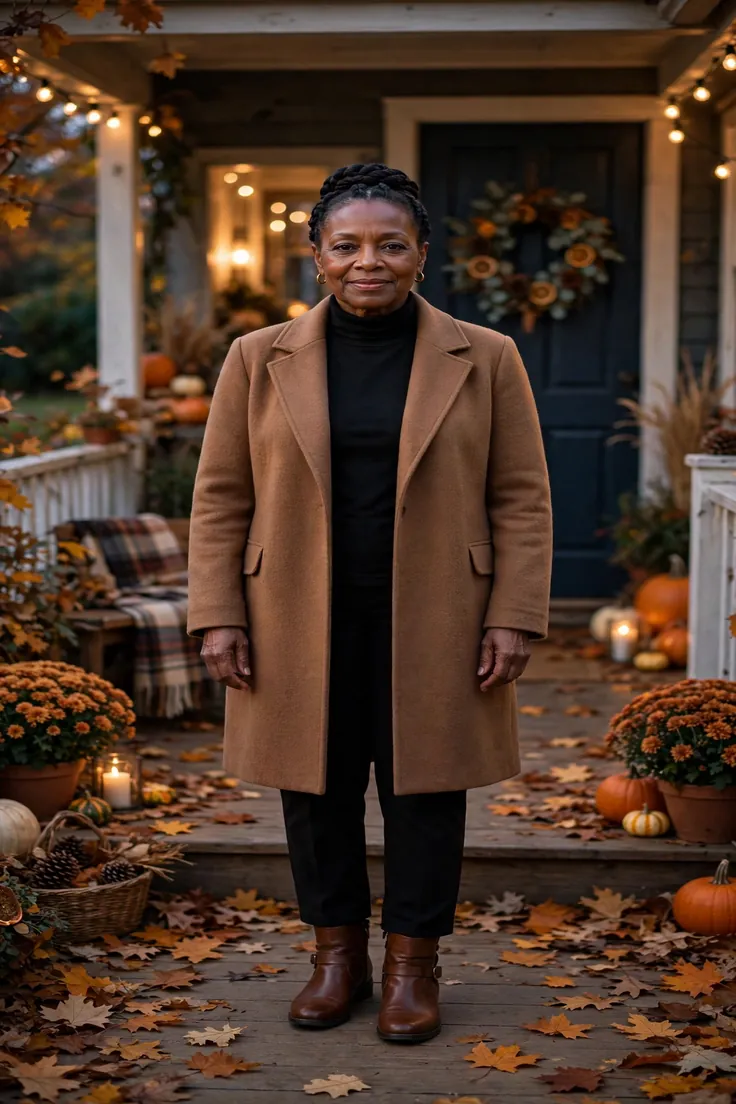
Plan the late evening transition before leaving home, especially if the night may continue to a walk, dessert stop, or second home. Decide now whether you will keep the same outfit, change shoes, or add a layer, and pack only what that plan needs.
If you change anything late, keep the change to one piece, such as shoes or a layer, so the outfit still looks intentional. Ending the evening comfortably is part of dressing well, not an afterthought, and a home made plan saves a tired midnight decision.
31. If You Host Friends at Your Home
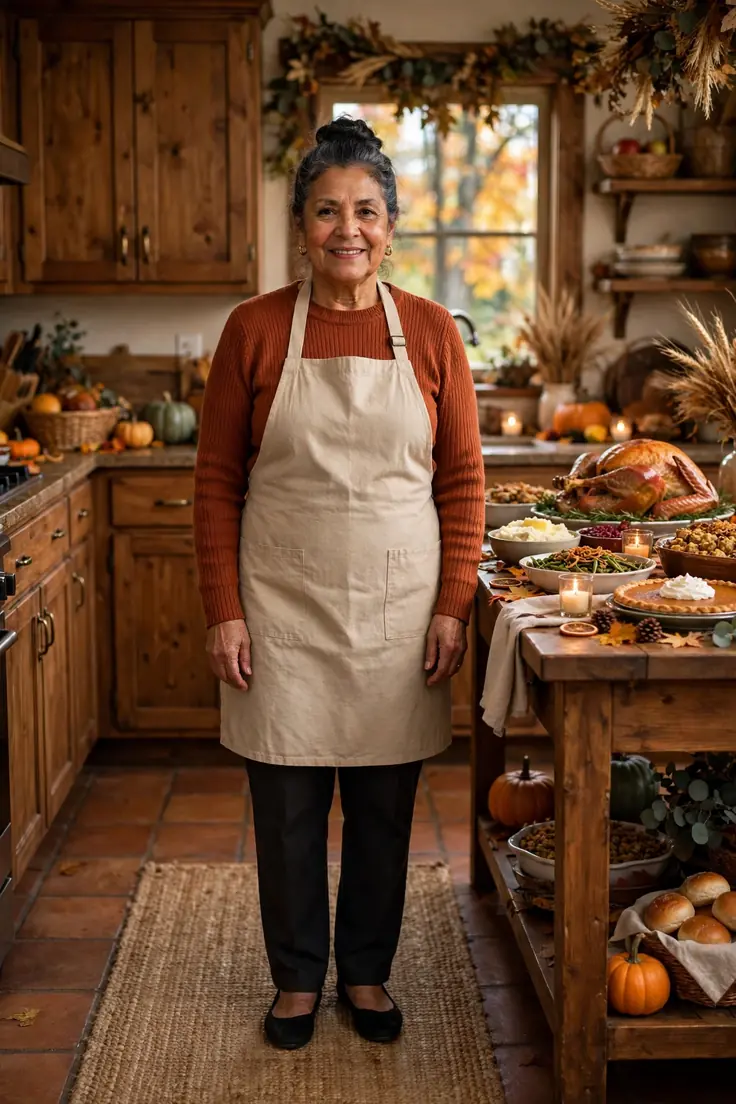
If you host at home, dress for hosting first and photos second. Choose sleeves you can push up, a top that looks good with an apron, shoes you can slip off easily, and fabrics that resist stove wrinkles. Keep jewelry simple.
Lay out your coat and shoes before guests arrive if you will step outside, and keep a spare layer ready for a porch greeting. A host outfit that works in the kitchen also works in photos, because it looks relaxed and in control.
32. Do a Final Check and Keep the Plan
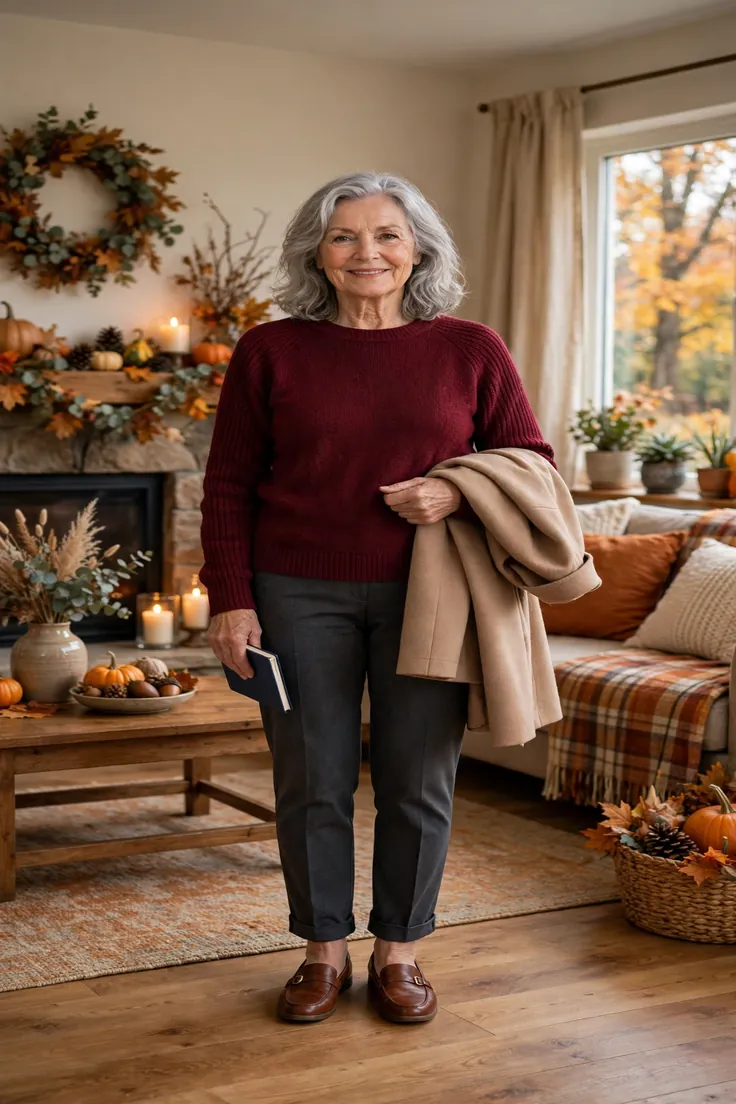
Do a final check the night before with the full outfit on, including shoes, bag, jewelry, and coat. Walk, sit, carry a dish, take a photo, and check for pulling, bunching, slipping, or anything you keep touching. Fix only what bothers you in that check.
Write the final outfit down with the dish you will bring, then stop changing things. Keep that written plan for next year, with a note about what worked and what you would change. A saved plan removes the guessing that makes dressing for friends stressful.
Frequently Asked Questions
What should I wear to Friendsgiving if I do not know anyone well?
Choose a casual polished outfit in a calm color, such as a soft knit with dark trousers or a midi dress with a cardigan, and add one festive detail. That level fits most friend gatherings without looking overdressed or underdressed.
Can I wear jeans to Friendsgiving?
Yes, if the jeans are dark, clean, and comfortable when you sit, and you pair them with a knit or blouse and a shoe with some shape. Dark jeans suit a home Friendsgiving, while a dressier venue may call for trousers or a dress.
How festive should my Friendsgiving outfit be?
Festive enough to show you care, but not so festive that you outdress the host or your friends. One rich autumn color, one polished layer, or one simple sparkle in jewelry is usually enough, and the rest of the outfit can stay calm and friendly.
What should I bring to Friendsgiving, and how does it affect my outfit?
Bring what the host asked for, or a simple dish or drink, and choose an outfit that lets you carry it safely. Sleeves you can push up, a secure top, and shoes you can walk in will make carrying and serving easier.
How do I dress for Friendsgiving if it moves to a second location?
Choose a base outfit that works in both places, a coat that fits over it, and shoes you can walk in. A dark base, a removable layer, and a small bag will carry you from a home to a restaurant without a full outfit change.
Your Next Step
Pick one Friendsgiving gathering, work through these steps in order, and test the outfit at home with a dish in your hands before the day arrives. For ideas to pair with this guide, see the [17 Thanksgiving outfits for women over 50](https://stylesonnet.com/thanksgiving-outfits-for-women-over-50/) and the [11 midsize Thanksgiving outfits](https://stylesonnet.com/midsize-thanksgiving-outfits/) on stylesonnet.com.
