
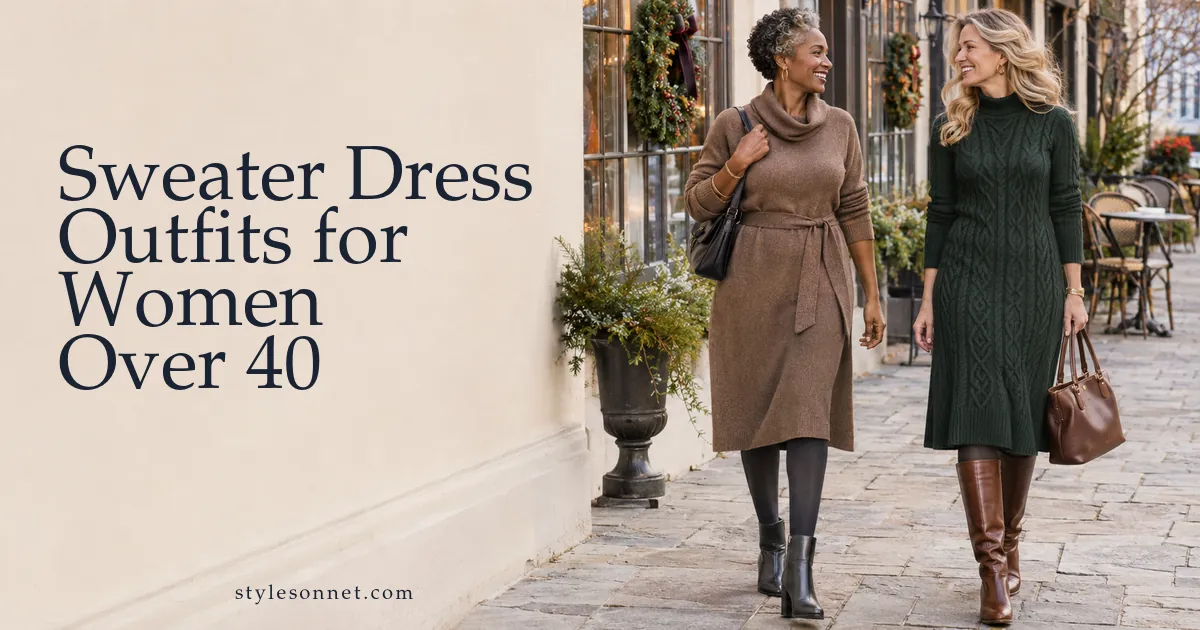
A sweater dress with boots can move from the office to dinner after 40 without feeling overly formal. For a workday, try a knee-length knit dress with opaque tights and sleek knee-high boots. On a casual day, a longer sweater dress with ankle boots and a structured tote feels just as intentional.
The key decisions are practical: make sure the hem and boot shaft do not compete, choose tights for the weather, and sit down in the complete outfit before leaving. This guide compares ankle and tall boots, tights, layers, and fit so you can use what is already in your closet.
Three sweater-dress outfits to try
- Office-ready midi sweater dress + matching tights + knee-high boots + tailored coat.
- Dark knit dress + ankle boots + opaque tights + simple leather tote.
- Longer sweater dress + flat tall boots + understated jewelry for dinner after work.
1. Start With the Workday, Not the Weekend

Start with the workday, because that is where most sweater dresses after 40 live. A dress that only works for a weekend lunch is lovely, but it is not the dress you reach for on a Tuesday morning with meetings, a commute, and dinner after.
That one shift changes everything. A workday base means a hem you can sit in, a neckline you do not have to watch, sleeves that stay put when you reach for a file, and boots you can walk in all day.
2. A Sweater Dress That Works at the Office First

A sweater dress has a clean line and a fabric that holds its shape. Look for a knit thick enough not to cling, with a hem that falls straight when you stand and does not ride up when you sit, like a ribbed knit.
Fit matters more than fashion here. The dress should skim, not squeeze, and the waist should be defined by the cut, not by a belt you have to keep adjusting, so try it with the tights and boots you actually own.
3. Hem Length Sets the Whole Look
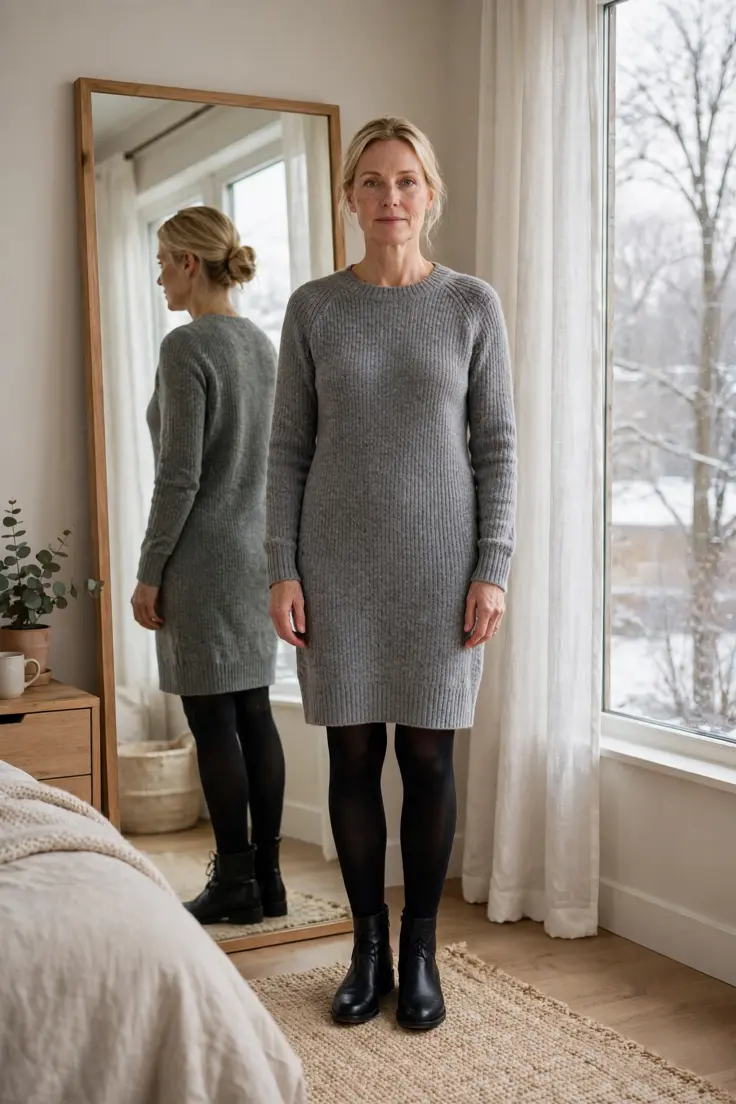
Hem length is the first decision, and it sets every other decision. A hem just above the knee gives you the most boot options, because both ankle and knee-high boots can work with it, while a midi hem narrows your choices.
Measure the hem against your boots, not against your legs alone. Put the dress on, put the boots on, and stand before a full-length mirror, because the space between hem and boot is the whole outfit, and too much bare leg looks accidental.
4. Ankle Boots Love a Shorter Hem
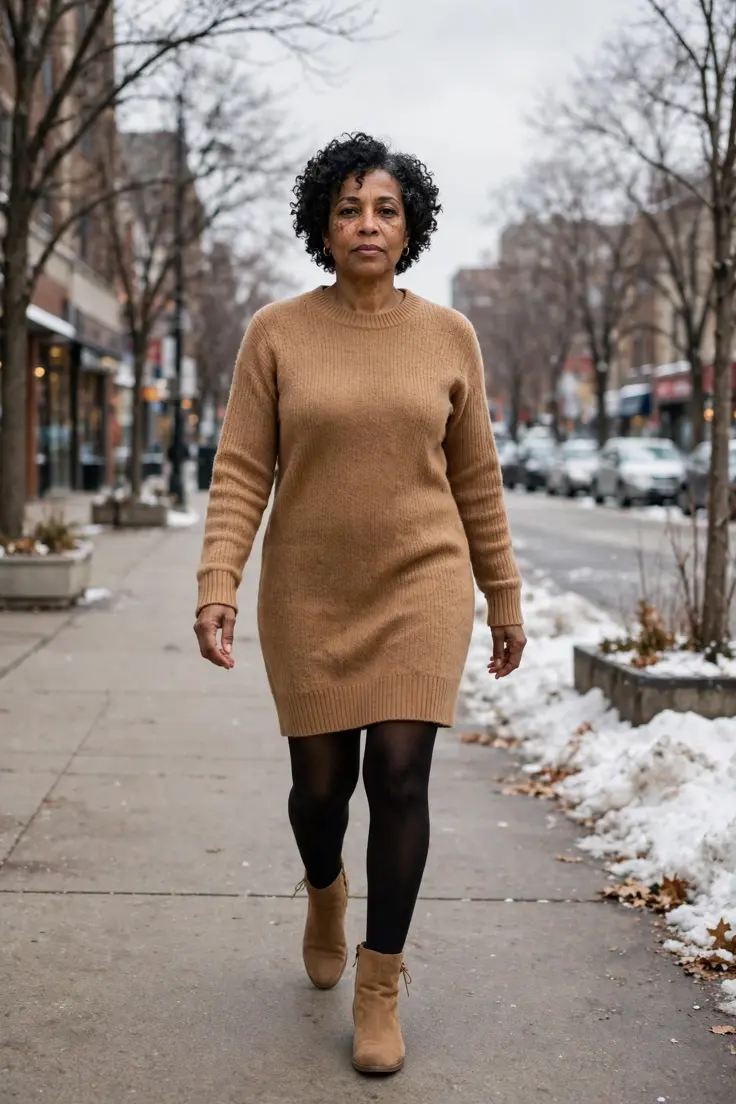
Ankle boots are the easiest partner for a shorter sweater dress hem. A hem just above the knee with a slim ankle boot shows a little leg, keeps the line long, and works for a workday, a lunch, and a casual dinner without fuss.
Choose an ankle boot with a low block heel or a flat sole, because you will walk in it all day. Keep it simple, in black, dark brown, or navy, because a boot with heavy buckles or a loud print will compete with the dress.
5. Knee-High Boots Need a Longer Hem
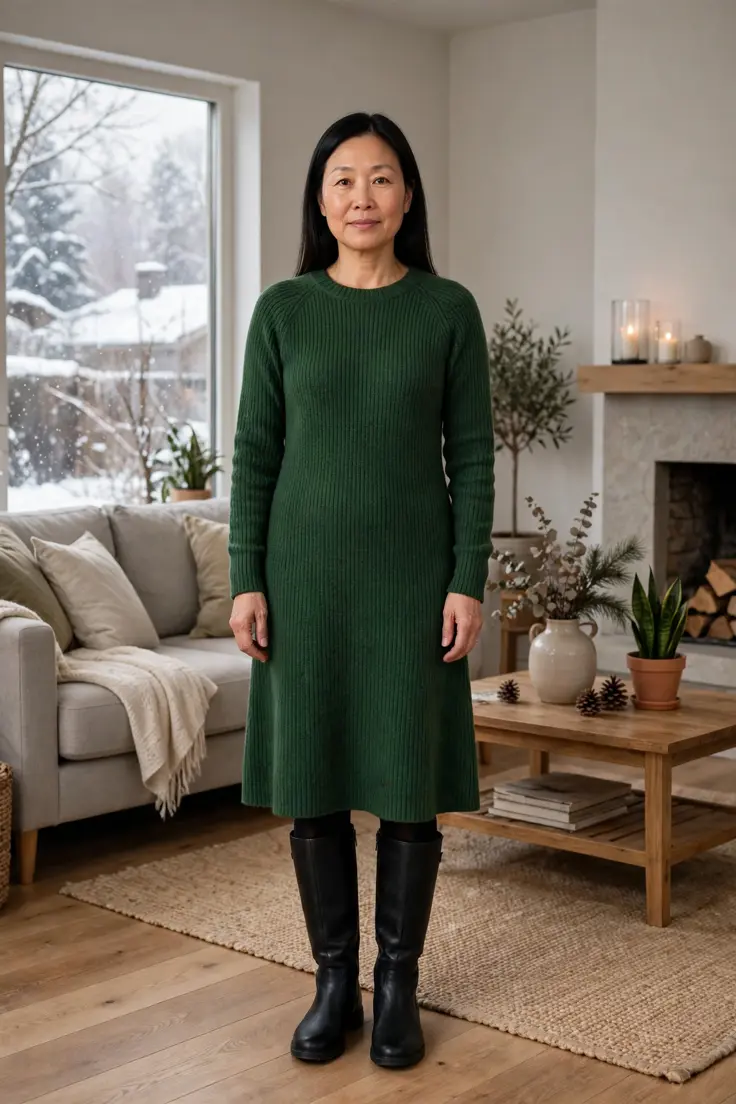
Knee-high boots need a longer hem, or a hem that clears the top of the boot by a little. A midi sweater dress with knee-high boots can look polished and warm, because the boot fills the gap under the hem and keeps you warm.
Try the combination sitting down, not just standing. Sit in a chair, cross your legs if you normally do, and watch what the hem does over the boot, because a hem that rides up and stays bunched means an ankle boot would serve you better.
6. The Gap Between Hem and Boot Matters

The gap between hem and boot is where sweater dress outfits go wrong. A gap of a few inches of tights looks intentional and leg-lengthening, especially in a dark tight matching the boot, while bare skin in January looks like you forgot the weather.
Use tights to control the gap, not bare skin. A dark opaque tight turns the gap into a single dark line from hem to boot, which reads longer and warmer than skin, and a gap wider than a handspan means one piece should change.
7. Opaque Tights Are Your Everyday Answer
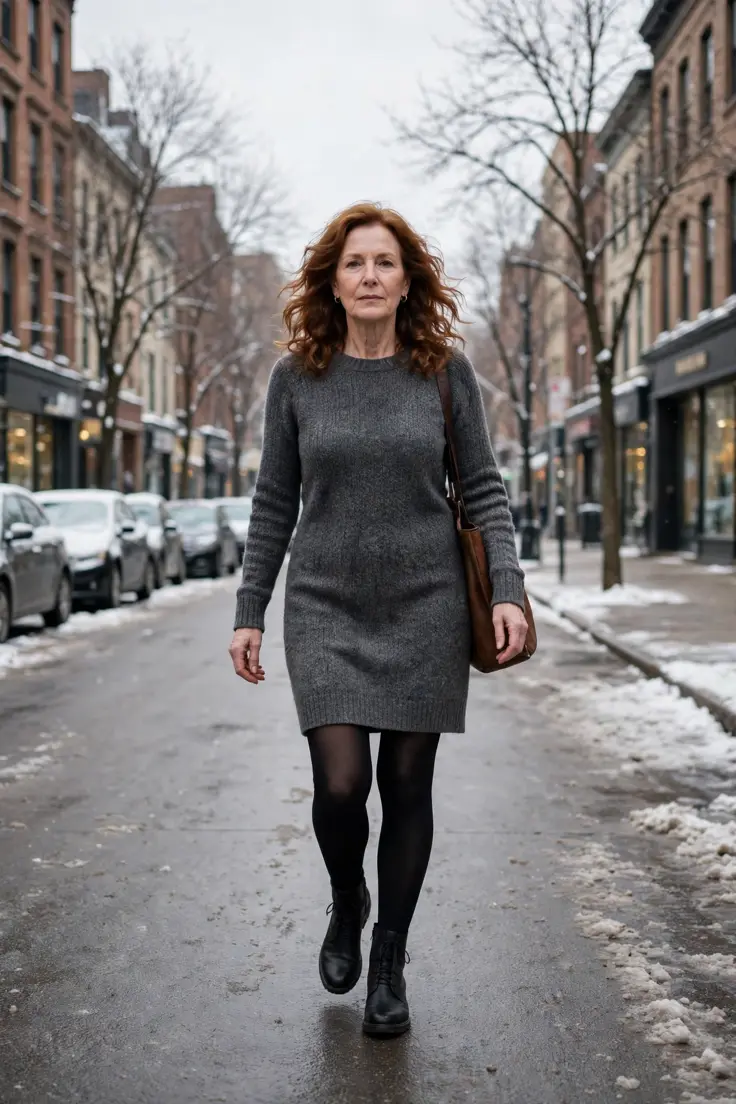
Opaque tights are the answer for a sweater dress after 40, and they are worth owning in two or three colors. Black is the workhorse, navy works with navy and grey dresses, and dark brown works with camel, rust, and olive.
Choose a denier that holds up, not the sheerest pair you can find. A 60 to 80 denier tight gives warmth without bulk and resists runs better than a sheer pair, so check the waistband because one that digs in ruins a long day.
8. Fleece-Lined Tights for Real Cold
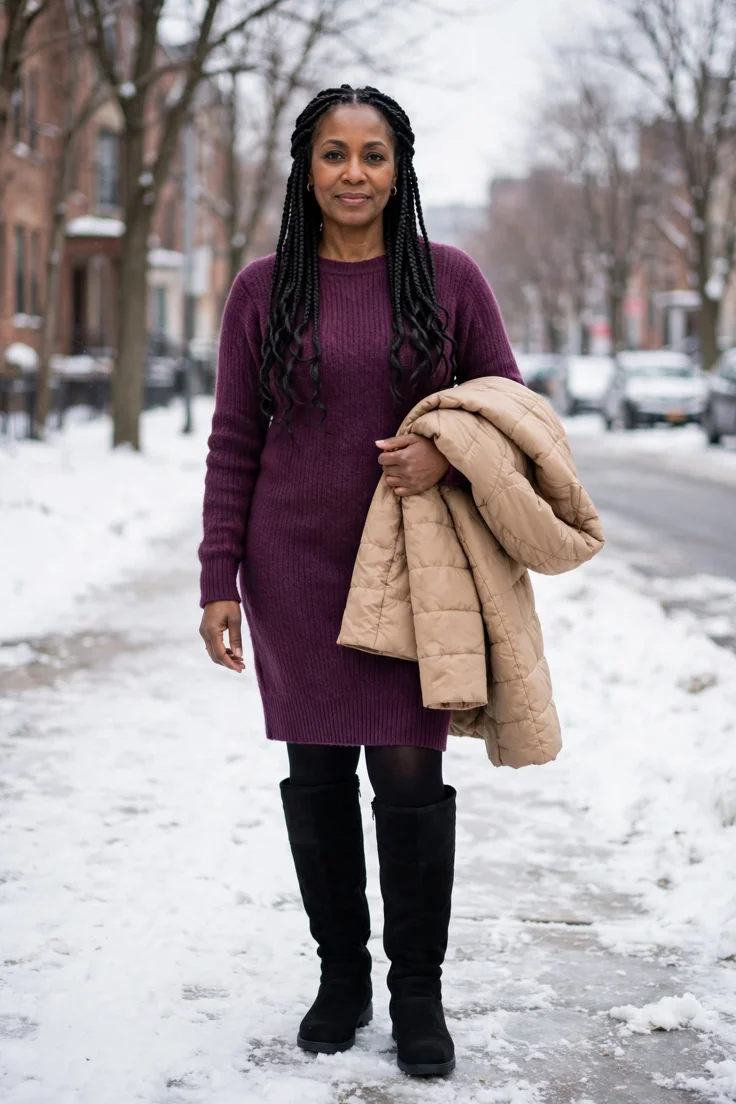
Fleece-lined tights are for real cold, not for a mild autumn day. They look like ordinary opaque tights from outside, but they keep your legs warm in a way no ordinary tight can, so you can wear a sweater dress in January without shivering.
Watch the bulk, because a fleece-lined tight adds a little volume. It works best with a dress that has some ease and a boot whose shaft is not already snug, so try the combination at home before you trust it for a workday.
9. The Tights Colour Rule: Match the Boots

Here is the tights color rule worth memorizing. Match your tights to your boots, not to your dress, so black tights with black boots, navy tights with navy boots, and dark brown tights with brown boots create one long dark line from hem to shoe.
This rule saves you money, because you do not need a tight for every dress, only a tight for every boot color you own. Keep the dress as the color story, and let tights and boots do the quiet work underneath it.
10. When to Break the Colour Rule

You can break the color rule, but only on purpose. A burgundy tight with black boots can look festive at a holiday dinner, and a grey tight with black boots can soften a dark dress, but both draw the eye to your legs.
Ask what you want the eye to notice. If the answer is your face, or one statement piece, keep tights matched to boots, and if the answer is a festive leg, break the rule once with a small color accent.
11. Calf Fit: Wide Shafts Are Not a Flaw
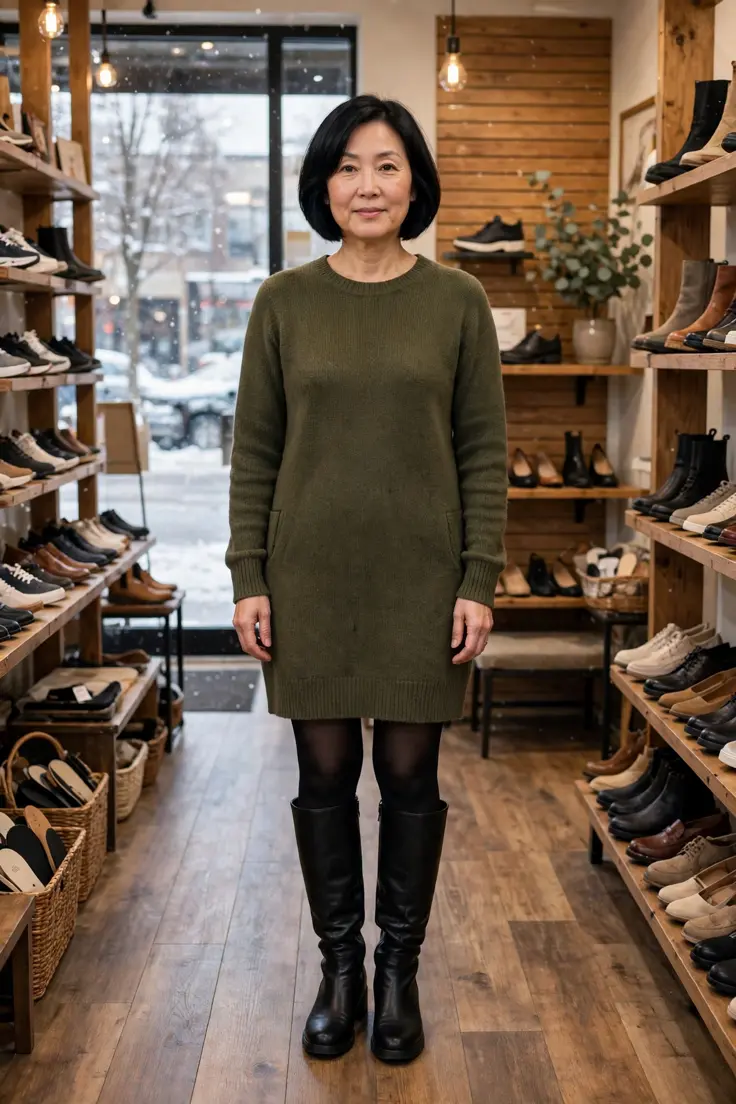
Calf fit is not a flaw, it is a measurement, and wide shaft boots exist for this reason. If a boot will not zip over your calf, the boot is wrong, and forcing it will make the boot bunch and the zip strain.
Measure your calf at its widest point, in the tights you will wear, and compare it to the boot shaft measurement. A shaft that closes with room will look better and last longer than one that only just closes.
12. Boots After a Workday: Comfort First

Boots need comfort first, because a workday is long and dinner after it is longer. A block heel, a cushioned insole, and a shaft that does not rub at the ankle or calf will carry you from morning to evening without a change of shoes.
Do the walking test. Wear the boots for twenty minutes at home, walk up and down stairs sit and stand again, and check for rubbing, pinching, or a heel that slips, because boots that hurt in that test will hurt more at dinner.
13. The Seated Test at Dinner

A sweater dress outfit is a seated outfit at dinner, so test it seated, not standing before a mirror. Sit in a dining chair, lean forward, and stand up again, watching for a hem that rides up or a boot shaft that gaps.
Fix the fit, not your posture. A dress with a little stretch holds its shape better than a stiff knit, a tight with a smooth waistband stays put better than one with narrow elastic, and a boot with a flexible shaft moves with your ankle.
14. A Hem That Works at the Office and at Dinner

A hem that works at the office and dinner is a hem above or below the knee. It is long enough to sit at a desk and at dinner, and short enough to show a boot, which is why it is versatile after 40.
Test the hem in chairs, not one. Sit at a desk chair, then at a dining chair, and check that the hem does not ride up far in either, because a longer hem or a dress with more weight will help it fall into place.
15. Younger Family Gatherings Without Looking Overdressed

Younger family gatherings can make you second-guess a sweater dress, because you do not want to look overdressed next to jeans, or underdressed next to a party dress. The answer is the middle, a calm dress with ankle boots and opaque tights.
Keep the rest of the outfit relaxed to match the room. A necklace, a scarf you can remove indoors, and a bag you can set down will keep the look friendly, while a statement earring or a richer lip color can lift it.
16. Layers That Do Not Bulk the Dress
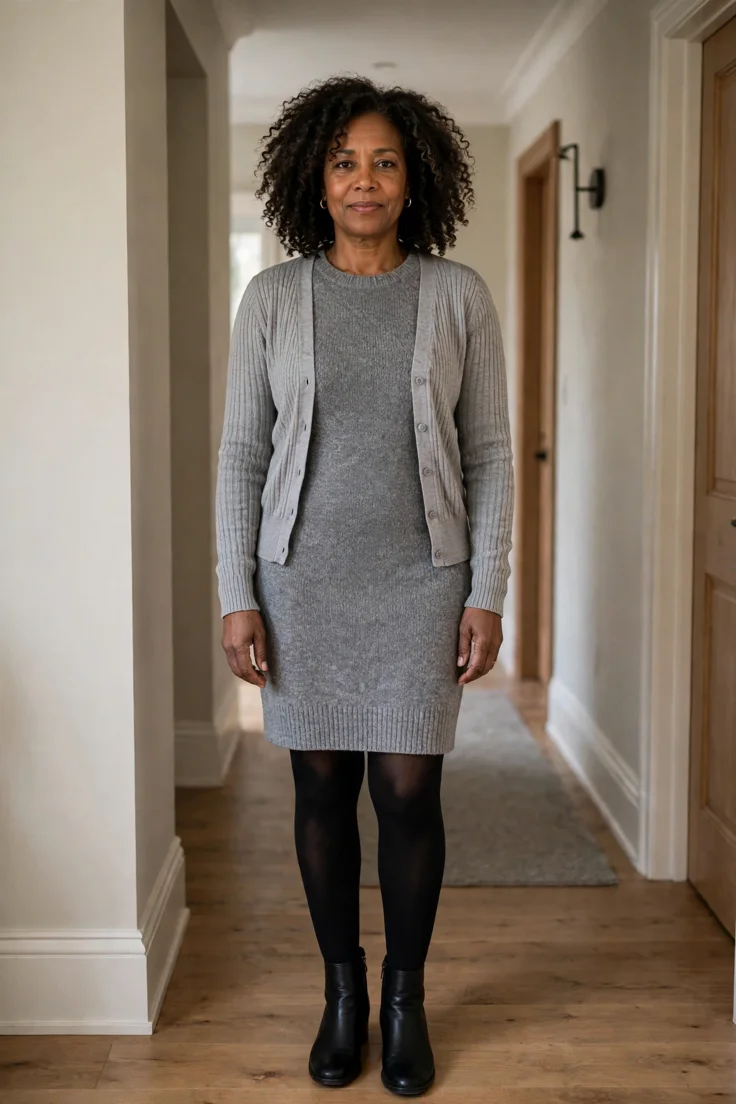
Layers should warm you without bulking it, and the trick is layering thin. A thin thermal top under a sweater dress, a light cardigan over it, or a fitted blazer on top will add warmth without changing the line, while a chunky cardigan adds bulk.
Check the layer from the side, not the front. A layer that bunches at the waist or pulls at the shoulders will show in profile and the dress underneath must look finished on its own if you remove the layer indoors.
17. A Coat That Covers the Hem

A coat that covers the hem makes the outfit look polished, and it keeps you warm. Choose a coat to cover the dress hem, with sleeves that slide over the dress sleeves without bunching, and a shape that does not squeeze the dress underneath.
Check the coat with the dress, tights, and boots you plan to wear. Put the coat on, walk a few steps, sit down, and stand up again, and watch for a hem that peeks out unevenly or a coat that pulls at the shoulders.
18. Scarves Without the Bulk

Scarves can warm an outfit, but they can also bulk it at the neckline. A wool scarf, a silk scarf, or a knit snood will add warmth and color without hiding the dress, while a chunky scarf can swallow the neckline and look heavy.
Loop the scarf once, and let it sit flat against the dress. If you want color a scarf is a good place for it, because it lifts the outfit without changing the dress, so keep the rest calm if the scarf is bold.
19. Jewelry With One Focal Piece

Jewelry follows the one statement rule, and it works well with knit, because knit is a calm background. Choose one focal piece, like gold hoops, a short strand of pearls, a cuff, or a statement earring, and keep everything else light and secure.
Check jewelry in warm light, where gold and pearls glow, and where pieces can look harsh. Avoid a stack of bracelets that clinks against a plate, or a long necklace that swings into food, because one choice looks intentional.
20. A Bag That Leaves Your Hands Free
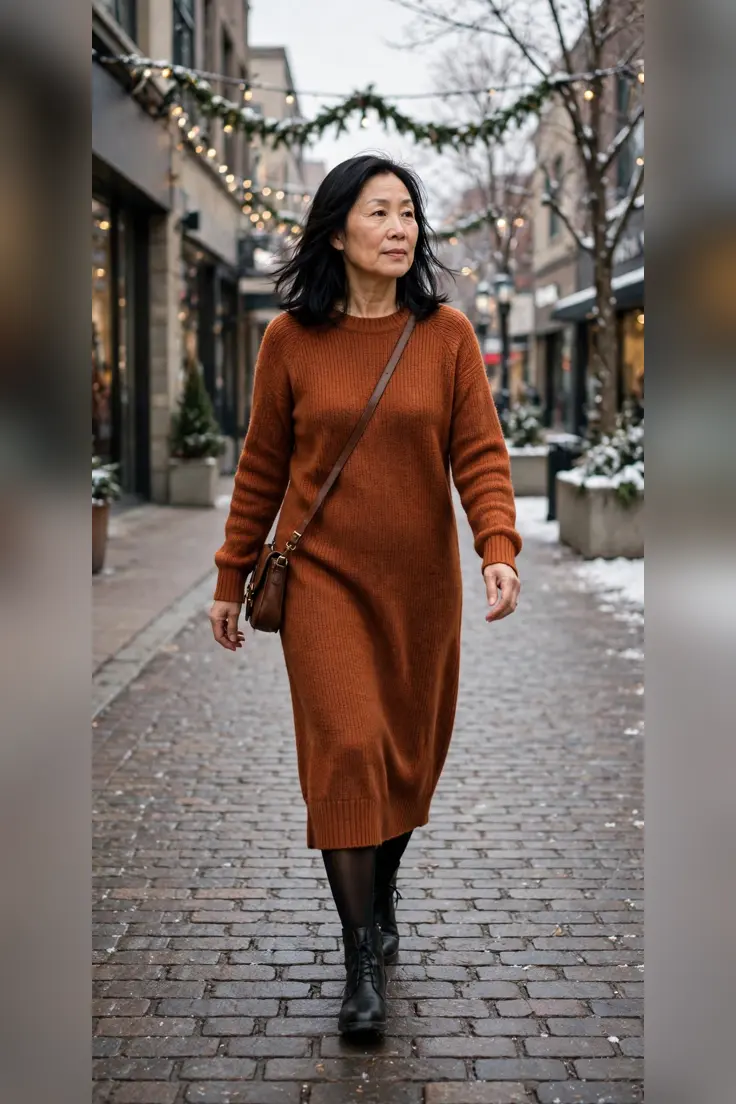
A workday that ends at dinner is busy, so choose a bag that leaves your hands free. A crossbody, a shoulder bag, or a tote with a strap will carry essentials without holding it, while a large tote gets in the way.
Match the bag to the dress, not to the boots. A small structured bag suits a workday dress, a slim shoulder bag suits a casual dinner, and a clutch suits a dressier evening, but a bag that bulges or gaps looks hurried at any level.
21. Hair and Makeup for Work to Evening

Hair and makeup for a dress should be steady because you will not have time to redo them between work and dinner. A blowout, a low bun, or soft waves that hold their shape through a commute, a warm office, and a dinner works.
For makeup, polish matters more than drama in warm light. A skin finish, defined brows, a soft eye, and a flattering lip color give a finished look that needs little checking, and a richer lip color at dinner can lift the outfit without changing dress.
22. How Your Outfit Reads in Photos

Photos are part of every family gathering and they show an outfit differently than a mirror does. Warm light flatters rich colors near your face, like burgundy, olive, camel, cream, and navy, while a busy print can dominate a photo.
Take one photo of yourself in the full outfit, including boots and coat, and look for pulling, bunching, or a hem that rides up. Fix only what bothers you in that check, then stop changing things, because a swap creates a new problem.
23. The Mistake of Too Many Textures
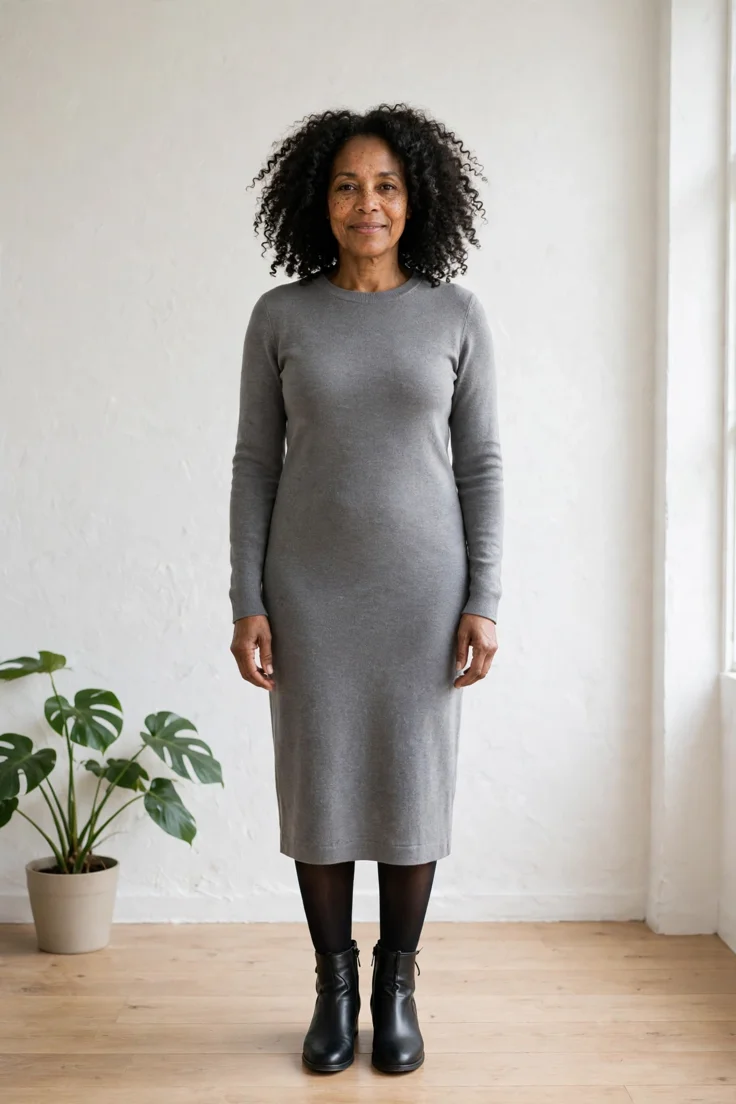
This is the most common mistake, and it is the easiest to fix. A chunky knit dress plus a textured tight plus a suede boot plus a wool scarf plus a leather bag does not add up to more interesting, it adds noise.
Use one texture and keep the rest smooth. If the dress is chunky, choose smooth tights, smooth boots, and a smooth bag, and if the dress is smooth, you can add one textured piece, like a suede boot or a wool scarf, but not both.
24. The Mistake of a Hem That Fights the Boot
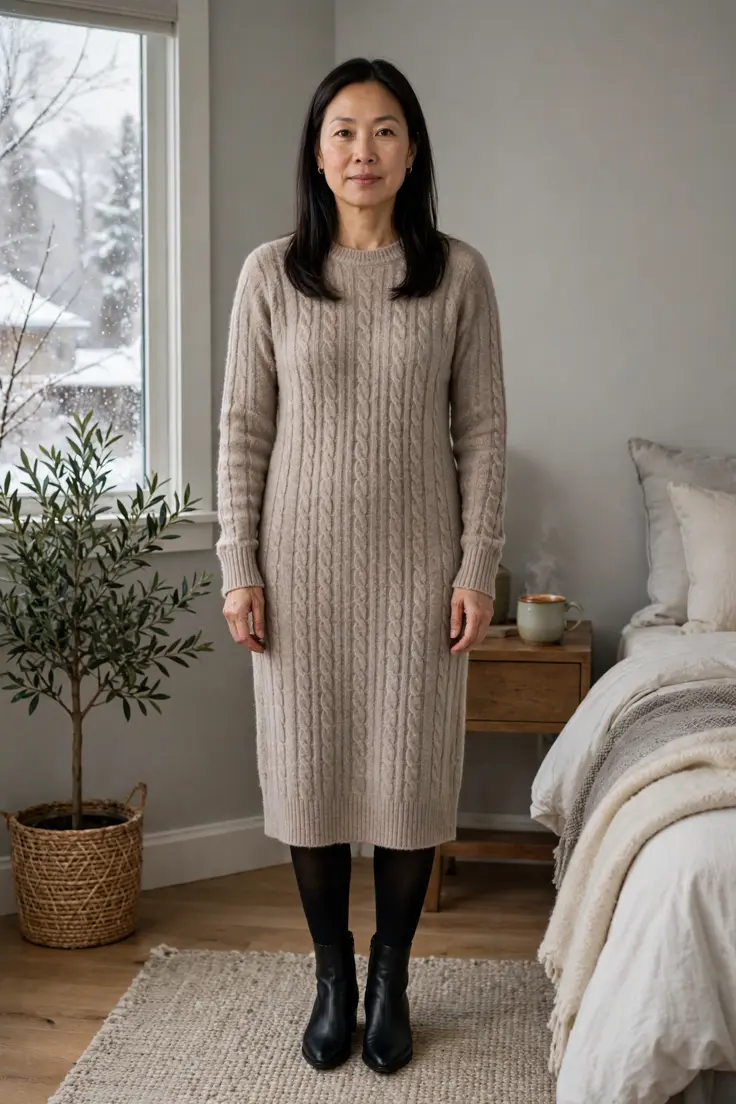
The second common mistake is a hem that fights the boot. A midi hem sitting on a knee-high boot shaft will bunch every time you walk, and a short hem with a tall boot can look crowded if the tights do not bridge the gap.
Guard against this by trying the dress, tights, and boots together, sitting and standing, before you trust them for a workday. Change the boot, not your posture, if the hem fights it, because an ankle boot with a midi hem will solve the fight.
25. Shopping: Try the Dress, Tights and Boots Together
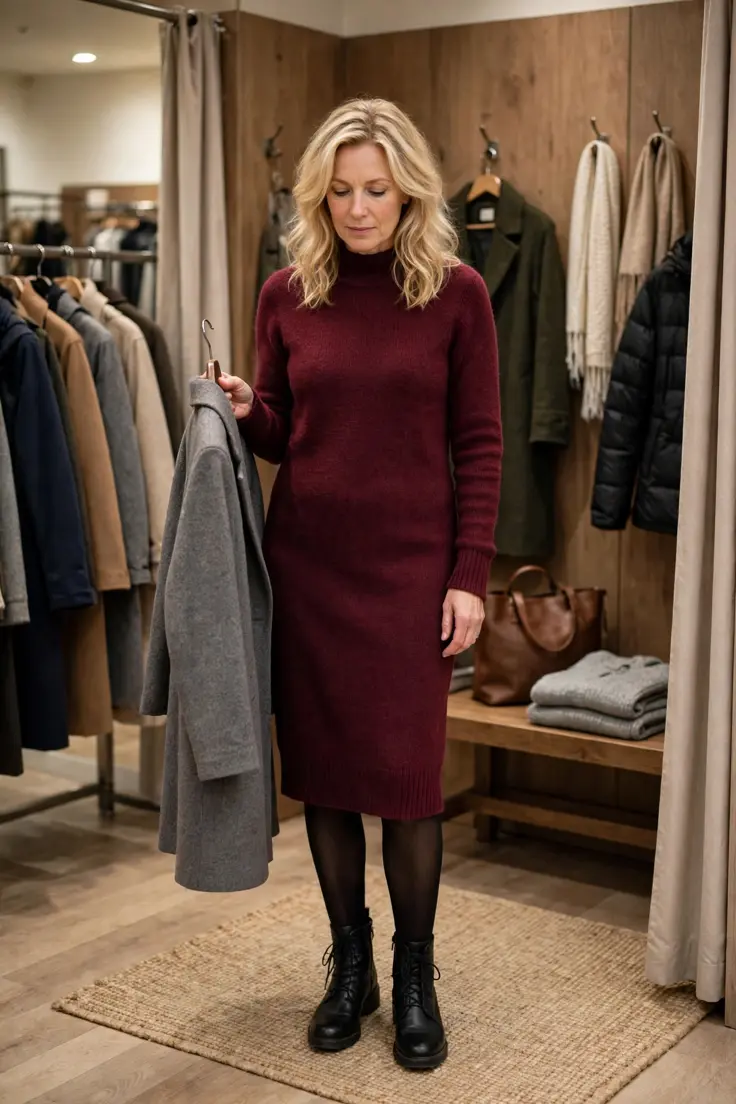
When you shop for a sweater dress, try the dress, tights, and boots together, in the shop or at home. A dress that looks perfect on a hanger, or with bare legs, can look completely different with opaque tights and boots.
Bring your own tights and boots to the shop or buy the dress, tights, and boots from places with easy returns, and try them together at home before you remove any tags, checking the hem, the gap, and the boot shaft in a mirror.
26. When to Choose a Skirt Instead

A dress is not the right answer, and a skirt with a separate top is better. If you struggle to find a dress with the right hem, waist, and sleeves a skirt lets you choose pieces, and it gives you control over the gap.
Choose the skirt when the dress keeps failing. If every dress is too short at the hem, too tight at the waist, or too long in the sleeve, a skirt and top will solve that problem without forcing you to accept a compromise.
27. The One Rule to Remember
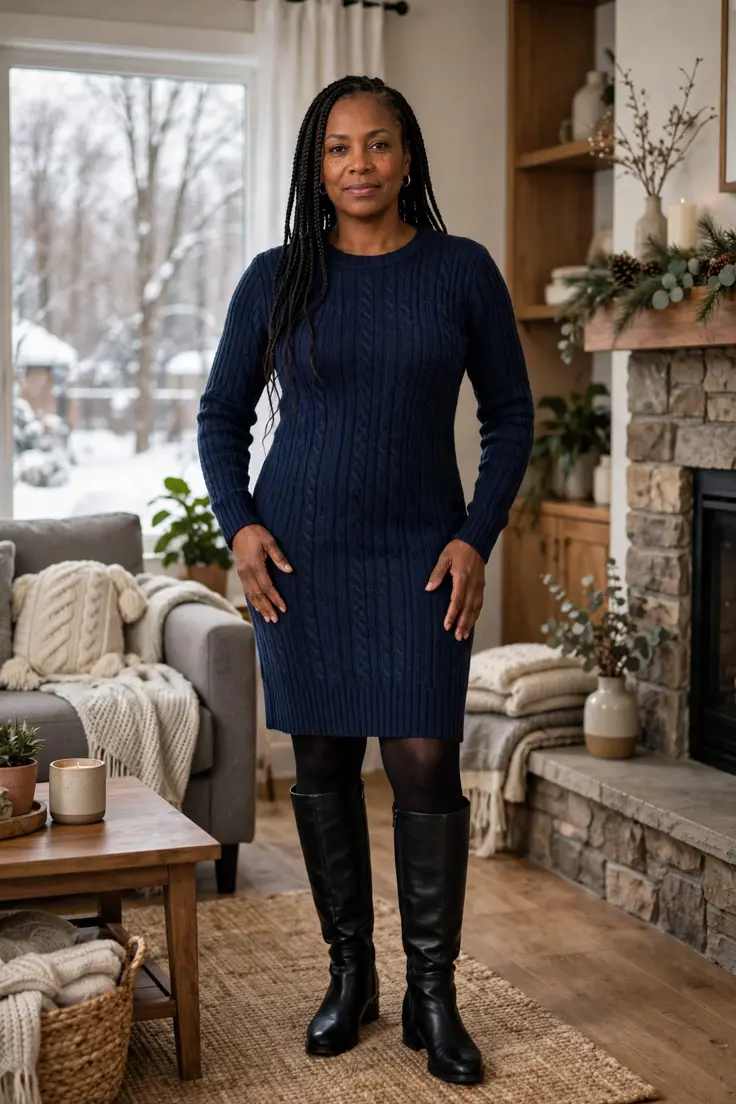
Here is the one rule to remember. Hem first, boot second, tights third, and match the tights to the boots, because that order stops you from buying boots for a dress you do not own yet, or tights for boots you will never wear.
Try it and you will see it. Look at the hem, choose the boot that suits that hem, and pick the tight that matches the boot, and the outfit will come together in minutes, not in an hour of trying, from work to dinner.
Frequently Asked Questions
Can I wear a sweater dress to work after 40?
Yes, if the hem sits just above or just below the knee, the knit is thick enough not to cling, and the boots are comfortable for a day, a sweater dress works well at most offices, especially with opaque tights and a polished bag.
Ankle or knee-high boots with a sweater dress?
Ankle boots suit a shorter hem and most workdays, while knee-high boots suit a longer midi hem and colder days, so let the hem decide, and check the gap between hem and boot in a full-length mirror before you choose.
What colour tights should I wear with black boots?
Black opaque tights with black boots create one long dark line that looks intentional and leg-lengthening, so match the tights to the boots, not to the dress, unless you are breaking the rule once on purpose for a festive evening.
Are fleece-lined tights too bulky for a sweater dress?
Fleece-lined tights add a little volume, but they work well with a dress that has some ease and a boot with a wider shaft, so try the full combination at home, including sitting down, before you trust it for a workday.
How do I keep a sweater dress from looking too casual at dinner?
Keep the hem and boots polished, add one focal piece of jewelry and a richer lip colour, and choose a structured bag, because those small lifts turn a workday dress into a dinner outfit without a change of clothes.
For more outfit inspiration, explore boot outfits for women over 40 and fall outfits for women over 40.
Closing
You do not need a new dress or a closet full of boots. Choose the hem first, the boot second, and the tight third, and match the tights to the boots. Test the outfit seated, standing, and in a photo, and it becomes the easiest outfit in your closet.
