

A sweater dress with boots and tights can make an easy winter outfit for a midsize figure, but the hem, boot height, and tights need to work together. Try a ribbed midi dress with knee-high boots and opaque tights for a polished look, or an A-line knit dress with ankle boots and tights in a similar shade for a relaxed day.
Start with the shoes you will actually wear and check the dress hem while standing and sitting. If you need more room through the calf, look for adjustable or wide-calf boot shafts; if temperatures are low, choose warmer tights without adding uncomfortable bulk at the waist. The combinations below give you practical starting points.
Quick midsize sweater-dress outfit formulas
- Ribbed midi sweater dress + wide-calf knee-high boots + opaque tights + belted wool coat.
- A-line knit dress + ankle boots + tights matched to the boots + structured crossbody bag.
- Soft neutral sweater dress + fleece-lined tights + flat tall boots for cold days.
1. Start With the Hem, Not the Boot

Start with the dress hem, not the boot, because the hem decides everything else. Put the dress on, stand in front of a full length mirror, and notice where it ends: above the knee, at the knee, or just below it.
Then try the boots you already own, one pair at a time, and look at the whole line, not just the shoe. A shorter hem usually loves an ankle boot with a small gap of tights.
2. Ankle Boots Love a Shorter Hem

Ankle boots are the easiest partner for a shorter sweater dress, because they leave a visible band of tights between boot and hem. That band is your friend. It breaks up the outfit and shows off the tights colour.
Watch the gap, though, because too much bare leg in winter looks cold, and too much tights with no break looks heavy. Aim for a gap of a few inches, in opaque tights that match the boot.
3. Knee-High Boots Need Hem Room
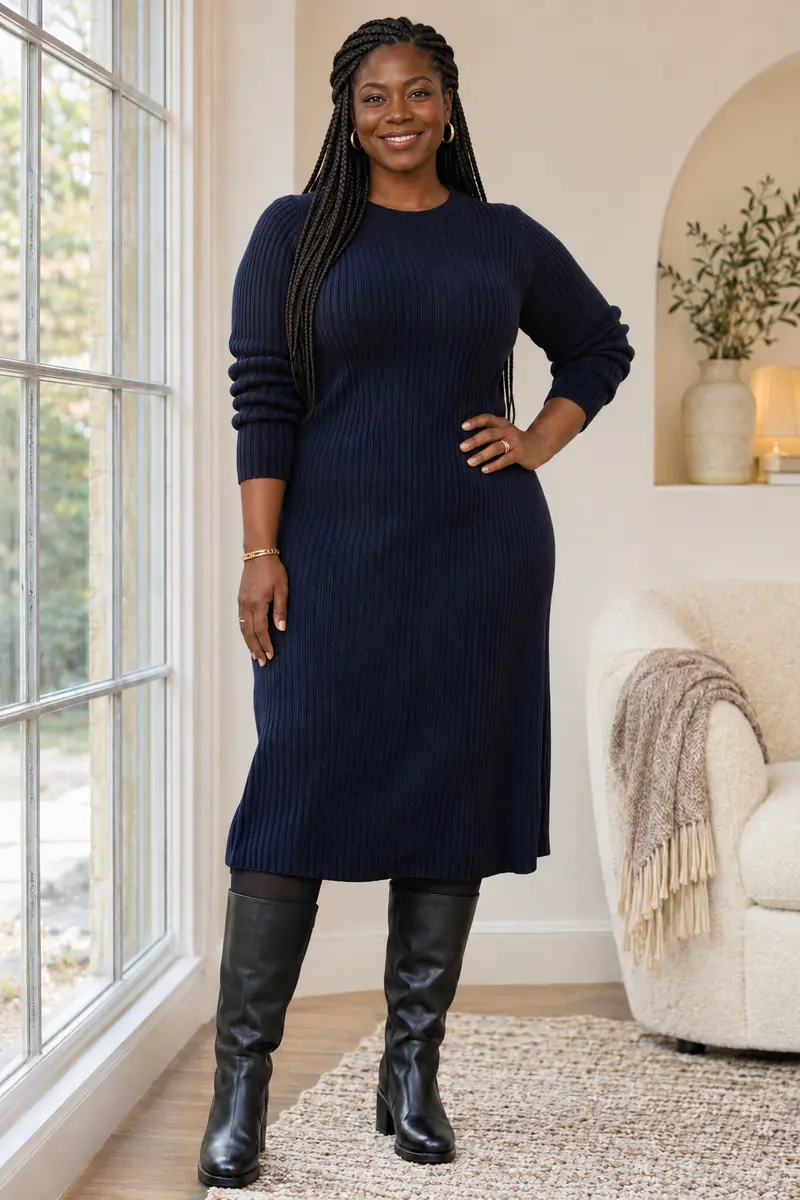
Knee high boots need room, and that room comes from the hem. For a knee high boot to work, the dress hem should end at or just above the top of the boot, with no bunching, no pulling, and no knit caught inside the shaft.
Try this at home before you leave. Sit down, stand up, and walk across the room, watching whether the hem stays put or slides down over the boot. A dress with a little structure at the hem stays in place best.
4. The Gap Rule: Skin, Tights, or Boot

Here is a simple rule to remember: between hem and boot, you should see tights or boot, not bare skin, in winter. Bare skin in that gap looks cold, even when you feel fine, and it draws the eye to the gap itself.
Use the gap as a design choice, not an accident. A dark tights gap with a dark boot looks long and calm. A coloured tights gap can add warmth, but only if it matches something else in the outfit, like a scarf or a bag.
5. Opaque Tights: The Everyday Workhorse
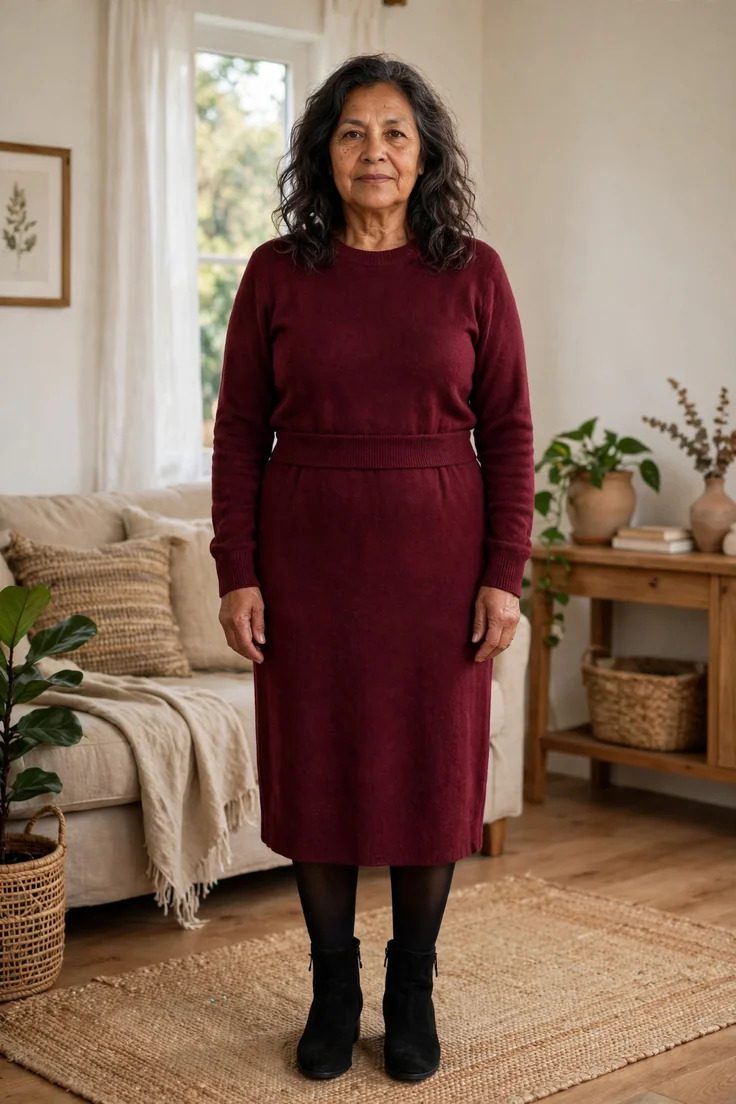
Opaque tights are the everyday workhorse for a sweater dress, and for a midsize figure they do more than keep you warm. They smooth the leg line and give the outfit a finished base in winter.
Fit matters more than brand here. Tights that are too small will dig at the waist and roll down, while tights that are too large will bag at the ankle and bunch inside the boot.
6. Fleece-Lined Tights: Real Cold Only

Fleece lined tights are wonderful in real cold, and a mistake in mild weather, because they add warmth and a little bulk. Save them for cold days outdoors, not for a quick trip between heated rooms.
Test them the way you will actually wear them. Put them on with the dress, sit for ten minutes in a warm room, and notice whether you feel comfortable or restless. Switch to regular opaque tights and add a longer coat instead.
7. The Tights Colour Rule: Match the Boots, Not the Dress
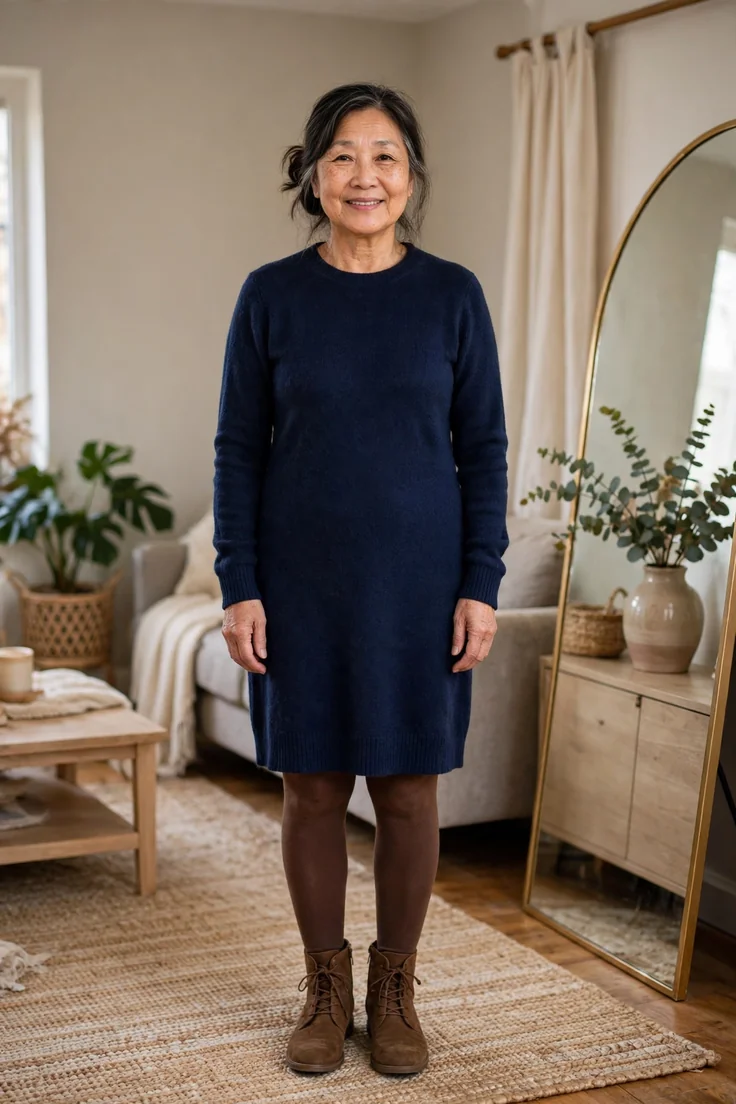
Here is the rule that saves more sweater dress outfits than any other: match your tights to your boots, not to your dress. Black tights with black boots make the leg look long and continuous, and brown tights with brown boots do the same.
Try it in the mirror and you will see it at once. Put on the dress, then hold two tights options against the boot: one that matches the boot, one that matches the dress. The boot match almost always looks calmer, longer, and more polished.
8. Black Tights Are Not Always the Answer

Black tights are a safe choice, but they are not always the right choice, and that distinction matters. With brown boots, black tights create a hard break at the ankle that shortens the leg, while brown or charcoal tights keep the line smooth.
Ask yourself what the boots are doing before you reach for black by habit. If the boots are black, black tights are perfect. If the boots are brown, tan, or grey, choose tights in that family, even if the shade is not an exact match.
9. Calf Fit: The Fuller Calf Boot Test

Calf fit is where many sweater dress outfits fail, and it is the test most women skip. A boot that fits the foot but squeezes the calf will pull, gap, or leave a red mark, and it will make you dread putting it on.
Do the test at home with the exact tights you plan to wear. Zip or pull the boot on, walk around, sit down, and stand up again, watching for pulling at the top, a gap that will not close, or a shaft that slides down.
10. Wide-Calf Boots Worth Checking
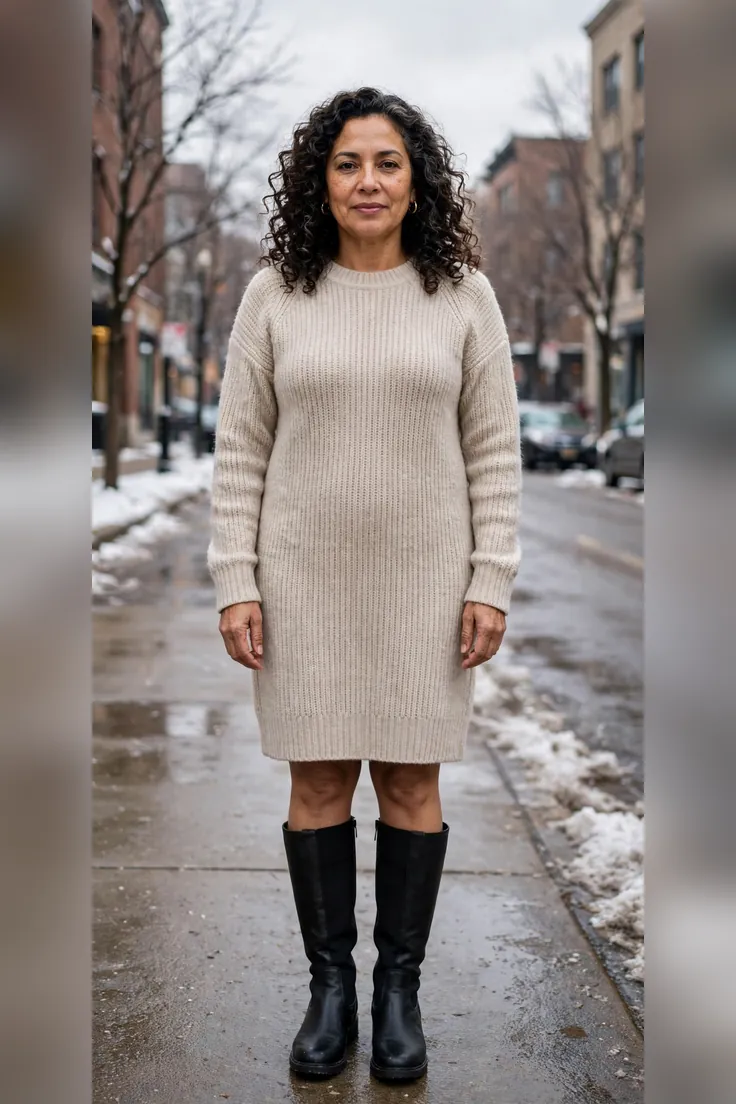
Wide calf boots are worth checking, even if you have never bought them before, because they are made for the exact problem many midsize women face. They offer a wider shaft and a more forgiving top.
Try them with your sweater dress, not just with jeans, because a dress shows the boot shaft in a way jeans do not. Look for a shaft that meets the hem cleanly and a top that stays up.
11. Ankle Boot Shaft Height Matters

Ankle boot shaft height matters more than most women realise, because a shaft that ends at the wrong place can cut the leg in half. A very short shaft that ends below the ankle bone looks light and works well with a shorter hem.
Match the shaft to the hem and to your leg, not just to the boot style you like. If you are shorter, or if your dress hem is longer, a lower shaft usually flatters more, because it leaves more leg visible.
12. A Heel Height You Can Walk In

A heel height you can walk in beats a heel height that only looks good in a photo. For a sweater dress, that means a low block heel, a wedge, or a flat, because winter pavements and long days do not forgive a narrow stiletto.
Test the heel the way you will wear it. Walk on a hard floor, stand for ten minutes, climb a step, and sit and stand again, all in the exact tights you plan to wear.
13. The Seated Waistband Test

A sweater dress is mostly worn seated, at a table, in a car, or on a sofa, so test it seated, not just standing before a mirror. Sit in a dining chair and lean forward as if reaching for food.
Fix the fit, not your posture, if you find a problem. A dress with a little stretch at the waist, a waistband that sits flat, and tights with a comfortable top will let you enjoy dessert without adjusting anything.
14. Waist Definition Without a Digging Belt

Waist definition for a midsize figure does not have to mean a tight belt, and often it should not. A belt that digs in creates a line you can see through knit, and it makes sitting uncomfortable, which defeats the purpose of a sweater dress.
Try the dress with and without a belt, and look at the side view, not just the front. A soft, wide belt worn loosely can define the waist without digging, while a thin, tight belt often does the opposite, cutting the dress in half.
15. Belt or No Belt? Decide by the Dress
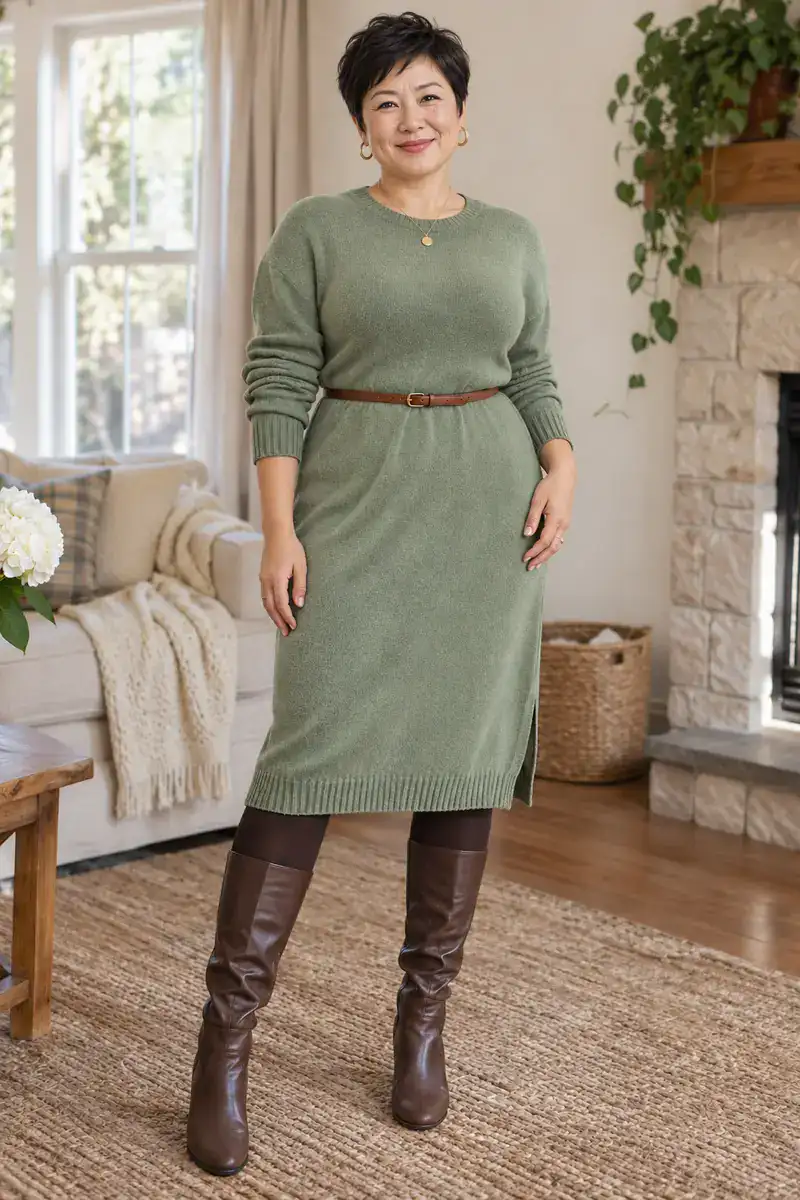
Decide belt or no belt by the dress, not by habit, because different sweater dresses need different answers. A straight, boxy dress often benefits from a soft belt, which gives it a waist it does not have on its own.
Use this quick check. Put the dress on, look in the mirror, and ask whether your eye knows where the waist is. If it does, skip the belt. If it wanders, add a soft belt in a colour close to the dress.
16. Arm Coverage That Still Looks Dressy

Arm coverage matters in winter, and it matters even more with a sweater dress, because the sleeves are part of the dress, not an afterthought. Long sleeves in the same knit as the dress look cohesive and dressy.
Check the arm line in the mirror, including the back, because a sleeve that pulls across the upper arm or bunches at the elbow will show in photos. A sleeve with a little stretch and a clean cuff will look polished all day.
17. Bust Coverage Without Boxiness
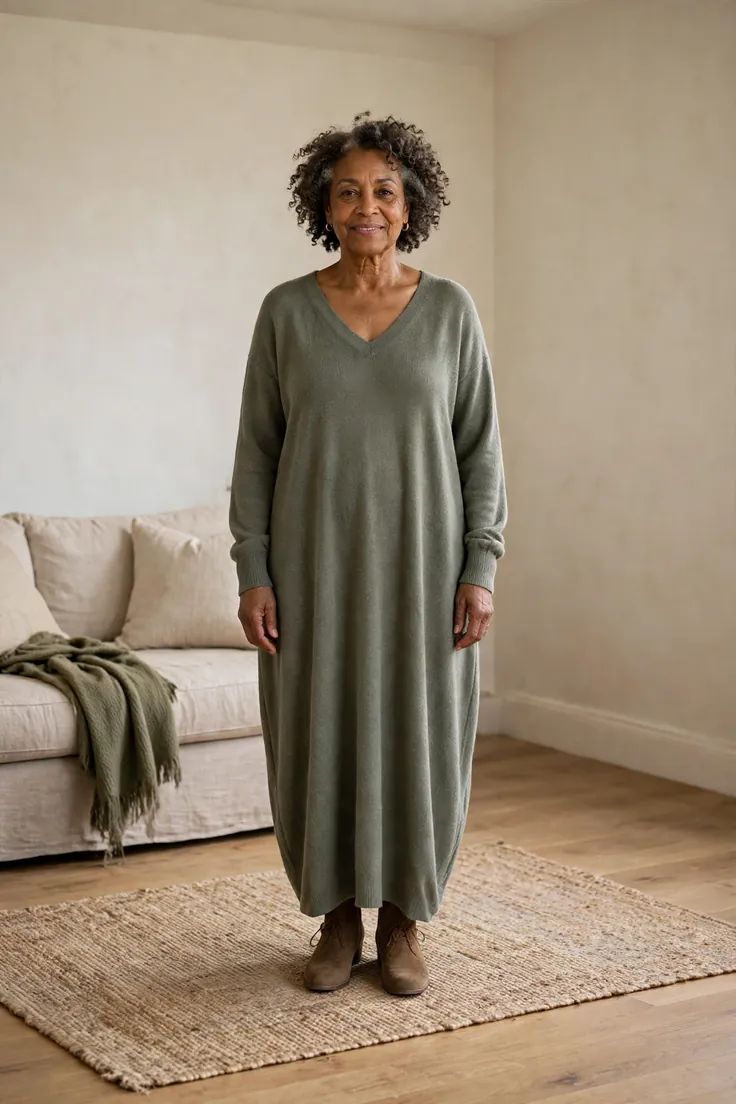
Bust coverage without boxiness is a balance, and a sweater dress can get it right with the right neckline and knit. A V neck or a scoop neck opens the chest just enough to avoid a solid block of knit.
Test the neckline seated as well as standing, because a neckline that gaps when you lean forward will need fixing all day. A dress with a little structure at the neckline and a good bra underneath will hold its shape.
18. Fabrics That Do Not Cling
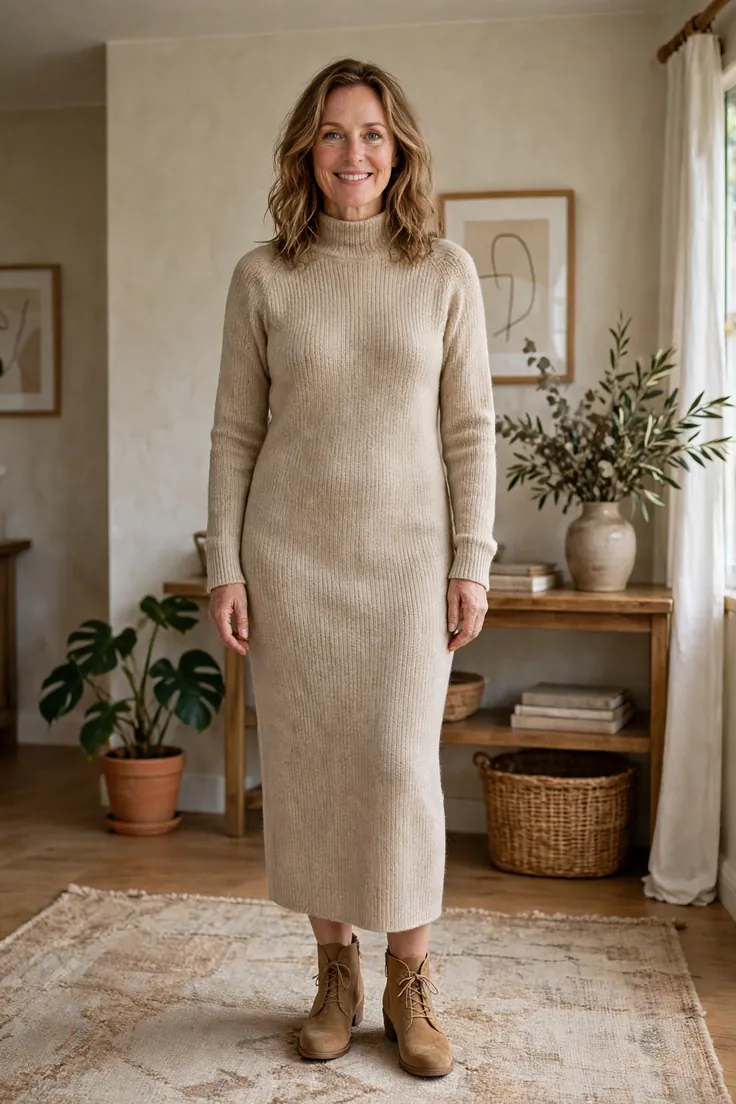
Fabric is the quietest way to make a sweater dress work for a midsize figure, and it is often the best way. A knit with a little structure, like a fine rib or a ponte knit, drapes over curves without clinging to every line.
Test fabric the way guests will see it. Hold it to the light, sit in it for a few minutes, and check how it falls when you stand again. Quality knit recovers its shape, while thin knit stretches and bags at the elbows.
19. Tights That Stay Up All Day
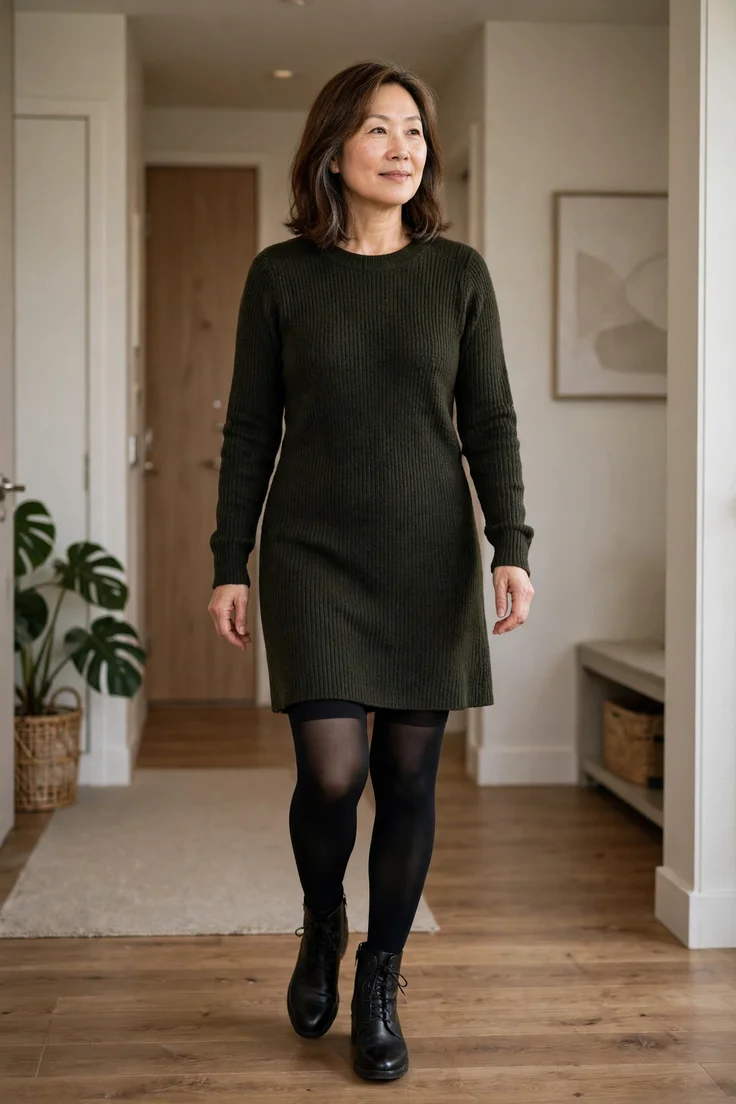
Tights that stay up all day are not a luxury, they are a requirement, because tights that slide down change the whole outfit. The waistband is the culprit most of the time, not your body.
Try this at home with the dress on. Walk, sit, stand, and climb a step, then check whether the waistband has moved. If it has, try a different size or a different brand, or add a smooth slip short underneath for grip.
20. Static, Pilling, and Snag Fixes

Static, pilling, and snags are the small problems that make a sweater dress look tired, and they are all fixable before you leave. Static comes from dry air and synthetic layers, so a light spray or a natural fibre layer underneath can reduce it.
Check the dress in daylight before the event, including the back and the sides, and fix what you find. Remove pills, trim a loose thread, and replace any piece that looks worn, because a sweater dress shows wear faster than a structured dress does.
21. A Coat That Covers the Hem

A coat that covers the hem is not just about warmth, it is about the whole outfit reading as finished when you arrive. In winter, you will be seen in your coat first, often longer than in the dress itself.
Try the coat over the exact dress, boots, and tights you plan to wear, and check the hem line in the mirror. Sleeves should slide without bunching, and the coat should close without pulling across the bust or waist.
22. Scarf, Hat, and Gloves Without Bulk

A scarf, hat, and gloves should keep you warm without adding bulk that hides the dress, and that means choosing lighter, smarter pieces. A soft, medium weight scarf in a colour close to the dress or coat adds warmth without a mountain of knit.
Keep the accessories to the same colour family as the outfit, and remove the bulkiest ones indoors. A scarf can stay as a soft wrap at dinner, but a heavy hat and thick gloves should come off at the door.
23. A Bag That Balances the Dress

A bag that balances a sweater dress should be structured enough to hold its shape, but not so large that it overwhelms the knit. A medium crossbody or a neat tote in a colour close to your boots will ground the outfit.
Match the bag to the formality of the day, not just to its size. A small structured bag suits dinner and a dressier day, while a neat leather shoulder bag suits a casual day out.
24. Jewelry With One Focal Piece

Jewelry follows the one statement rule, and it is easy to get wrong with a sweater dress. Choose one focal piece, like small gold hoops, a short strand of pearls, a simple cuff, or a brooch at the shoulder, and keep everything else light.
Check jewellery in warm indoor light, where gold, pearls, and soft stones glow, and where large glittering pieces can look harsh against knit. Avoid a stack of bracelets that catches on the knit or a ring that snags the fabric.
25. The Day to Evening Swap

A sweater dress can go from day to evening with one small swap, and that swap is the secret to wearing it twice in one day. Change the shoes, the jewellery, or the outer layer, and the same dress reads completely differently.
Plan the swap and pack it in your bag. A pair of earrings, a belt, or a dressier shoe means you can change in minutes, without going home. The best day to evening outfit is not two outfits, it is one dress worn two ways.
26. How Your Outfit Reads in Photos

Photos show a sweater dress differently than a mirror does, and they are worth planning for. Warm indoor light flatters rich colours near your face, like burgundy, olive, camel, cream, and navy, while a busy print near your face can dominate a group photo.
Take one photo of yourself in the full outfit at home, including boots and coat, and look for pulling, bunching, slipping, or anything you keep touching. Fix only what bothers you in that check, then stop changing things.
27. The Mistake of Too Many Warm Layers
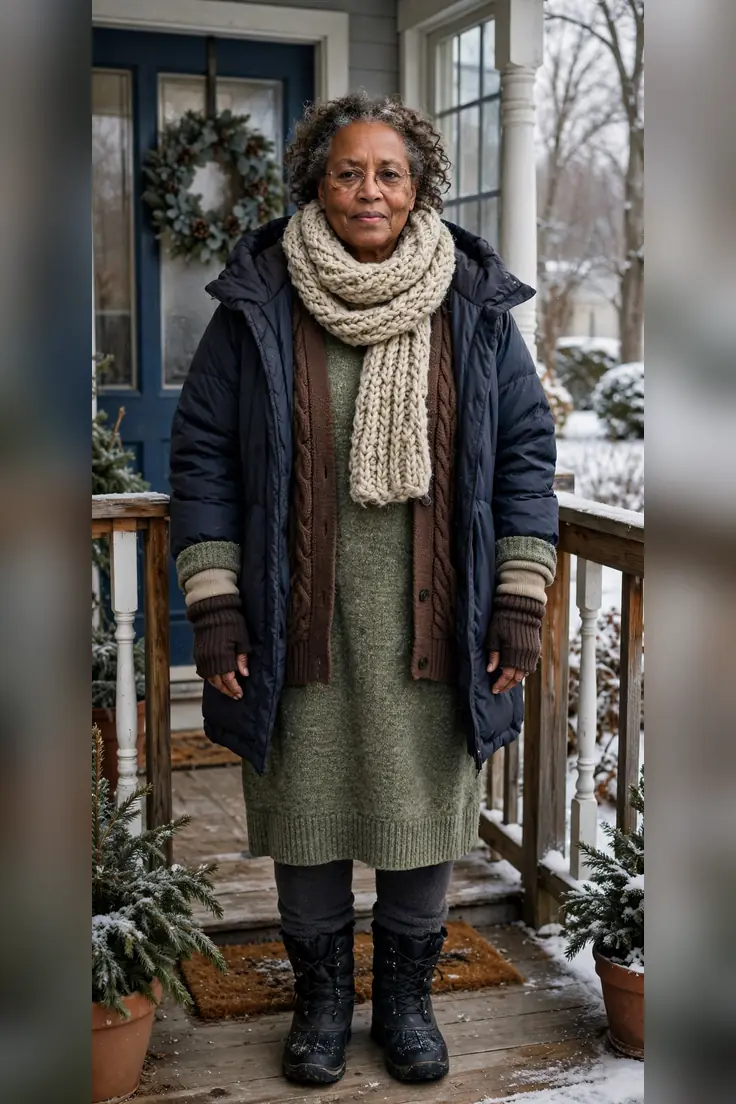
This is the most common sweater dress mistake, and it is also the easiest to fix. A thermal top plus a cardigan plus a coat plus a scarf plus thick tights does not add up to more warmth in a useful way.
Use layers with a job, not layers out of fear. One warm base, the dress itself, and one good coat are usually enough, with tights matched to the temperature outside. Lay the outfit out, count the warm layers, and remove all but the useful ones.
28. The Mistake of Dressing for Someone Else’s Calf
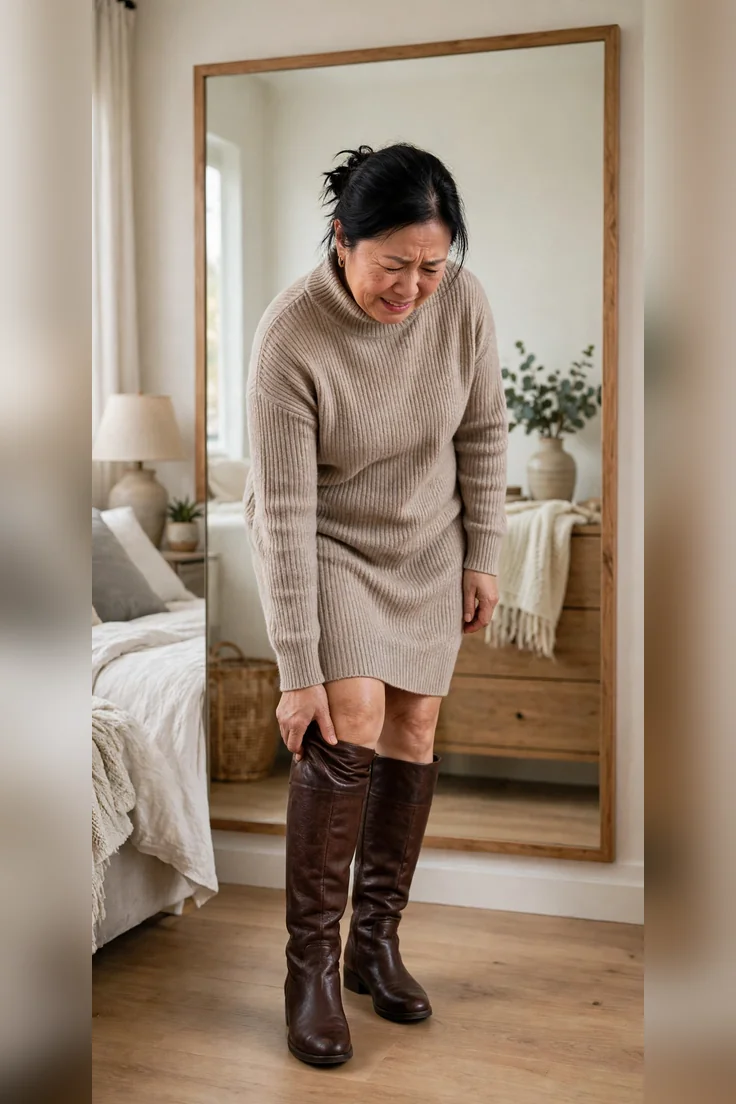
The second common mistake is dressing for someone else’s calf, hem, or waist, rather than your own. You might love a boot you saw on a model, but if it squeezes your calf, it will feel uncomfortable, no matter how beautiful it is.
Guard against this by trying the outfit on your own body, in your own mirror, and by trusting what it actually does, not what you hope it does. Match the hem to your leg, the boot to your calf, and the tights to your boots.
Frequently Asked Questions
Can a midsize woman wear a sweater dress with ankle boots?
Yes, ankle boots are often the easiest partner for a midsize figure, especially with a shorter hem, because they leave a neat band of opaque tights between boot and hem, keep the leg line calm, and avoid calf fit problems.
Should tights match the boots or the dress?
Match the tights to the boots, not to the dress, because a matching tights and boot pair makes the leg look long and continuous, while tights matched to the dress often create a block of colour that ends abruptly at the ankle.
Are fleece-lined tights too bulky under a sweater dress?
Fleece-lined tights add a little bulk, so save them for real cold days outdoors, and choose regular opaque tights for mild days or long indoor events, because warmth should come from layers you can remove, not from a base layer you cannot take off.
How do I stop tights from rolling down?
Choose tights by your actual measurements, look for a wide, soft waistband that sits flat, and try them with the dress and boots you plan to wear. A waistband that moves in that test will move all day.
What coat length works best with a sweater dress?
Choose a coat that ends just below the dress hem, closes without pulling across the bust or waist, and lets the sleeves slide without bunching, so the outfit reads as finished when you arrive, and the dress still stands on its own.
For more outfit inspiration, explore 15 midsize sweater dress outfit ideas and midsize knee-high boot outfits.
Closing
You do not need a smaller body, and you do not need a new wardrobe, to wear a sweater dress well. Match the hem to the boot, match the tights to the boots, choose a knit that drapes instead of clings. Do that, and the dress stops being a gamble.
