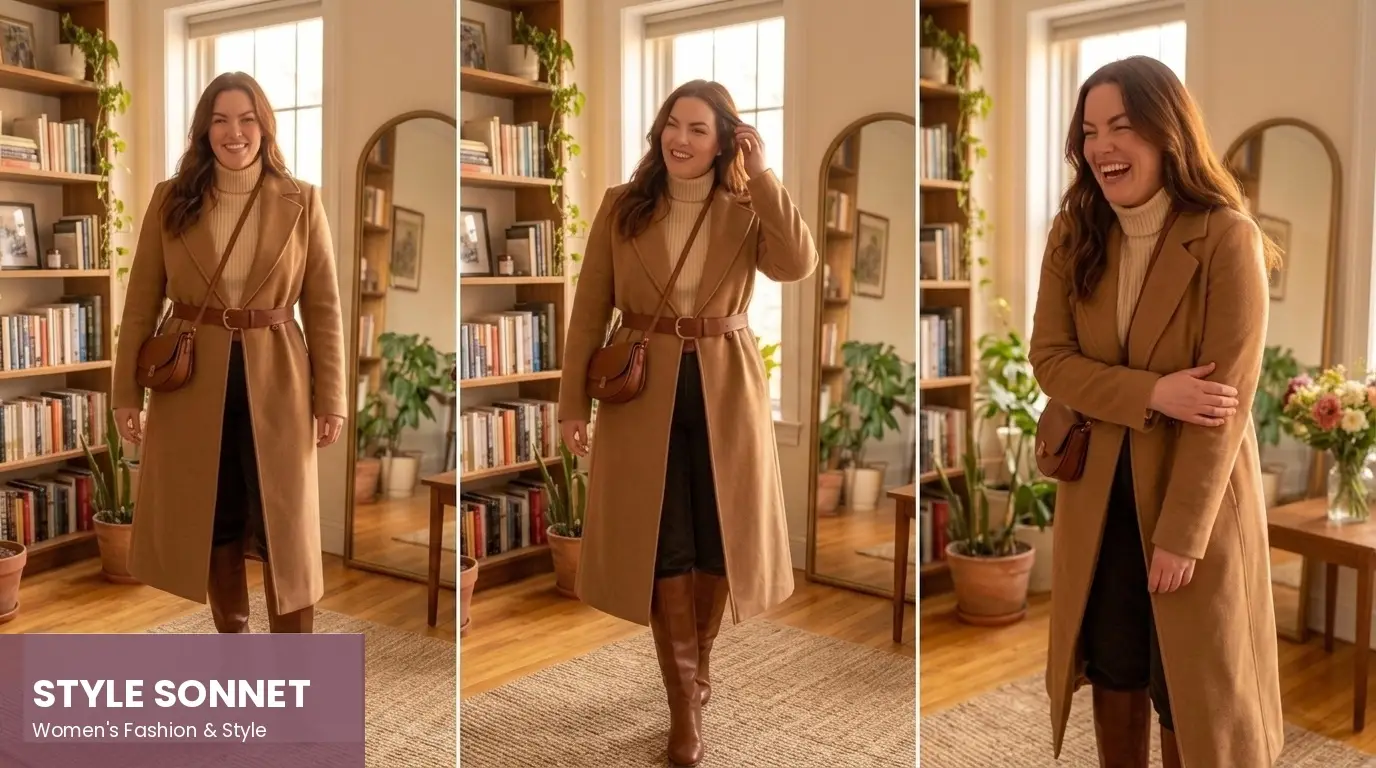
A coat that fits your shoulders but swallows your waist is not a coat problem, it is a shape problem. Most fall outfit ideas skip this part entirely and just show you a pretty color or a trendy cut, then wonder why it looks off on your body when it looked perfect on the model.
The truth is simpler than most style advice makes it sound. Coats are built on a handful of basic shapes, wrap, column, structured, cropped, oversized, and each one flatters a different body in a different way. Once you know which shape works with your proportions instead of against them, shopping gets faster and getting dressed gets easier.
This list breaks down coat styles by body shape, from hourglass to pear to petite to plus size, with the specific cut, length, and styling detail that makes each one work. No guessing, no returns, just the shapes that actually do their job.
Belted Wrap Coat Gives an Hourglass Shape
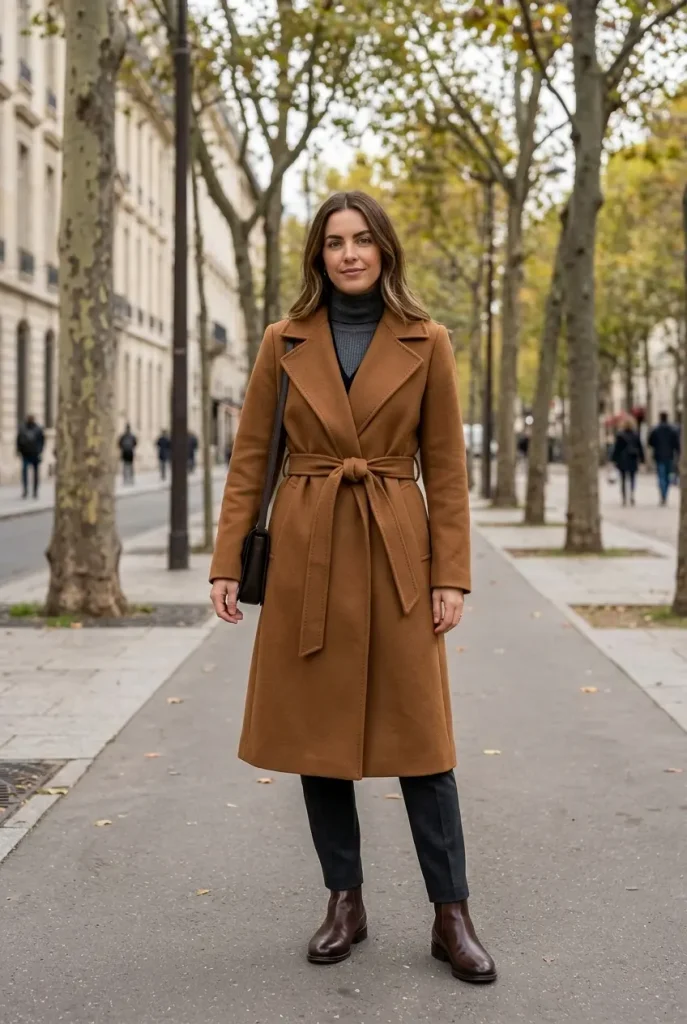
The hourglass shape already has a defined waist, the trick is picking a coat that does not hide it under boxy fabric.
A wrap coat with a self tie belt does the opposite of hide it. It follows the natural waistline and lets the coat move with the body instead of covering it up.
- Look for a tie belt, not just belt loops with buckles
- Choose mid weight wool so the fabric drapes instead of standing stiff
- Keep the length at or below the knee for the most balanced line
Column Coats Stretch a Pear Shape From Shoulder to Ankle
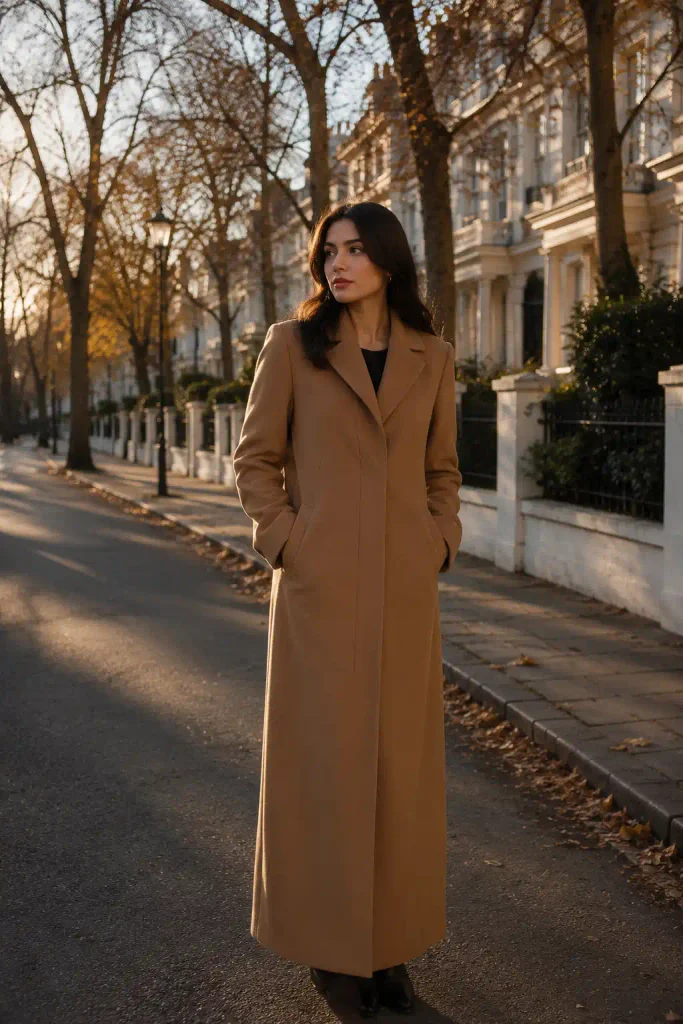
Pear shapes carry more width below the waist, so the goal with a coat is length, not volume control.
A single color column coat that runs long, past the knee and close to the ankle, draws the eye in one straight line and makes the hip width read as part of a longer silhouette instead of the widest point in the outfit.
Blazer Coats Keep an Apple Shape
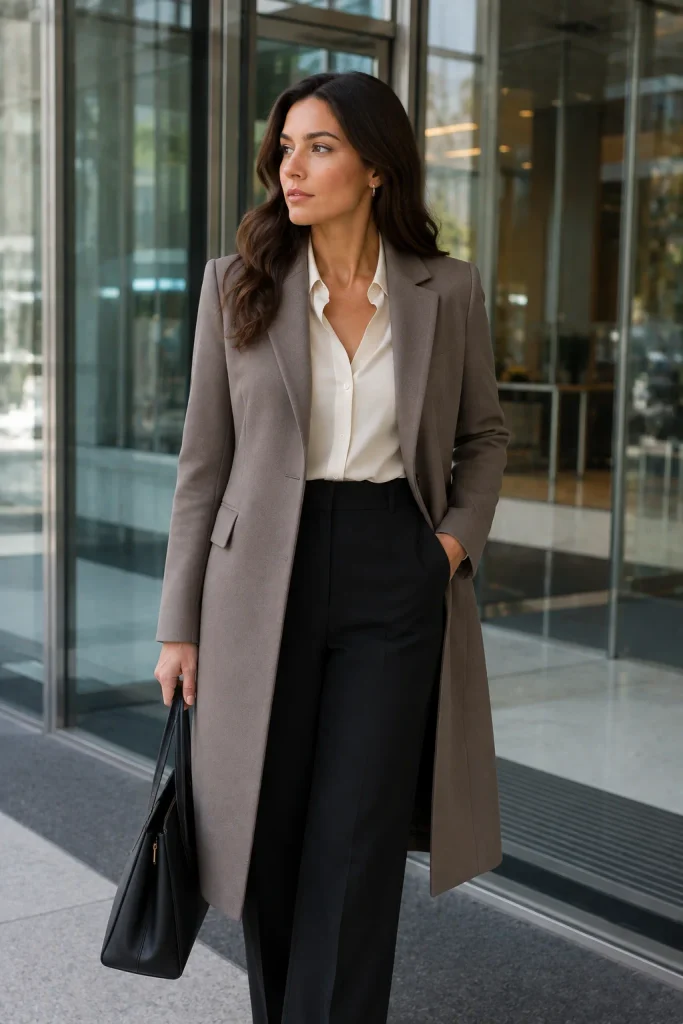
A common mistake with apple shapes is reaching for anything loose, thinking it will hide the midsection.
It usually does the opposite, adding fabric where there’s already fullness and making the whole outfit read as bigger than it is.
A structured blazer coat, worn open, solves this by giving the shoulders a clean line and letting the coat hang straight instead of clinging or bunching.
Build a Petite Puffer Look in Three Simple Moves
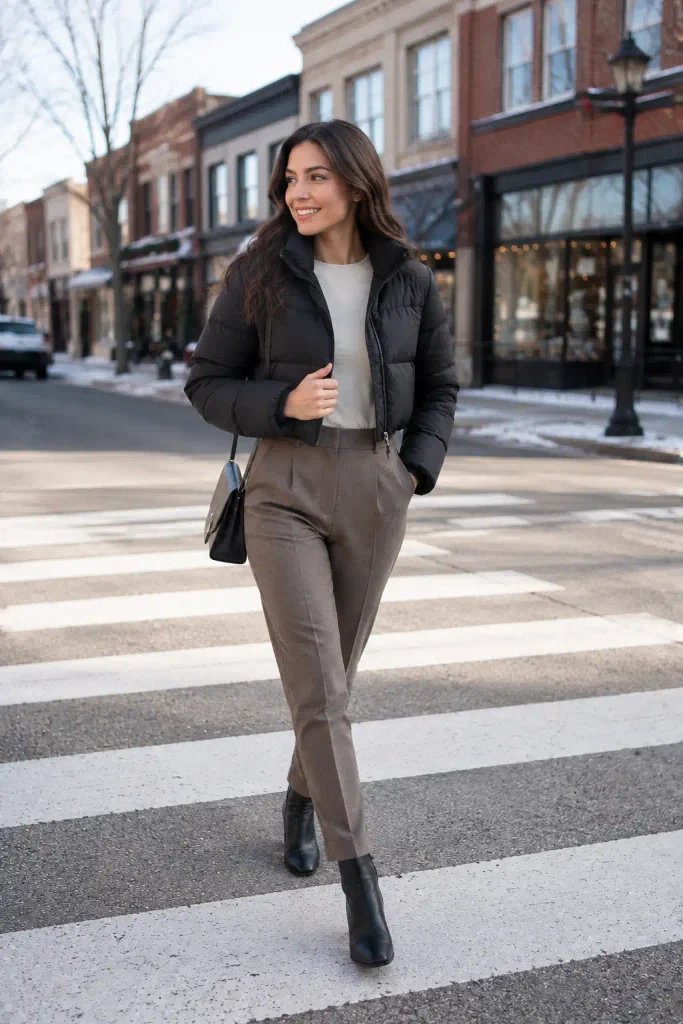
Petite frames can wear puffers, the height concern only shows up when the coat runs long and boxy.
- Choose a cropped puffer that stops at the hip, not below it.
- Pair it with high waisted trousers or jeans to keep the leg line unbroken.
- Add a low ankle boot instead of a bulky sneaker to avoid cutting the leg off visually.
Teddy Coat That Finally Fit Right
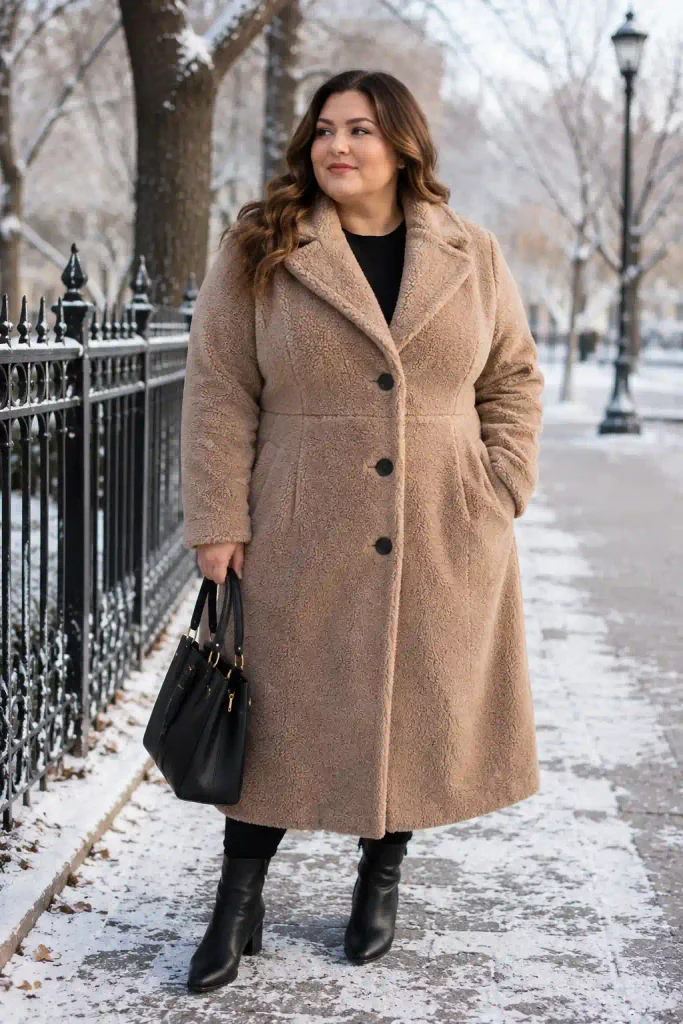
A friend of mine spent two winters convinced teddy coats just weren’t made for her, until she realized every one she’d tried was cut straight up and down with no shape at all.
The fix wasn’t sizing up or down, it was finding a teddy coat with a slight waist definition built in, not from a belt, just a seam that follows the body.
Before You Buy a Trench Coat, Check This List
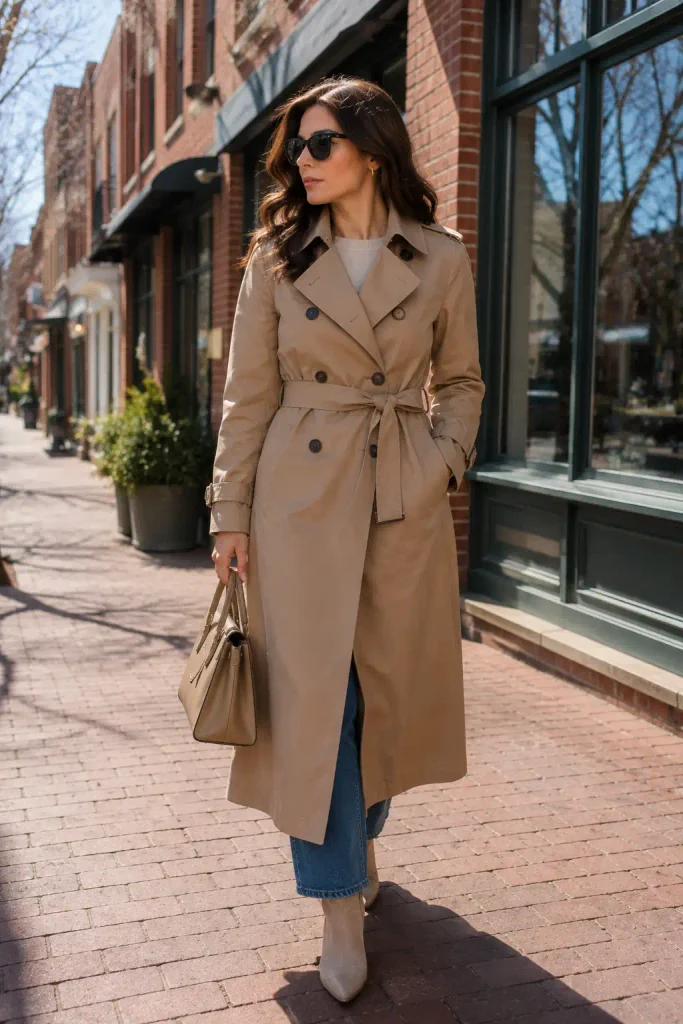
Not every trench works for a rectangle shape.
The whole point is creating a waist that isn’t naturally there, so a few details matter more than the color or the brand.
Cropped Coat Fixes a Long Torso by Adding a Break
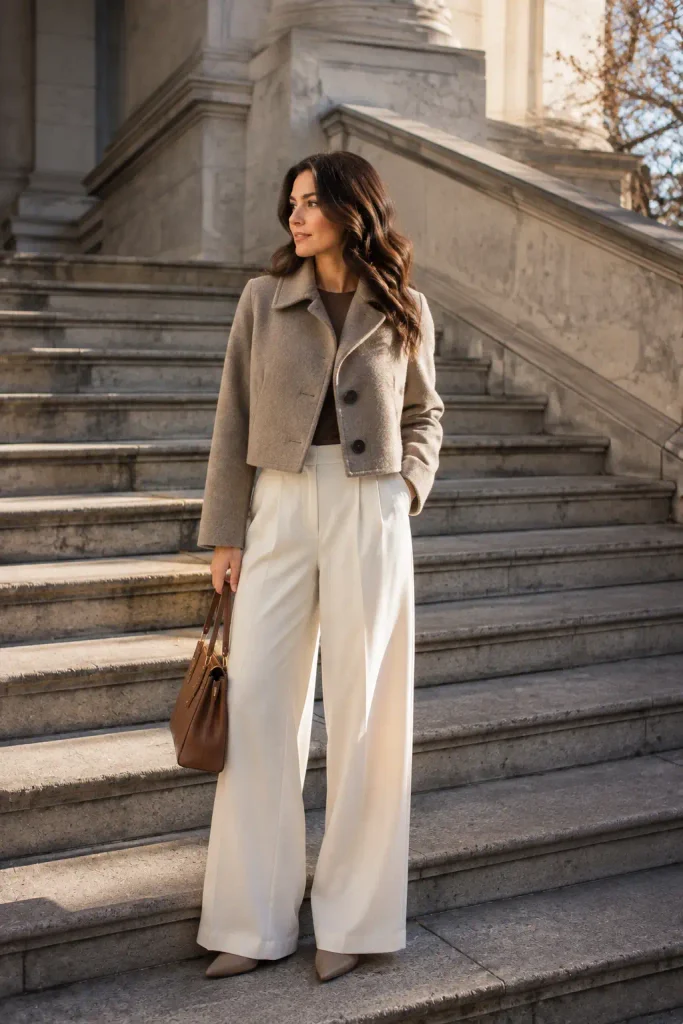
The instinct with a long torso is to reach for length everywhere, but a cropped coat that stops at the hip actually does more good.
It adds a visible break between top and bottom that a long torso doesn’t naturally have, which balances things out instead of stretching them further.
Double Breasted vs. Single Breasted for Broad Shoulders
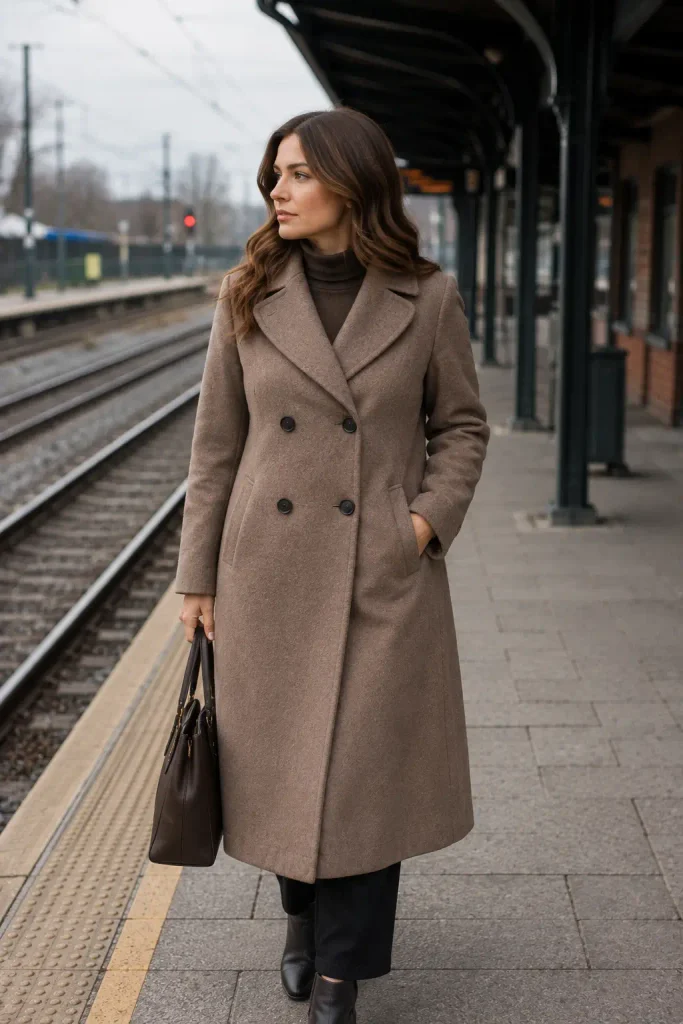
Both coats work, but they solve the shoulder question in different ways, and picking the wrong one can end up adding width instead of softening it.
Curvy Midsections Do Well in Motion, Not Just Standing Still
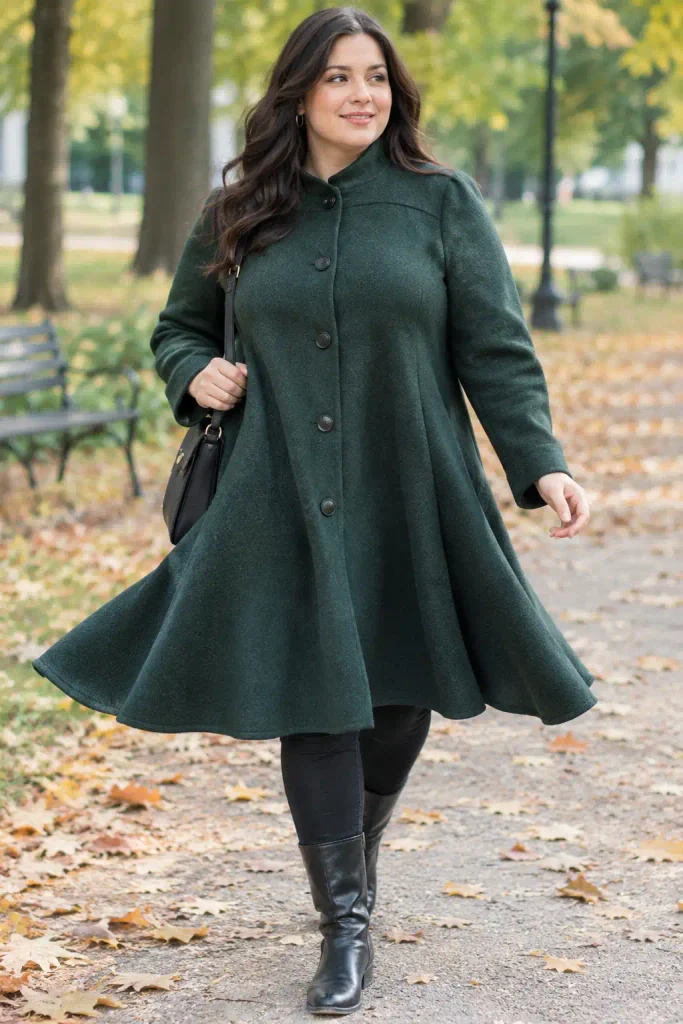
An A line swing coat is one of the few styles that actually looks better with movement.
The flare starts at the chest and moves outward the whole way down, so walking, not standing still, is when the shape does its best work.
Tall Frames Don’t Need More Length, They Need Better Proportion
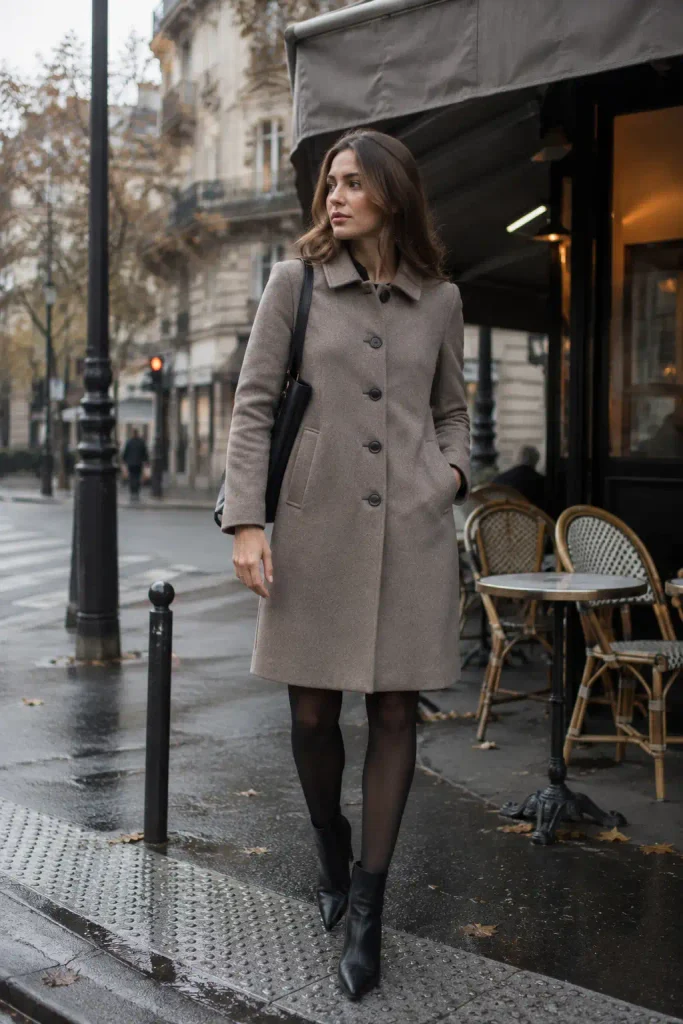
Most style advice tells tall women to just wear long coats since they can “pull it off.” That’s true, but it skips the more useful point, a knee length single breasted coat with a slim collar often looks more intentional than an ankle length one, because it avoids the head to toe monochrome column that can read as overwhelming instead of elegant.
Cape Coat Detail Everyone Forgets to Check
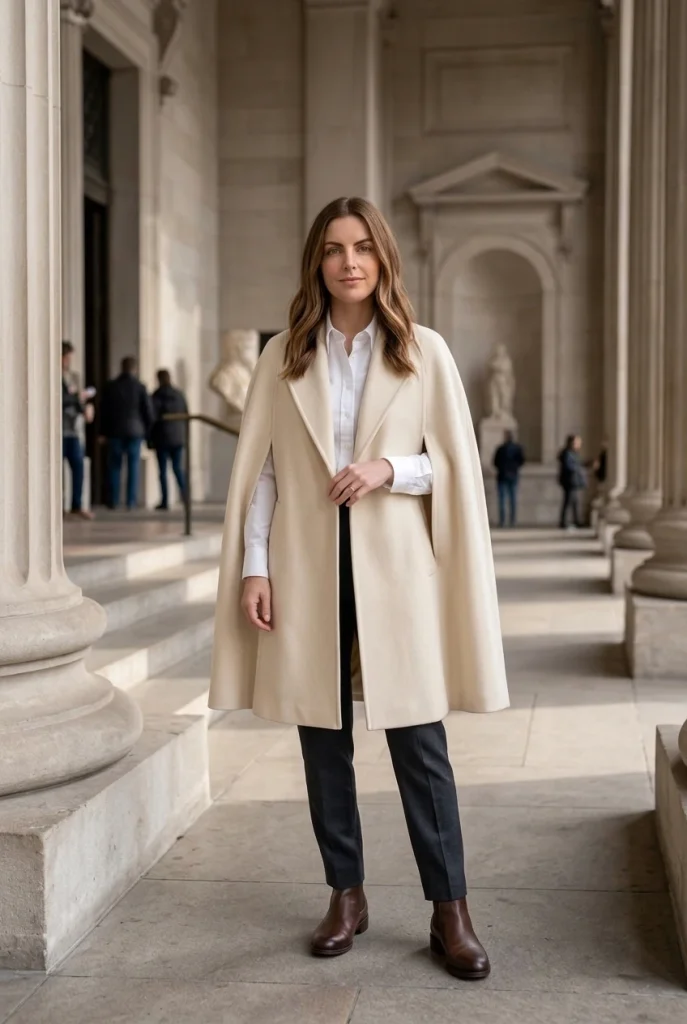
Cape coats look elegant in photos, but the armhole placement is what actually determines whether one works for broader shoulders and a fuller bust.Too narrow, and the coat pulls tight across the back the moment you move your arms. Too wide, and it adds bulk right where there’s already volume.
- Try lifting your arms in the coat before buying, not just standing still in front of a mirror
- Look for a dropped shoulder seam, which gives more room without adding width
- A structured fabric holds the cape shape better than something soft and clingy
Fit and Flare Coats Work Because They Skip the Waist Entirely
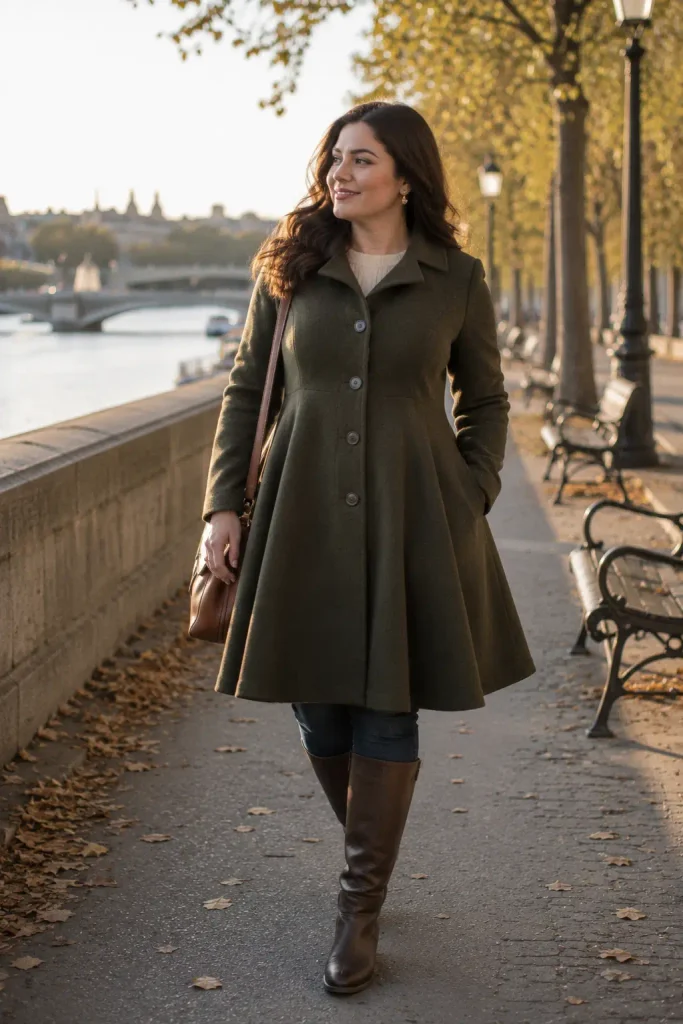
Apple shapes often get told to “define the waist,” which usually backfires since there isn’t much of a waistline to define in the first place.
A fit and flare coat skips that problem completely. It skims loosely through the stomach with no cinching, then flares out below the hip, so the eye moves down and out instead of stopping at the midsection.
Camel Isn’t Just a Color, It’s a Shortcut for Pear Shapes
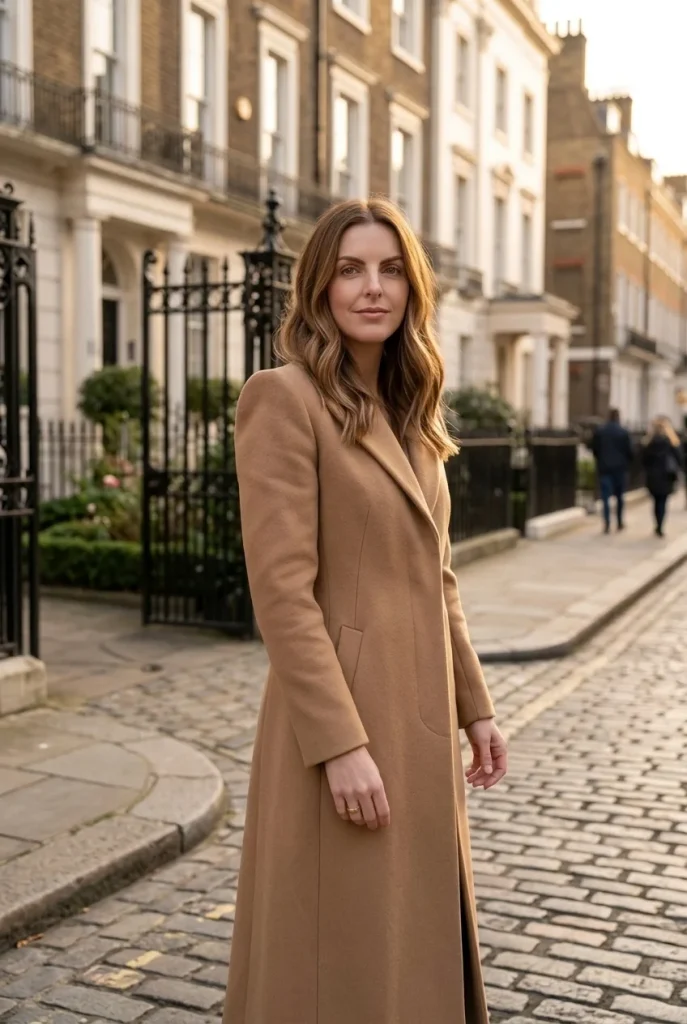
Camel coats show up on every fall outfit ideas list for a reason that has nothing to do with trend cycles.
The light, warm tone naturally draws the eye upward toward the face and shoulders, which is exactly where a pear shape wants attention to land first.
Cousins Cocoon Coat Taught Me Something About Petite Curvy Frames
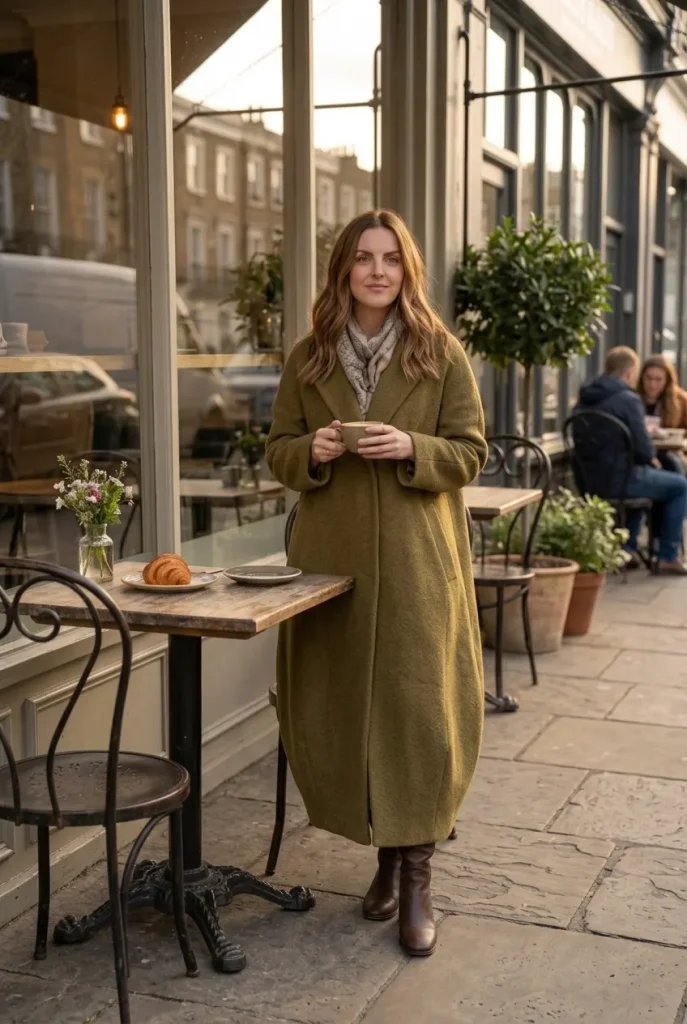
She’s short and curvy, and for years she avoided cocoon coats thinking the rounded shape would make her look wider.
Then she tried one that tapered in at the hem instead of staying wide the whole way down, and the difference was immediate.
The taper gave the coat an ending point, instead of just stopping wherever the fabric ran out.
Inverted Triangle Shapes Need the Coat to Stop Talking
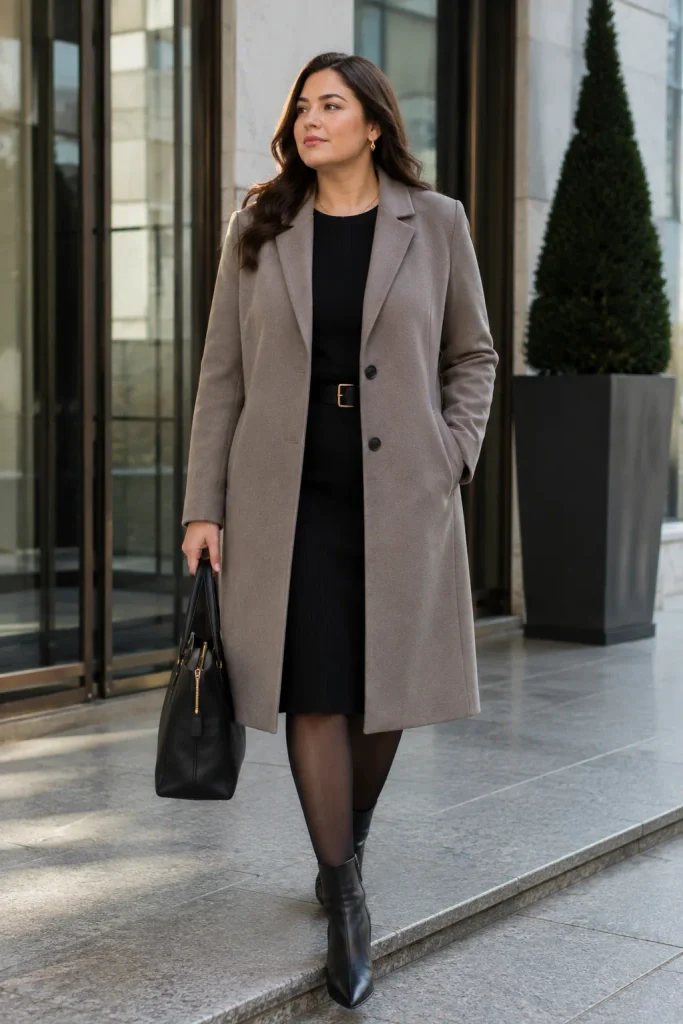
An inverted triangle already has plenty going on up top, so a tailored overcoat with a narrow lapel and a straight, undecorated cut works better than anything with extra collar detail, patch pockets, or a wide notch lapel.
Longline Duster Fixes the One Thing Short Torsos Fight All Fall
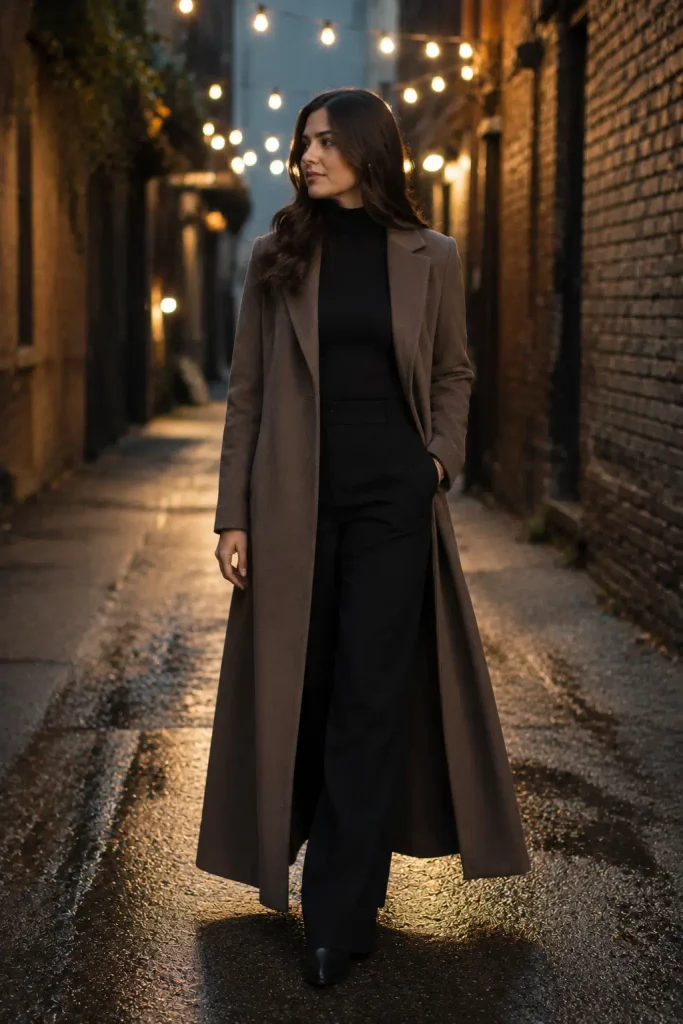
A short torso paired with a mid length coat often creates an awkward stopping point right at the widest part of the hip.
A longline duster skips that problem by running well past it, letting the coat’s length do the work instead of cutting the body into shorter looking sections.
Faux Fur Trim Adds Softness Without Adding Size
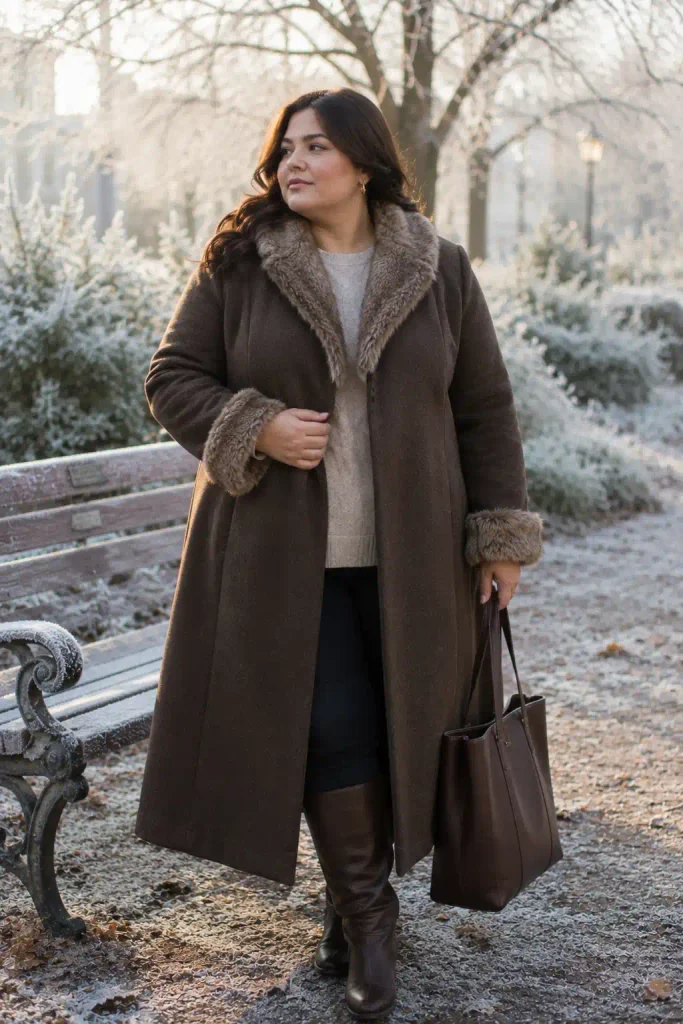
There’s a common worry that texture on a coat automatically adds visual bulk, but trim placed only at the collar and cuffs does the opposite.
It draws attention to the face and hands, the narrowest points on the body, while the rest of the coat stays streamlined underneath.
Three Things a Military Coat Needs to Actually Define a Waist
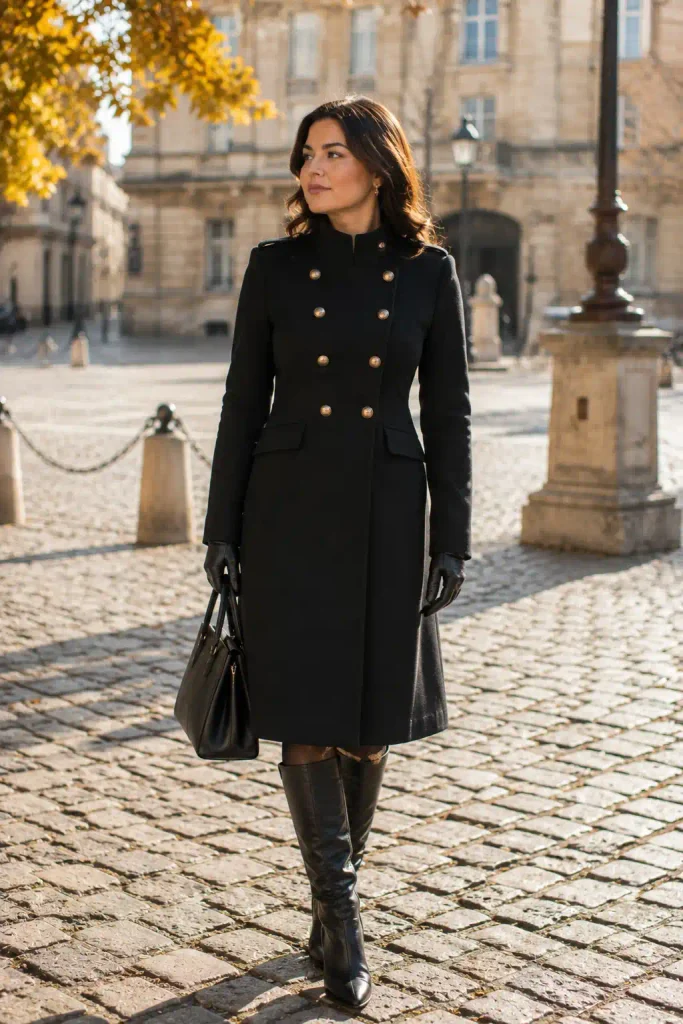
A rectangle shape doesn’t have a lot of natural waist definition to work with, so a military style coat has to do most of the shaping through its construction rather than just its silhouette.
Plaid Wrap Coats Give Curvy Hourglass Frames Two Wins at Once

laid usually gets a bad reputation for adding visual width, but on a wrap coat it actually works in reverse.
The tie belt already creates a defined waist, and the pattern draws just enough attention to that middle point instead of away from it.
Belt Placement That Balances Broad Hips
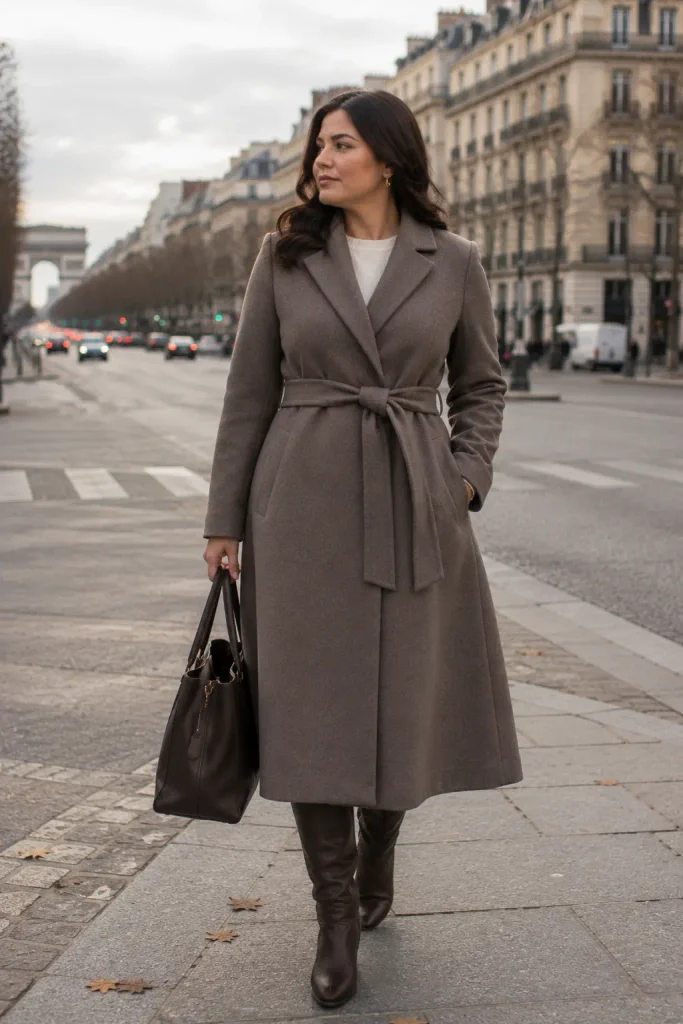
Most people belt a coat right at the smallest part of the waist without thinking twice, but for broad hips, moving the belt slightly above the natural waistline changes the whole proportion.
It shortens the visual distance between shoulder and hip just enough to even things out.
Conclusion
Coats don’t need to be complicated once you know what to look for. A wrap coat needs a real tie belt, a column coat needs one unbroken color, a cropped coat needs a real break at the hip.
These small details matter more than trend or brand, and they’re the difference between a coat that just sits on you and one that actually works with your shape.
